
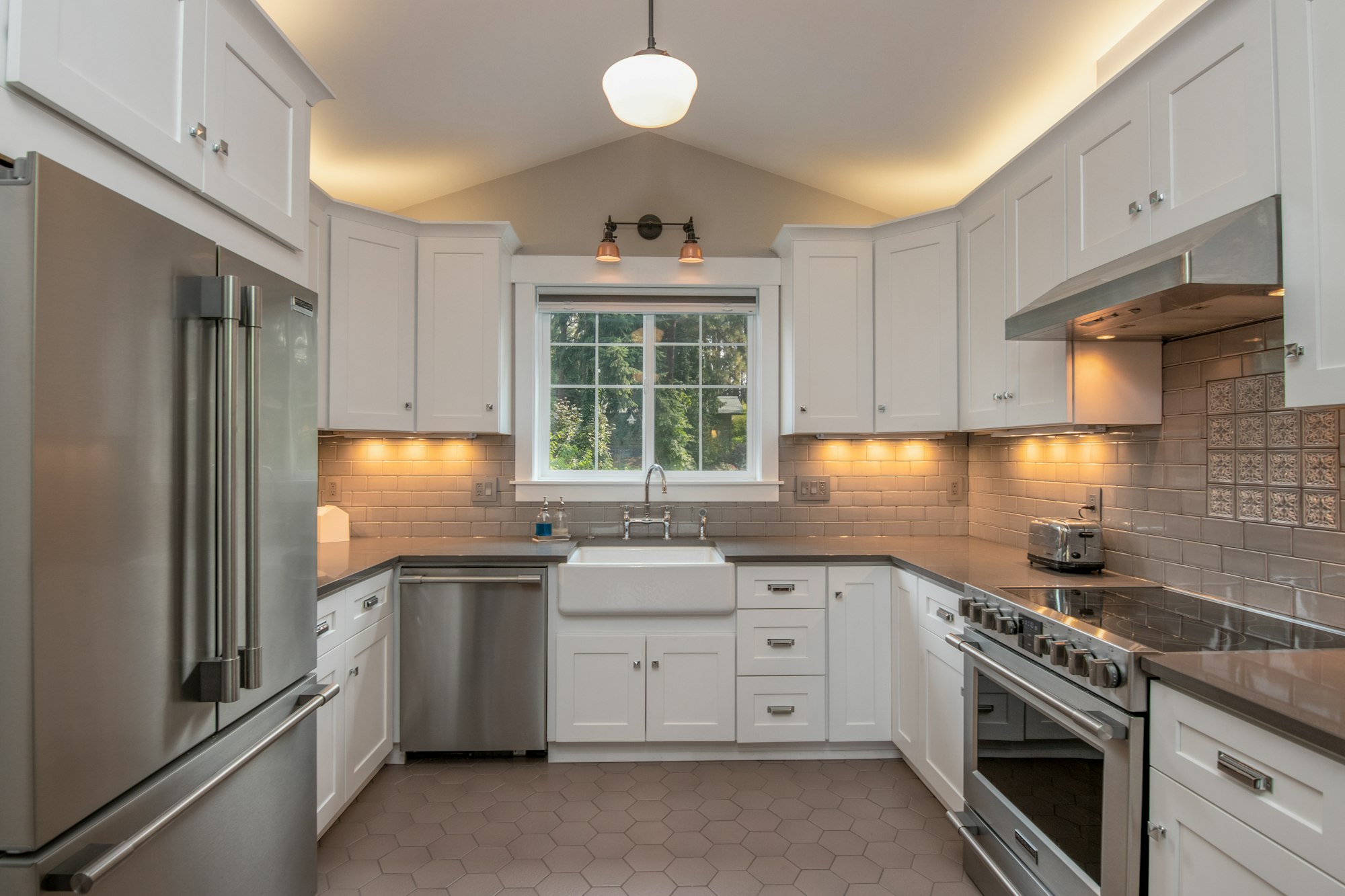
Photo: Clay Elliot / Unsplash
A completed remodeling project may be photographed for several reasons. The homeowner may want a record of the work, while a professional may wish to show the project in a portfolio. Those purposes are related but not identical. A photograph kept in a private project file is different from an image published on a website or social channel. Discussing the intended use before photography begins helps everyone understand the arrangement.
The conversation should be practical and specific. Identify who will take the photographs, what areas are included and where the images may appear. Do not assume that allowing a camera into a room automatically answers every publication question. The relevant project documents and permissions should be reviewed through the agreed process, with any uncertainty clarified before the images are used.
Separate the room from private details
Walk through the proposed views and notice what else may appear. Family photographs, names on paperwork, computer screens and recognizable personal items can become part of an image even when the subject is a cabinet or wall finish. Decide what should be moved, obscured or excluded. The photographer should understand these boundaries rather than discovering them only after selecting the final images.
Consider identifying information beyond the room itself. A view through a window, an exterior image or a caption may reveal more about the home than the household intended to share. The right decision depends on the agreed purpose and the people involved. Avoid publishing a precise location or personal story simply because it makes the portfolio description more detailed.
Confirm how the work will be described
A caption should accurately identify the work shown and avoid inventing a homeowner’s experience. Before-and-after comparisons need particular care: the images should represent the actual spaces and should not imply a broader transformation than the project delivered. A professional can explain a design choice without attributing a testimonial or personal motivation to the homeowner.
If a quotation is proposed, confirm both the wording and the permission to use it. A casual remark during a walkthrough should not automatically become a public endorsement. Likewise, approval of a photograph should not be treated as approval of every accompanying claim. Keeping those decisions distinct makes the final presentation more accurate and reduces avoidable misunderstandings.
Keep a record of the agreed use
Record the practical arrangement in the project’s communication system so it is available after the work is complete. Include any exclusions or conditions the relevant parties have agreed. This is not a substitute for professional advice about legal rights; it is a way to ensure that ordinary publication decisions do not depend on conflicting memories of a conversation.
Provide a clear contact route for a question about a published image or description. If an error is identified, the responsible person should know which versions need reviewing. A thoughtful photography process can celebrate good work while respecting the home as a private place. The strongest portfolio story is one that accurately shows the project and reflects the understanding reached with the people who live there.
Putting It Into Practice: A Photo Walkthrough Checklist
A short walkthrough before the camera comes out keeps the photography session calm and avoids rushed decisions. We find it works best when the household member who knows the home best walks the space with whoever will take the photos.
Before the walkthrough
- Confirm which rooms or features are part of the shoot and which are not.
- Agree on the intended uses: a private project record, a portfolio page, social posts or printed materials.
- Decide whether exterior views, street-facing windows or any identifying features are off-limits.
- Agree on how the household will review images before anything is published.
During the walkthrough
- Look at each room from the angles the photographer plans to use, not just from the doorway.
- Check mirrors, glass cabinet doors and shiny surfaces, which can reflect things outside the intended frame.
- Note calendars, mail, schoolwork, medication, framed family photos, artwork with names and anything on a screen.
- Check what shows through windows, including house numbers, vehicles and neighboring homes.
- Decide what will be moved, covered or left out, and who will put things back afterward.
After the session
- Review the selected images together before publication.
- Confirm the caption wording for each image.
- Write down the final agreement and where it is stored.
Common Misunderstandings and How to Avoid Them
“We said yes to photos, so we said yes to everything.” Agreeing to a private record is not the same as agreeing to a public post. Spell out each use, even if it feels repetitive.
“It’s only a cabinet, so nothing personal is in it.” A close-up of a pantry can still show labels, notes or a child’s drawing on the fridge. Look at every frame as a whole.
“The caption is just marketing.” A caption makes claims about the work and sometimes about the people who live in the home. It deserves the same review as the image.
“We can always take it down later.” An image can be shared or saved by others once it is published. That is why the review should happen before publication, not after.
“Before photos are just for comparison.” Before images can show more of a home’s condition or contents than a household might want public. Treat them with the same care as finished shots.
Questions Readers Ask
Can we say yes to some rooms and no to others?
Yes. Room-by-room decisions are a normal part of the conversation. A household may be comfortable showing a renovated kitchen but prefer to keep a bedroom or office private.
What if we change our minds after the project?
Use the contact route agreed at the start to raise the question. The responsible person can explain which images and descriptions are affected and what options are available. If the question involves legal rights, that is a matter for a qualified attorney rather than the project conversation.
Can our first names or neighborhood appear in the caption?
Only if the household agrees. Many portfolio stories work well with a general description of the project and no personal or location details at all.
Can we have copies of the finished photos?
That is worth asking about during the same conversation. Whether and how images are shared with the household should be part of the agreed arrangement rather than an assumption on either side.
Quick check
How much did you catch? Tap a question to see the answer.
1. Why distinguish project-record photos from portfolio photos?
Answer: They have different purposes and potentially different audiences.
2. What else should be checked besides the main room feature?
Answer: Background personal details and identifying information in images or captions.
3. Does approving a photo automatically approve a testimonial?
Answer: No. Photographs, quotations and accompanying claims should be considered separately.


Leave a Reply