
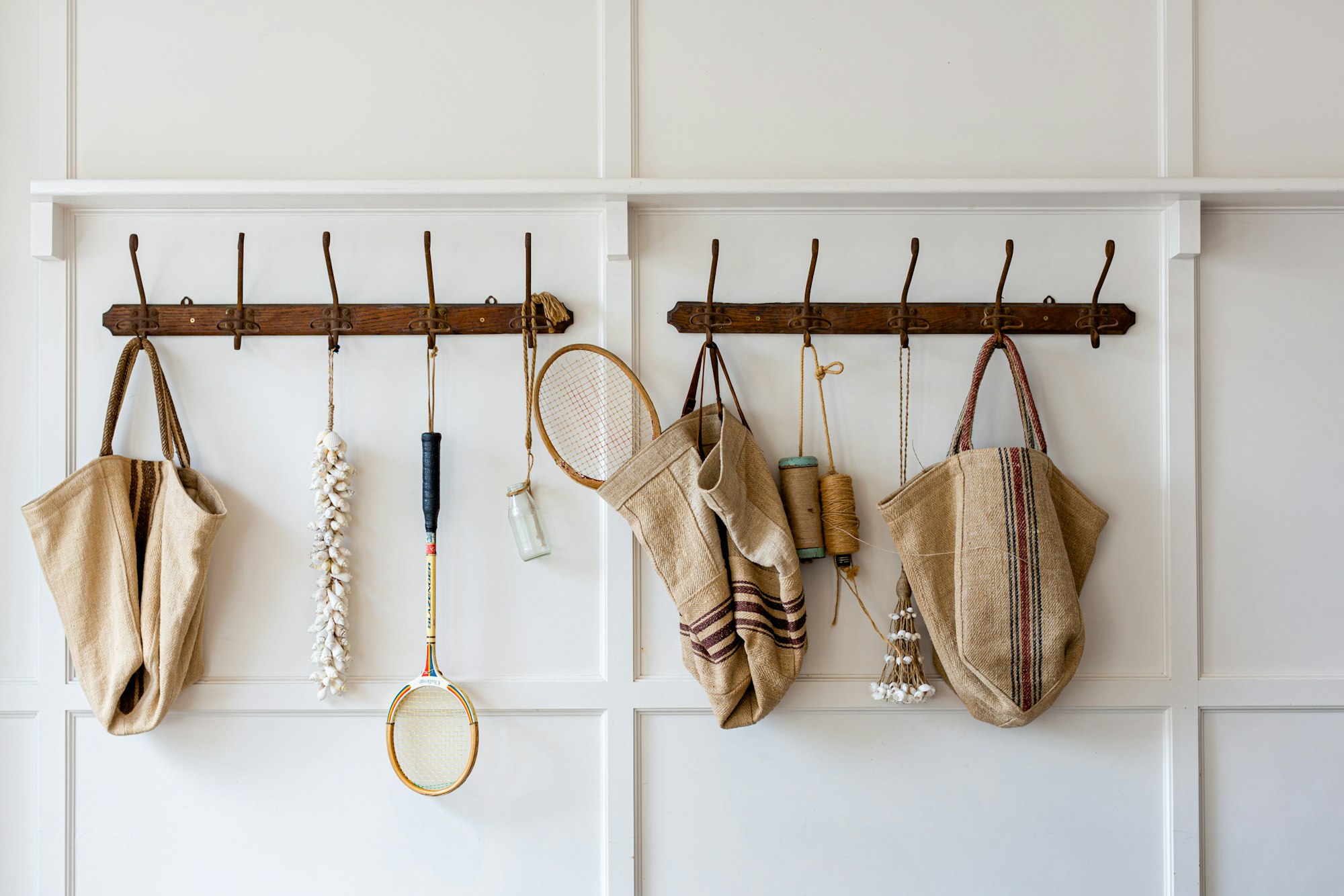
Photo: Luisa Brimble / Unsplash
Reusable shopping bags often move through several places in a home without having a clearly defined destination. They arrive with groceries, wait to be emptied, collect near a door and eventually need to return to the next trip. A kitchen plan that considers only food storage can miss this small but repeated routine. Giving the bags an intentional place can reduce clutter without requiring an elaborate new feature.
Begin by following the actual sequence. Where are groceries set down? Where are bags emptied? Which bags are kept, and when do they leave the house again? The useful storage location depends on those answers. A neatly designed compartment may be inconvenient if it sits far from the point where the household naturally handles the bags.
Separate the items by use
Not every bag has the same shape or purpose. Some fold compactly, while others hold their form or have product-specific care instructions. Sort the household’s actual collection and decide which items are used regularly. Do not design permanent storage around a large assortment that nobody intends to maintain. The first improvement may be a clearer selection of what belongs in the routine.
Keep any relevant cleaning or drying requirements in the discussion, using the product’s guidance rather than making assumptions. The storage plan should reflect how the items are actually put away after use. A compartment that looks organized only when every bag is folded identically may be unrealistic for a busy household. Choose an arrangement that supports a repeatable habit.
Locate storage along the route
Consider the movement from entry to unpacking area and from storage back to departure. A location that works for one part of the routine may make another part awkward. Discuss the tradeoff before choosing a cabinet accessory or custom detail. Sometimes a simple existing space can answer the need better than adding a specialized feature to the remodel.
Check whether the proposed location competes with other frequently used items. Bags should not require moving a collection of cookware every time they are retrieved, and their storage should not block an ordinary door or drawer. These are practical questions for the design review. Bring the actual folded or stored items to the conversation when that will help explain their shape.
Make the handoff visible to the household
Agree on what happens after groceries are unpacked. A storage arrangement works better when everyone knows where the bags belong and who returns them to the departure routine. Avoid designing around an assumption that one person will always complete the final step. A simple label or clear compartment can be useful when several household members use the kitchen differently.
Try the arrangement temporarily before committing to a custom installation, using a safe setup that does not interfere with the room. Observe whether bags return to the intended place over an ordinary period of use. If they do not, ask which part of the route is inconvenient rather than immediately blaming the household’s habits. Small storage decisions are valuable when they follow everyday movement and make the next use easier, allowing a modest item to stop becoming a recurring pile.
Putting It Into Practice: A One-Week Bag Observation
Before we add a bag drawer or cabinet insert to a kitchen plan, it helps to know what actually happens to the bags today. A single week of casual observation usually tells the household more than any storage catalog.
- Count the collection. Lay out every reusable bag in the house. Note how many are used regularly and how many simply accumulate.
- Watch the arrival. After each shopping trip, notice where the full bags are set down first and how far that spot is from where food gets put away.
- Watch the emptying. Where does each bag go once it is empty? Is it folded, hung, tossed on a chair or left by the door?
- Watch the departure. Before the next trip, where do people look for bags? Do they find them, or do bags get left behind and forgotten in the car?
- Write down the friction. Note the moment each week when bags pile up or go missing. That moment is what the storage plan should solve.
Storage Approaches to Discuss
There is no single right answer. The best option depends on the bags, the route and the space available, and the design team can explain how each idea fits your kitchen.
- A shallow drawer near the unpacking area. Works well for bags that fold flat and keeps them close to where they are emptied.
- Hooks or a rail inside a pantry or closet door. Suits bags with handles that hold their shape, as long as the door still closes properly and the hooks do not block other storage.
- A bin or basket near the exit route. Helps bags make it back to the car, though it may be farther from the unpacking area.
- A small section of an existing cabinet. Sometimes a modest divider in a cabinet already in the plan does the job without adding a specialized feature.
Common mistakes and how to avoid them
- Planning for the whole pile. Designing storage for every bag ever collected makes the solution larger than it needs to be. Decide on a working set first.
- Choosing a beautiful spot on the wrong route. A neat compartment at the far end of the kitchen may stay empty while bags gather by the door.
- Ignoring damp or dirty bags. Some bags need to dry or be cleaned before storage. Follow the product’s care guidance and give those bags an appropriate temporary spot.
- Expecting perfect folding. If the system only works when every bag is folded the same way, it may not survive a busy week.
Questions Readers Ask
Is this really worth discussing during a remodel?
It is a small item, but it repeats every time someone shops. A few minutes in the design review can prevent a long-term pile in a spot meant for something else.
What about insulated or specialty bags?
They often have different shapes and care needs from fold-flat bags. Treat them as their own category and check the product guidance for storage and cleaning.
Should the bags live in the car instead?
Some households prefer that. If so, the kitchen plan may only need a place for bags to wait between unpacking and returning to the car, which is a much smaller requirement.
How do we know if the new spot is working?
Repeat the observation for a week or two after the change. If bags still collect elsewhere, notice where, and adjust the location rather than the household’s routine.
Quick check
How much did you catch? Tap a question to see the answer.
1. Which sequence should be observed first?
Answer: Arrival, unpacking, storage and the bags’ return to the next trip.
2. Why use the household’s actual bags in planning?
Answer: Their shapes, frequency of use and care needs may differ.
3. What should be reconsidered if bags never return to the new storage spot?
Answer: Whether the location and routine are convenient for the people using them.


Leave a Reply