
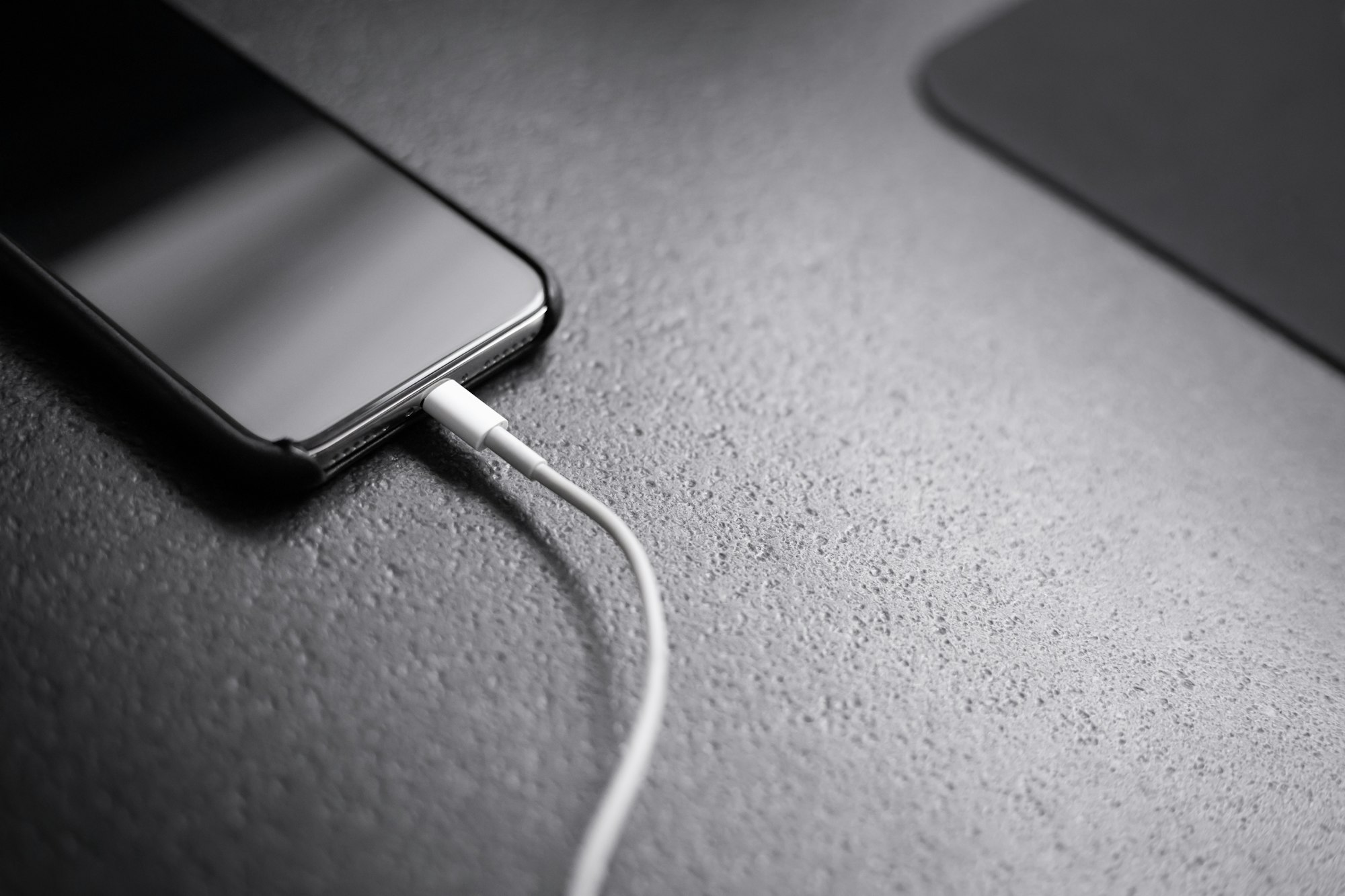
Photo: Andreas Haslinger / Unsplash
A collection of phones, tablets and other household devices can gradually create a tangle of cables on a convenient surface. A proposed charging station may seem like a simple way to hide the clutter. Before choosing a cabinet or decorative enclosure, however, the household needs to describe what will actually use the space. Different devices, accessories and instructions can make a generic compartment an incomplete answer.
Start with a device list and the ordinary charging routine. Identify which items are used daily, which move between rooms and which belong to different household members. The purpose is to understand storage and access, not to create an electrical design. Questions about permanent power arrangements should be discussed with the appropriate qualified professional using the actual products and home conditions.
Keep product information with the plan
Record the devices and charging equipment that the household intends to use. Keep relevant manufacturer instructions available, including any directions that affect placement or operation. Do not assume that a device can be enclosed simply because it physically fits inside a drawer. The design conversation should distinguish a place to store an unplugged item from a place intended for charging it.
Include the space needed to connect and disconnect the equipment comfortably. A tightly arranged surface can become awkward if every cable must be pulled out from behind another object. Describe the movement rather than prescribing a hidden technical solution. The project team can explain which parts of the proposed arrangement need a different approach or further professional review.
Decide who uses the station and when
A shared station may need recognizable places for different devices without becoming an elaborate labeling project. Discuss whether items will remain there while in use or only while being charged. Those behaviors can affect the desired location and the kind of surface or storage being considered. A household should not have to interrupt a normal activity merely to retrieve its own device from the back of the arrangement.
Consider what information might be visible on screens in a shared room. The placement of a device can affect ordinary household privacy, particularly near an entrance or gathering area. This is a layout conversation, not a reason to collect personal access information. Each person should remain responsible for their own device settings and private credentials.
Leave room for change
Devices and connectors may change over time. Ask which parts of the proposed storage can be adjusted and which would be difficult to modify after installation. A highly specific compartment may look tidy today but become less useful when the household replaces an item. Flexibility should be discussed alongside appearance, without assuming that every future product can be anticipated.
At the project handoff, confirm how the station is intended to be used and keep the relevant instructions with the home records. Do not treat the finished cabinet as approval to use any charging equipment in any arrangement. A useful station brings order to the household’s actual routine while respecting the devices’ requirements and the professional decisions needed for the permanent installation.
Putting It Into Practice: Build the Device List
When a household asks us about a charging station, the most useful first step is a simple device list. It takes a few minutes and makes the rest of the conversation far more concrete.
- Gather everything that charges. Phones, tablets, watches, earbuds, handheld games, cordless tools that live in the house, rechargeable lights and anything else the household plugs in regularly.
- Record each item. Note the device, who uses it and how often it is charged.
- Record the charging equipment. Note the charger and cable for each device, including any that are shared or that came with the product.
- Note the manufacturer’s directions. Look for guidance about where and how the device and its charger should be used, including any ventilation or placement directions.
- Mark the routines. Which items charge overnight, which charge briefly during the day and which move around the house?
Once the list is complete, it often becomes clear that some devices do not belong in the station at all, while others are the main reason for it.
Common Mistakes in Charging Station Plans
- Designing around appearance only. A closed drawer or cabinet may look tidy, but it is not automatically suitable for charging every device. Keep the product directions and professional advice at the center of the decision.
- Running extension cords into cabinetry. Improvised power arrangements inside built-ins are not a substitute for a proper assessment. Discuss permanent power needs with a qualified electrician.
- Making every slot the same size. Devices vary widely. A row of identical slots may fit phones but not a tablet with a case.
- Locating the station far from where devices are used. If the station is inconvenient, devices will end up charging on the kitchen counter anyway.
- Forgetting cable management. Cables need a way to reach devices without being pinched, kinked or pulled tight around corners.
A quick planning checklist
- Device list completed with users and routines
- Manufacturer instructions gathered
- Location chosen with privacy and traffic in mind
- Questions about permanent power noted for a qualified professional
- Room left for different devices in the future
Questions Readers Ask
Can we put the charging station inside a closed drawer?
That depends on the devices, the chargers and the manufacturer’s directions, as well as the arrangement itself. Ask the project team and the appropriate qualified professional to review your specific products before deciding.
Where is the best place for a family charging station?
Often near where people naturally set devices down, such as a kitchen edge or entry area, but the right place depends on your routines and your home. Consider foot traffic, privacy and whether screens will be visible to guests.
Should every person have their own spot?
It can help in busy households, but it is not required. A few clearly recognizable spaces may be enough, especially if devices are charged at different times.
What happens when we buy new devices?
That is why flexibility matters. Adjustable dividers, open shelf space and standard outlets in an appropriate location tend to adapt more easily than a compartment shaped around one specific product.
Do older chargers and cables belong in the new station?
Only the ones the household actually uses. Remove worn, damaged or unidentified cables from the collection rather than giving them a permanent home, and keep the charging equipment that matches each device’s instructions.
Quick check
How much did you catch? Tap a question to see the answer.
1. What should be listed before choosing the station?
Answer: The actual devices, charging equipment and household routine.
2. Is storage space automatically suitable for charging?
Answer: No. Product instructions and professional assessment may require a different arrangement.
3. Why discuss adjustability?
Answer: Devices and connectors can change, making a fixed compartment less useful.


Leave a Reply