
Photo: Francesca Tosolini / Unsplash
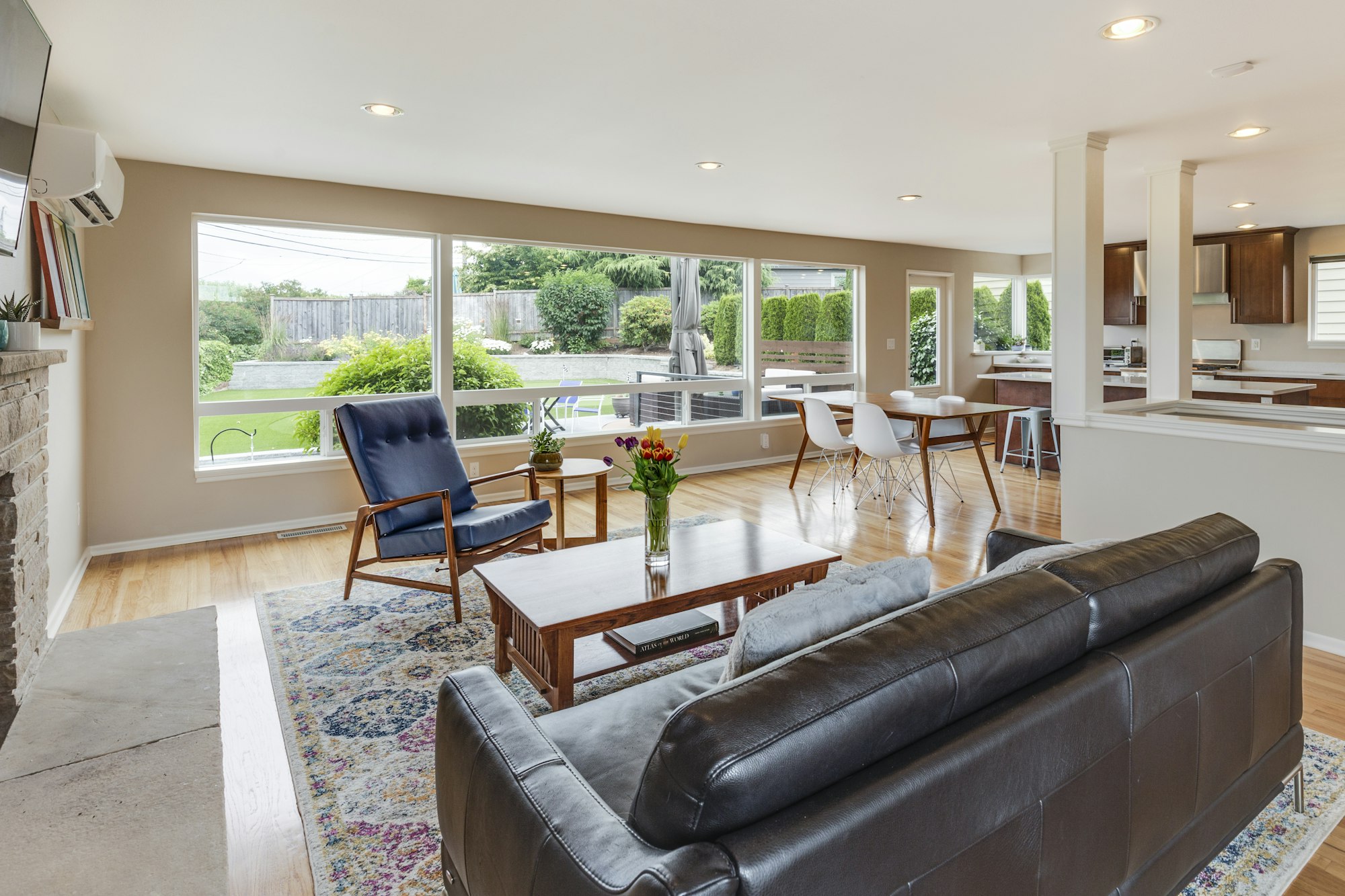
Many room decisions are reviewed while people stand near an entrance or look at a photograph taken from an elevated position. Daily life often happens elsewhere: seated at a table, working at a desk or relaxing in a chair. The view from those positions can change how lighting, storage and decorative features are experienced. A seated review adds useful context before the household approves the final arrangement.
The purpose is not to discover one ideal viewing height for everyone. People use rooms differently, and the furniture itself affects the experience. Begin with the actual or proposed seating that matters to the room’s routine. If a piece has not been selected, identify that uncertainty rather than treating a convenient temporary chair as a perfect representation of the finished setting.
Choose the positions that matter
List the main seated activities and where they occur. A dining position, a reading chair and a work surface may present different questions. Review each one separately rather than assuming that a single view represents the whole room. Notice what needs to be visible, what should remain easy to reach and which nearby elements may interrupt the intended use.
Describe observations in plain terms. A light source may be directly in view, a shelf may conceal something useful or a decorative object may dominate the sightline more than expected. Record the condition without immediately guessing the technical remedy. The designer or appropriate professional can evaluate possible changes within the larger plan.
Include ordinary objects in the review
A room behaves differently when a table is set, a laptop is open or a frequently used item is placed on a nearby surface. Represent the relevant activity safely with ordinary objects where possible. Avoid judging the arrangement only when every surface is empty. The goal is to understand the room as it will be used, not only as it might appear in a completion photograph.
Consider how the view changes when another person is present. A shared table or seating group may need to support conversation without placing an object directly between people. This does not mean every decorative feature must disappear. It means the household should understand the tradeoff and choose it deliberately rather than discovering the obstruction after installation.
Review changes with the whole plan
If a seated observation suggests moving a fixture, surface or built-in element, discuss it with the project team before making a decision. A change that improves one view may affect another activity or introduce a technical issue. Keep the original concern visible so the discussion remains focused on the experience that needs improvement rather than on a preferred solution alone.
Repeat the check after important layout decisions are settled and again during the appropriate walkthrough. Note any remaining questions using the project’s agreed process. A seated review is a small addition to planning, but it can make the conversation more representative of everyday use. The finished room should support the positions where people actually spend time, allowing its appearance and practical comfort to be judged from within the routine rather than only from the doorway.
Putting It Into Practice: A Seated Review in Six Steps
A seated review takes very little time and can be repeated at several points in the project. Here is a simple sequence households can follow, either during planning with representative furniture or during a walkthrough once the room is taking shape.
- Pick the seats. Choose the two or three positions where people spend the most time: a dining chair, a sofa corner, a desk chair or a reading spot.
- Use realistic seating. Bring in the actual chair if possible. If not, use something close in height and note that it is a stand-in.
- Sit for a few minutes. A quick glance from a chair can miss what becomes obvious after a short while. Let your eyes settle naturally.
- Look in each direction. Notice what is straight ahead, what sits at the edge of view and what draws attention when you turn to speak to someone.
- Try the main activity. Set a place at the table, open a book or a laptop, or reach for something you would normally use from that seat.
- Write short observations. “Pendant glare in eyes from the end chair” or “can’t see the TV past the shelf edge” gives the designer something specific to evaluate.
What Often Changes From a Seated View
Every room is different, but several issues appear frequently once people sit down. They are worth looking for specifically.
- Light fixtures. A fixture that looks well placed from standing height may sit directly in a seated person’s line of sight, or a bare bulb may become visible from below.
- Window glare. The angle of sunlight can make a screen hard to read or a seat uncomfortable at certain times of day. Review at more than one time if possible.
- Storage reach. A drawer or shelf meant to be used while seated may be too high, too low or blocked by the chair itself.
- Decorative focal points. Art, a mantel or a feature wall may feel too high, too low or partly hidden by furniture when viewed from a chair.
- Cords and hardware. Items that are hidden from above, such as cords behind a desk or the underside of a shelf, may be clearly visible from a seat.
Common mistakes and how to avoid them
- Reviewing from only one chair. The person at the end of the table may have a very different view. Rotate seats.
- Judging an empty room. Without the table set or the laptop open, sightlines can seem clearer than they will be.
- Treating a stand-in chair as exact. Seat height and posture vary between chairs. Record the difference so it can be considered.
Questions Readers Ask
When is the best time to do a seated review?
Ideally more than once: early in planning with representative furniture, after major layout decisions and again during the appropriate walkthrough.
What if household members have very different heights?
Have each person sit in the positions they actually use. The goal is to understand the tradeoffs, not to find one view that suits everyone perfectly.
Can a seated review change an approved plan?
It can raise a question, and the project team can explain whether and how the plan can be adjusted. Bring the observation through the agreed process rather than requesting a specific fix on the spot.
Is this only for living and dining rooms?
No. Home offices, kitchens with seating, bedrooms with reading chairs and even bathrooms with a vanity seat can all benefit from the same simple check.
Quick check
How much did you catch? Tap a question to see the answer.
1. Why review a room while seated?
Answer: The view and experience can differ from standing or from a presentation photograph.
2. What should accompany the review?
Answer: The relevant furniture and ordinary objects used during the activity.
3. Why discuss a proposed change with the project team?
Answer: Improving one view may affect another activity or a technical part of the plan.



Leave a Reply