
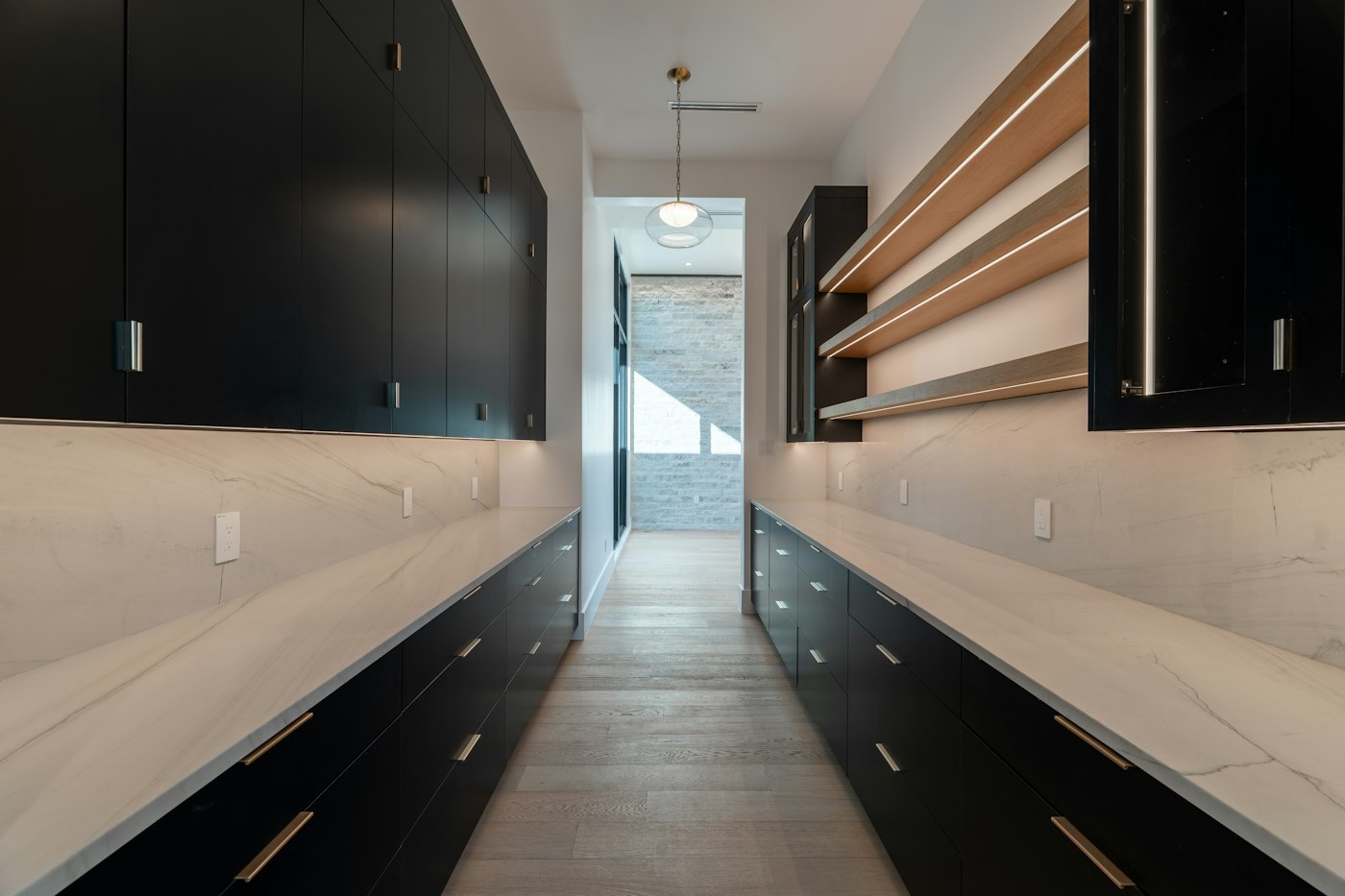
After a season of holiday baking and stocking up, many kitchens feel short on food storage. A well-designed pantry keeps ingredients visible, cuts down on duplicate purchases and frees up counters and upper cabinets. Pantries come in several forms, and the right one depends on your kitchen’s size and layout.
The Walk-In Pantry
A walk-in pantry is a small room or large closet, usually lined with shelves on two or three sides. It offers generous storage and can hold bulk items, small appliances and serving pieces. Some walk-in pantries include a counter for appliances like a stand mixer or toaster, sometimes with outlets, so those items can live out of sight but stay ready to use.
The trade-off is space. A walk-in needs room for the shelves plus a comfortable aisle, which can be hard to find in an existing house. When planning one, pay attention to shelf depth. Very deep shelves can bury items in the back, so shallower shelves at eye level are often more useful.
The Reach-In Pantry
A reach-in pantry is a closet that you access from the doorway rather than stepping inside. It takes less floor space than a walk-in and can be very efficient when organized well. Door-mounted racks add storage for spices and small items. Adjustable shelves let you adapt to cereal boxes, cans and jars. As with reach-in clothes closets, deep corners can be hard to use, so plan those spaces carefully.
The Cabinet Pantry
A cabinet pantry is a tall cabinet, or a bank of them, built into the kitchen run. It fits neatly into many remodels because it can sit alongside the refrigerator or at the end of a run of cabinets. Interior options make a big difference:
- Pull-out shelves or drawers inside the tall cabinet
- Full-height pull-out units that slide out entirely
- Door-mounted shelves for small items
- Adjustable fixed shelves for flexibility
Even a narrow pull-out between cabinets can provide useful storage for oils, spices and canned goods.
Details That Make Any Pantry Better
- Lighting: A pantry you cannot see into is a pantry you cannot use well.
- Adjustability: What you store will change over time; adjustable shelving keeps up.
- Visibility: Clear containers and labels help you see what you have.
- Ventilation and temperature: Keep pantries away from heat sources like ovens when possible.
- Durable surfaces: Shelves that wipe clean easily handle spills.
Finding Room for a Pantry
If your kitchen has no pantry, look for overlooked space. A shallow wall, an underused coat closet nearby, the end of a run of cabinets or even space beside the refrigerator might work. In some remodels, part of an adjacent room or hallway can be borrowed. A remodeling professional can help evaluate what is practical in your home. If you would like to explore adding or improving a pantry, reach out through our contact page.
How to Plan Your Pantry Shelving
A pantry works best when the shelves are designed around what you actually store. A few minutes of planning can double how useful the space feels.
- Empty and group. Pull everything out and group it: canned goods, baking supplies, snacks, grains and pasta, breakfast items, oils and vinegars, bulk backups, small appliances and paper goods.
- Measure the tallest items. Cereal boxes, bottles and small appliances determine your shelf spacing. Note their heights.
- Place by frequency. Put everyday items between waist and eye level. Heavy items, such as bulk bags or appliances, belong on lower shelves. Lightweight, rarely used items go up top.
- Vary shelf depth. Shallower shelves keep cans and jars one or two rows deep so nothing gets lost. Deeper shelves near the floor can hold bins, baskets and large items.
- Leave a landing zone. A clear shelf or counter at waist height gives you somewhere to set groceries or a recipe while you gather ingredients.
Organizing Ideas That Last
- Use bins as drawers. On deep shelves, bins or baskets you can pull forward work like drawers and keep small items together.
- Try tiered risers. Step shelves for cans and spices let you see labels at a glance.
- Create zones. A baking zone, a breakfast zone and a snack zone at kid height make it easier for everyone to find things and put them back.
- Store backups separately. Keep extra stock on a high or low shelf, and move items forward as you use them so older items get used first.
- Label everything. Labels on shelves or containers help the whole household keep the system going.
- Leave some empty space. A pantry packed to the edge is hard to maintain. A bit of open room makes restocking easier.
Pantry Mistakes We See
Shelves that are all the same depth
Uniform deep shelves create a back row where food expires unnoticed. Mixing depths, or adding pull-outs, keeps everything visible.
No outlets for appliance storage
If you plan to keep a toaster, mixer or coffee maker in a walk-in pantry, outlets and some ventilation make it far more practical. Plan electrical work with a licensed electrician during the remodel.
Placing the pantry too far from the work zone
A pantry across the room from the prep area means extra trips. Even a small pantry near the counter can be more useful than a large one at the far end of the house.
Choosing a door that blocks traffic
A swing-out pantry door can collide with a refrigerator or dishwasher door. Pocket doors, barn-style doors or bifolds may work better in tight spots.
Pantry Questions Homeowners Ask
Is a walk-in always better than a cabinet pantry? Not necessarily. A well-organized cabinet pantry with pull-outs can be easier to use day to day than a deep walk-in that becomes cluttered.
What shelf material is best? Painted wood, laminate and coated wire all work. Solid shelves keep small items from tipping, while wire allows airflow and light. Choose surfaces that wipe clean easily.
Can a pantry go in a corner? Corner pantries can provide generous storage, but they need careful shelf planning so the back corners remain reachable. L-shaped or rotating shelves can help.
How often should I reorganize? A quick check each season, especially after holiday cooking, keeps things in order and lets you clear out expired items. It is also a good moment to adjust shelf heights if what you buy has changed over the past few months.


