
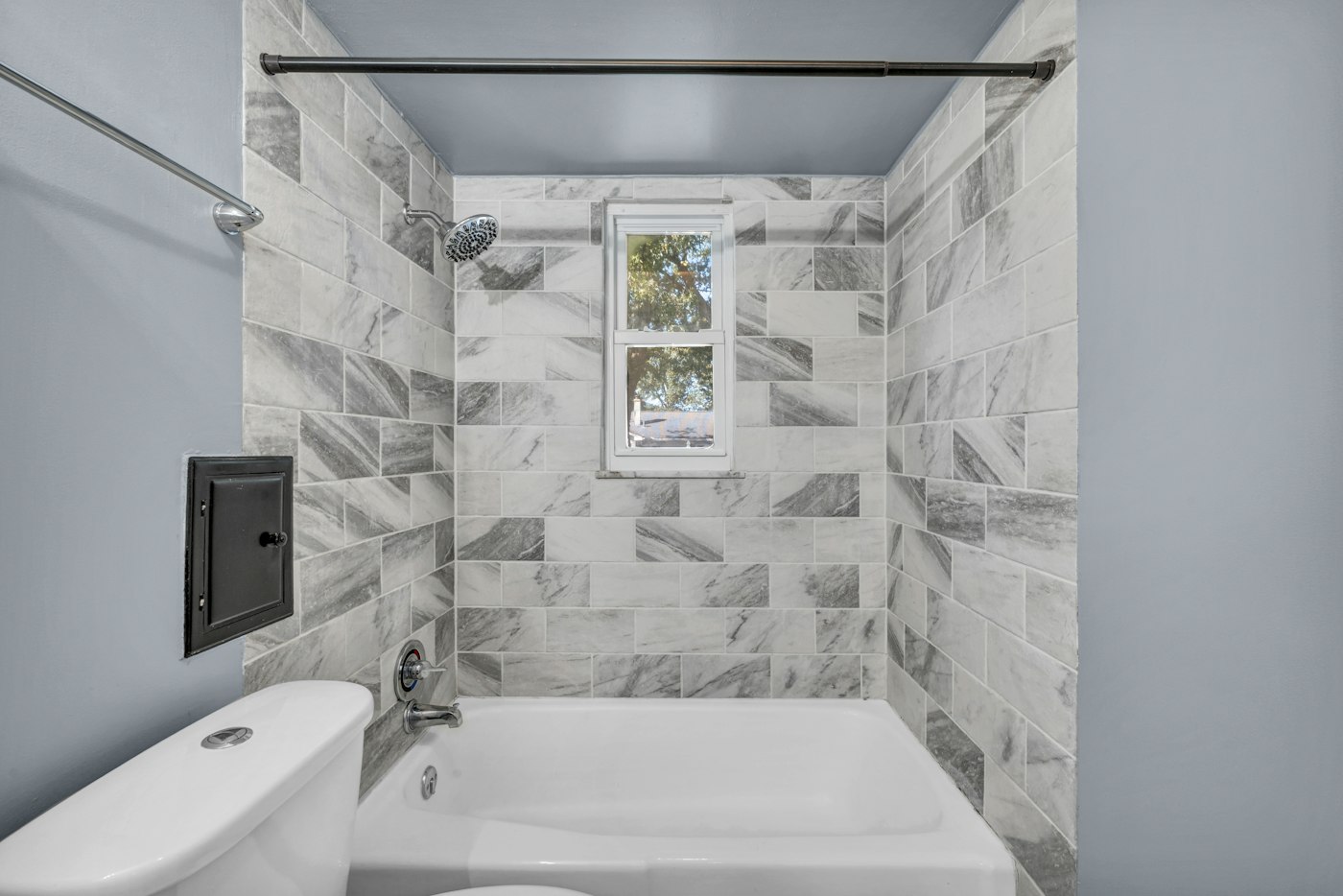
In winter, bathroom mirrors fog faster, windows drip and walls sometimes feel damp after a hot shower. That is because warm, moist air condenses quickly on cold surfaces. A bathroom exhaust fan is the main tool for moving that moisture out of the house, and in the cold months it works harder than at any other time of year.
What an Exhaust Fan Does
An exhaust fan pulls humid air out of the bathroom and sends it through a duct to the outside. That helps protect paint, drywall, trim, cabinets and grout from moisture damage, and it reduces conditions where mold and mildew thrive. It also removes odors. A fan only does its job if it is properly sized, properly ducted and actually used long enough.
Signs Your Fan Is Not Keeping Up
- The mirror stays fogged long after a shower.
- Paint is peeling or bubbling on the ceiling or walls.
- Mildew appears regularly on caulk, grout or the ceiling.
- The fan is loud but seems to move little air.
- A tissue held near the grille is not pulled toward it when the fan runs.
Any of these suggests the fan may be undersized, clogged, poorly ducted or simply not running long enough.
Where the Air Goes Matters
A bathroom fan should vent to the outdoors, typically through a roof or wall cap. Some older installations vent into an attic or a wall cavity, which can move the moisture problem into hidden spaces. In winter, warm moist air dumped into a cold attic can condense on framing and insulation. If you are not sure where your fan exhausts, it is worth having it checked. Ducts that are long, crushed or full of bends also reduce airflow, and in cold climates, insulated ducting can help limit condensation inside the duct itself.
Choosing a Better Fan
Fans are rated by how much air they move, usually listed in cubic feet per minute, and by sound level, often listed in sones. A quieter fan tends to get used more, which matters. When sizing a fan, the room’s size and layout come into play, and local codes may have specific ventilation requirements, so it is wise to talk with a professional. Useful features include:
- Timer switches that keep the fan running for a set period after a shower
- Humidity-sensing fans that turn on and off automatically
- Integrated lights for small bathrooms with limited ceiling space
- Backdraft dampers that help keep cold outside air from flowing back in
Good Habits That Help
Run the fan during every shower or bath and leave it on for a while afterward. Keep the grille clean, since dust buildup reduces airflow. Squeegee shower walls and hang towels where they can dry. If you are remodeling a bathroom, upgrading ventilation is one of the most valuable behind-the-scenes improvements you can make. For help planning a bathroom project with ventilation in mind, reach out through our contact page.
Testing and Maintaining the Fan You Already Have
Before deciding whether to replace a fan, it helps to find out how well the current one is working. A few simple checks can tell you a lot.
- Run the tissue or paper test. Hold a single sheet of toilet paper near the grille with the fan on. A strong fan will pull it toward the grille and hold it there.
- Clean the grille and housing. With power off at the switch or breaker, remove the grille and gently vacuum dust from the grille, housing and fan blades. Wash the grille if the manufacturer allows it.
- Check the exterior vent. Find the vent cap on the roof or wall. With the fan running, you should be able to feel air coming out, and the damper flap should open freely.
- Look in the attic, if it is safe to do so. Make sure the duct is connected at both ends, not crushed or kinked, and that it does not end loose in the insulation.
- Listen for changes. A fan that has grown louder, rattles or hums without spinning may have a worn motor or a loose part.
If anything looks wrong, or you are not comfortable working near wiring or in an attic, have a professional take a look.
When Replacement Makes Sense
- The fan is undersized for the room, especially after a remodel that added a larger shower or tub.
- It is so noisy that household members avoid using it.
- The duct vents into the attic or a wall cavity and needs to be rerouted outside.
- The motor is failing or the housing is damaged.
- You want features like humidity sensing, a timer or a quieter motor.
During a remodel, with the ceiling or attic accessible, replacing the fan and improving the duct run is far easier than doing it later as a stand-alone project.
Common Ventilation Mistakes
Turning the fan off too soon
Moisture lingers in the air and on surfaces after a shower. Leaving the fan running for a while afterward clears it. A timer switch makes this automatic.
Relying on a window in winter
Opening a window may help in mild weather, but in cold months it chills the room, and many people simply keep it closed. A properly working fan is more reliable year-round.
Blocking makeup air
A fan can only pull out as much air as can flow into the room. A small gap under the bathroom door helps air enter. A door sealed tight to the floor can reduce the fan’s effectiveness.
Ignoring the duct
Even a powerful fan underperforms through a long, crushed or uninsulated duct. The duct deserves as much attention as the fan itself.
Quick Answers About Bathroom Fans
How long should the fan run after a shower? Long enough that the mirror clears and the room no longer feels damp. Timer and humidity-sensing controls take the guesswork out of it.
Why is there frost or water dripping from my fan in winter? This often means warm, moist air is condensing in a cold, poorly insulated duct, or that the duct slopes back toward the fan. Insulating and correctly sloping the duct usually help, so have it inspected.
Can a fan over a shower be on the same switch as the light? It can be wired several ways. Fans located over showers or tubs often need to meet specific code requirements, so ask a licensed electrician about the right fixture and wiring.
Does a half bath need a fan? Even without a shower, a fan helps with odors and some moisture, and local code may require ventilation.


