
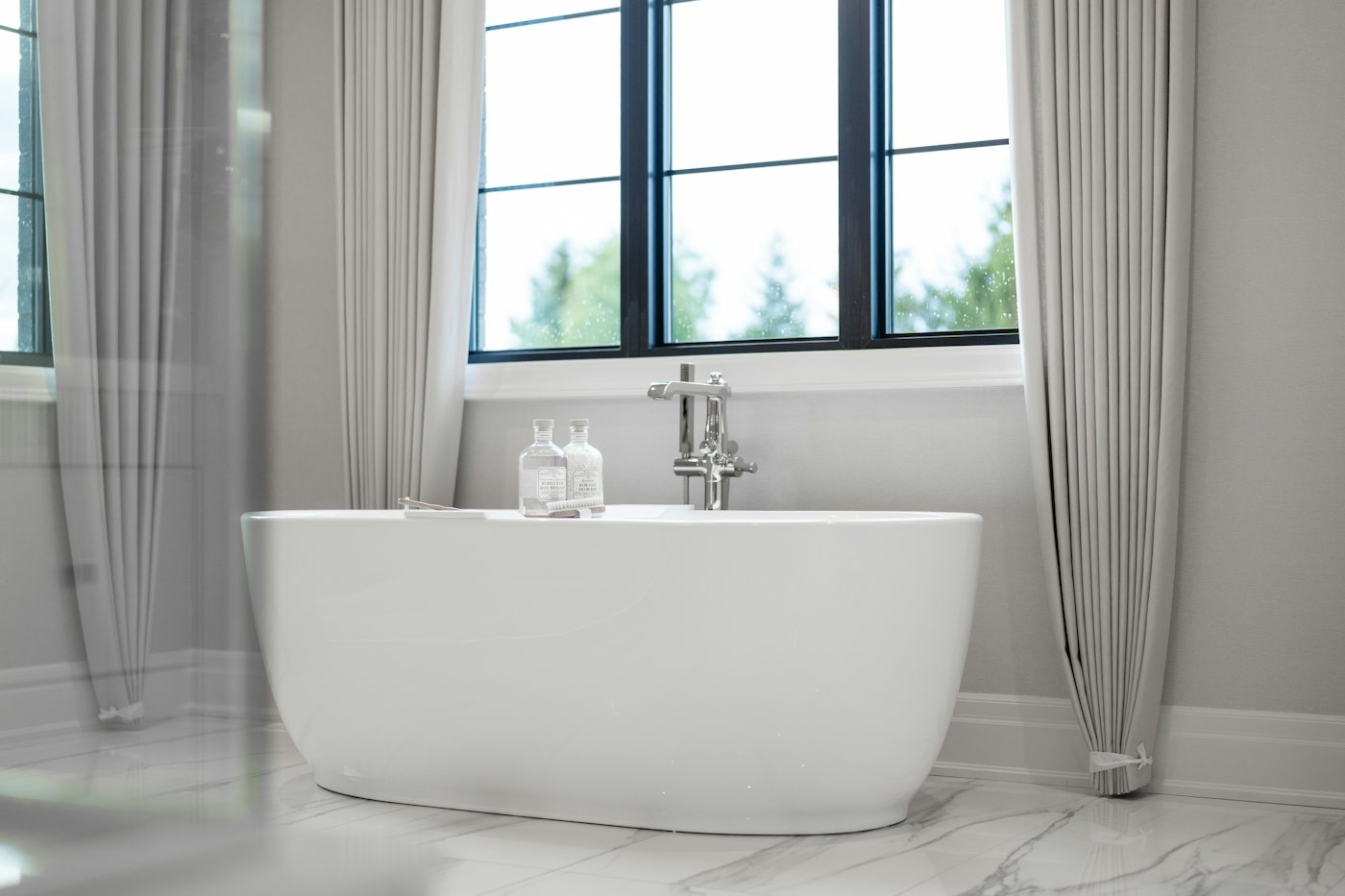
Few fixtures make a statement like a freestanding bathtub. Set apart from the walls, it becomes a sculptural centerpiece and an invitation to slow down, which may be why so many people dream of one during the long evenings of late winter. Before choosing one, it helps to understand the practical side of these beautiful tubs.
Materials and How They Feel
- Acrylic: Lightweight, widely available and warm to the touch. Acrylic tubs come in many shapes and are usually easier to move into a second-floor bathroom.
- Cast iron: Coated in enamel, very durable and known for holding heat well. Cast iron tubs are extremely heavy, which can require structural review of the floor.
- Stone resin and solid surface: Made from crushed stone and resin, with a smooth, matte look. They tend to be heavier than acrylic and feel substantial.
- Natural stone, copper and wood: Specialty options with distinctive character and specific care requirements.
Weight matters, especially when the tub is full of water and a person. Ask whether your floor framing needs to be evaluated for a heavier tub, and plan how it will get through doors and up stairs.
Shapes and Sizes
Freestanding tubs come in several classic shapes. Clawfoot tubs evoke vintage charm. Slipper tubs have one raised end for reclining. Double-slipper tubs raise both ends so two people can lean back, or so one person can choose either end. Modern pedestal and oval tubs have smooth, continuous sides. Pay attention to interior length and depth, not just exterior dimensions, and if possible sit in a tub at a showroom to see how it fits your body.
Faucets and Plumbing
Because a freestanding tub sits away from the wall, the faucet needs special planning. There are three common approaches:
- Floor-mounted tub fillers rise from the floor beside the tub, requiring plumbing beneath the floor.
- Wall-mounted faucets work when the tub sits near a wall, with plumbing inside the wall.
- Deck-mounted faucets attach to a tub that has a rim or ledge designed for them.
The drain location must also be planned precisely, since it is set before the tub is placed. This is an area where accurate measurements and a clear plan before work begins really pay off.
Space and Placement
A freestanding tub needs breathing room to look and work its best. Leave enough space around it to clean easily and walk comfortably. Placing a tub under a window or on a feature wall makes it a focal point, though you will want to think about privacy, drafts and window treatments. A nearby surface, such as a small stool or wall niche, gives you somewhere to set a towel, book or cup of tea.
Is a Freestanding Tub Right for You?
Freestanding tubs are ideal for people who truly enjoy baths. They are typically not paired with a shower, so they work best in bathrooms with a separate shower or in homes with another bathroom that has one. They also tend to be taller-sided than alcove tubs, which can make getting in and out harder for some people. If you are thinking about a freestanding tub as part of a bathroom remodel, reach out through our contact page.
Planning a Freestanding Tub Installation, Step by Step
A freestanding tub looks effortless, but the work behind it requires careful coordination. Here is how the planning typically comes together.
- Choose the tub first. Because every model has a different drain position, size and weight, the specific tub should be selected before plumbing or flooring work begins.
- Confirm structural support. For heavier materials, or for any tub on an upper floor, have the floor framing evaluated so it can carry the filled weight.
- Plan the path in. Measure doorways, hallways and stair turns to confirm the tub can be delivered and carried into the bathroom.
- Select the faucet type. Decide on floor-mounted, wall-mounted or deck-mounted fillers, since each needs different plumbing.
- Set the drain and supply locations. Mark exact positions on the floor, using the manufacturer’s specifications and the tub’s planned placement in the room.
- Coordinate with the flooring. Tile and waterproofing around the tub area are installed with the drain and supply lines in place.
- Set and level the tub. The tub is placed, leveled and connected, and any seams around the base are sealed as the manufacturer directs.
Bathing Comfort Details to Consider
- Backrest angle. Slipper and double-slipper shapes offer a more reclined position. If possible, sit in the tub to find the angle you like.
- Overflow height. The overflow drain sets the maximum water depth. A higher overflow allows a deeper soak.
- Interior width. Some tubs taper at the foot. Taller bathers may need a longer interior length to stretch out.
- Water heater capacity. Large, deep tubs can hold a lot of water. Make sure your water heater can fill the tub with comfortably hot water.
- Getting in and out. A nearby grab bar, a slip-resistant mat and a stable surface to hold can make exiting a tall-sided tub safer.
Freestanding Tub Mistakes to Avoid
Pushing the tub too close to the wall
A tub that nearly touches the wall leaves a gap that is impossible to clean and loses the open, sculptural effect. Leave enough space to reach behind it with a cloth.
Forgetting where the towel goes
Plan a towel bar, hook or warmer within reach of the tub so you are not dripping across the floor.
Ignoring the floor finish
Water will splash. Choose tile or another water-resistant floor around the tub, and keep it slip resistant.
Overlooking the faucet height
Floor-mounted fillers must reach over the rim of the tub. Compare the filler’s spout height with the tub’s rim height before ordering.
Freestanding Tub Questions We Hear
Can a freestanding tub go in a small bathroom? Compact freestanding models exist, but they still need room around them to look and work well. In tight spaces, an alcove tub may be more practical.
Can I add a shower over a freestanding tub? It is possible with a ceiling-mounted ring and curtain, though it is less common and can splash more. Many homeowners prefer a separate shower.
How do I keep the tub clean? Rinse after each use and follow the manufacturer’s care instructions for its material. Avoid abrasive cleaners on acrylic and enamel surfaces.
Do freestanding tubs stay warm? Heat retention depends on material and thickness. Cast iron and stone resin tend to hold warmth longer, while acrylic warms up quickly to the touch. Some models have insulated walls that help keep the water warm through a long soak.


