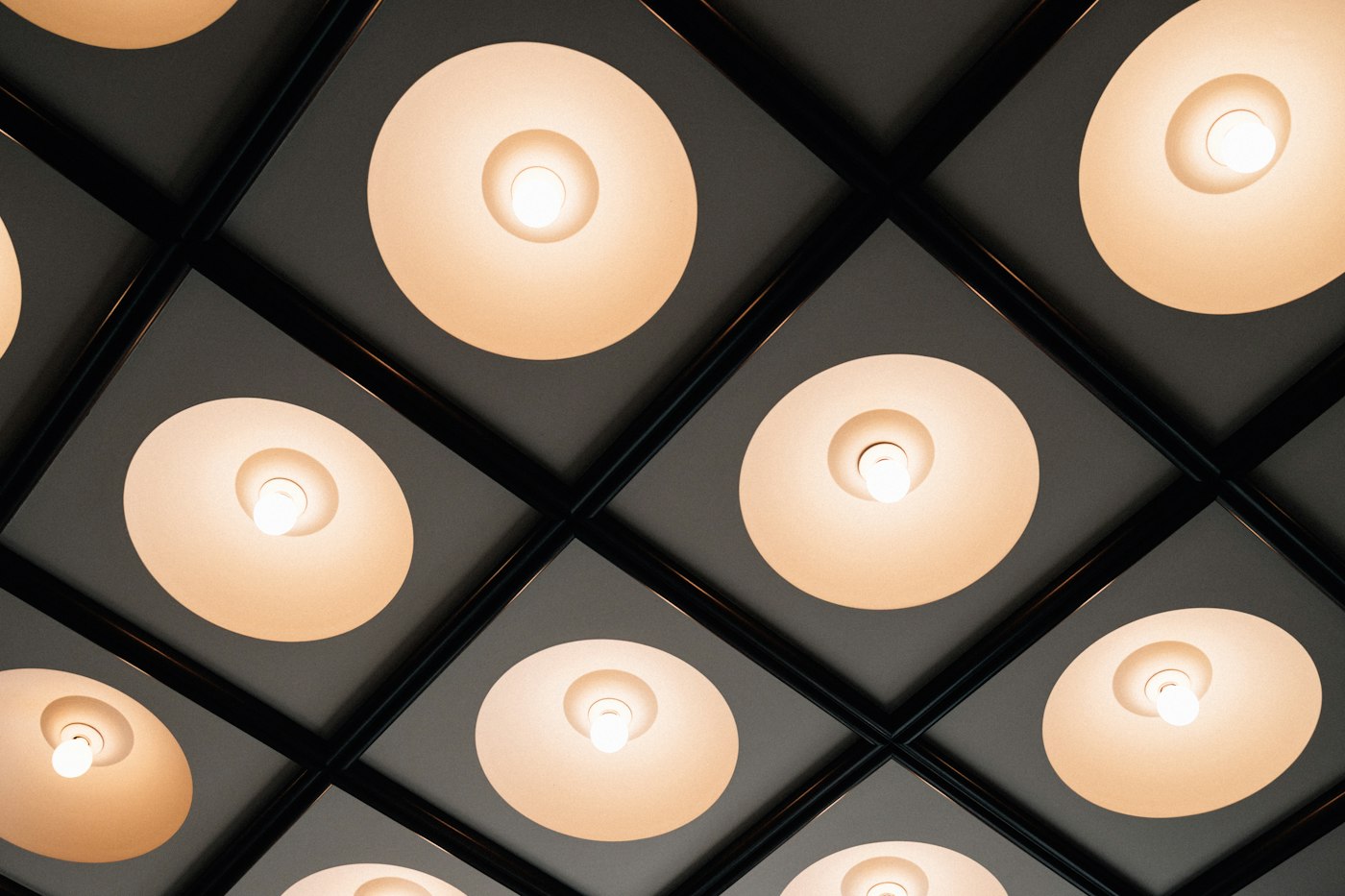
Recessed lights, often called can lights or downlights, sit flush with the ceiling and provide light without visible fixtures hanging down. They are popular in kitchens, living rooms, hallways and basements because they look clean and work with almost any style. But placement makes all the difference. Well-planned recessed lighting brightens a room evenly. Poorly planned lighting can leave dark corners, create glare and make a ceiling look like a grid of holes.
Start With the Purpose of the Light
Before placing a single light, think about what each area of the room needs. Recessed lights can provide general ambient light, focused task light over counters or desks, or accent light to highlight artwork, fireplaces or architectural features. Different purposes call for different placement and sometimes different trims and beam spreads.
Placement Guidelines
Exact spacing depends on ceiling height, fixture output and beam angle, so lighting designers and manufacturers often provide guidance specific to their products. Some general principles help:
- Avoid placing lights directly behind where you stand. In kitchens, lights centered over the walkway cast your shadow onto the counter. Positioning them closer to the counter edge helps.
- Do not hug the walls too closely or space them too far away. Lights very close to a wall can create harsh scallops; lights too far away leave walls dim.
- Use walls to make rooms feel bigger. Washing walls with light can make a room feel more open.
- Align fixtures with each other and with architectural features. Neat rows look more intentional than scattered lights.
- Consider obstacles above. Joists, ductwork and plumbing can affect where lights can go.
Common Mistakes to Avoid
- Relying only on recessed lights for all lighting needs, which can make a room feel flat
- Installing too many lights, creating a busy ceiling
- Choosing a color temperature that clashes with other fixtures
- Skipping dimmers, which give recessed lights flexibility
- Using fixtures not rated for the location, such as non-wet-rated fixtures in showers or fixtures not rated for contact with insulation where they will touch it
Modern Options
Many recessed fixtures today are integrated LED units, which are often slim enough to fit where traditional cans could not. Some offer selectable color temperature. Gimbal or adjustable trims let you aim light at artwork or a feature wall. Wafer-style lights mount in a thin profile, which can help in ceilings with limited depth. Each option has its own installation requirements, so check manufacturer guidance and local code, and use a licensed electrician for installation.
Layer Recessed Lighting With Other Sources
Recessed lighting works best as one layer in a broader plan. Pair it with pendants, under-cabinet lights, sconces or lamps to create a room that feels warm and welcoming. Layering lets you set the mood for different times of day and different activities. If you are planning lighting as part of a remodel, reach out through our contact page.
Planning a Layout, Room by Room
Every room asks something different of its recessed lights. Here is how we think through the most common spaces.
Kitchens
Start with the work surfaces. Lights over countertops are generally positioned so the beam lands on the front portion of the counter rather than behind you. Add separate lighting over an island, sink or range if those areas need more focus, and let under-cabinet lights handle the shadows cast by upper cabinets. Ambient fixtures in the center of the room can then fill in the walkways.
Living Rooms
Living rooms benefit from flexibility. A few recessed lights on a dimmer, combined with wall washing on a feature wall and adjustable fixtures aimed at art or shelves, create a comfortable baseline. Table and floor lamps then supply the warm, low-level light that makes the room inviting in the evening.
Hallways
Hallways usually need fewer lights than people expect. A single centered row, spaced so pools of light overlap slightly on the floor, keeps the path evenly lit without a runway effect.
Bathrooms
Recessed lights work well for general illumination and in showers when the fixture is rated for wet locations. For grooming, though, light from the front at face level, such as sconces beside a mirror, is far more flattering than light from directly overhead.
Basements
Basements often have lower ceilings and few windows, so even, glare-free light matters. Thin-profile fixtures can help where ductwork or joists limit depth, and lighting the walls can make a lower-level room feel less enclosed.
Our Step-by-Step Planning Process
- Sketch the room with furniture, cabinets and any art or features you want to highlight.
- Mark the tasks. Note where people cook, read, work or groom.
- Place task lights first, then accent lights, then fill in ambient light where needed.
- Check the ceiling. Confirm joist direction and any obstructions before finalizing positions.
- Group lights into zones on separate switches or dimmers so each area can be controlled independently.
- Choose color temperature and trims consistently, so fixtures in the same space look like a set.
Understanding the Specifications
Product sheets for recessed lights can be confusing. A few terms come up again and again.
- Lumens measure how much light a fixture produces. Higher numbers mean more light.
- Color temperature, measured in kelvins, describes how warm or cool the light appears. Lower numbers look warmer and more golden; higher numbers look cooler and bluer.
- Color rendering index (CRI) indicates how accurately colors appear under the light. Higher values make food, skin tones and finishes look more natural.
- Beam angle describes how widely the light spreads. Narrow beams focus light; wide beams spread it.
- IC rating indicates whether a fixture is rated for direct contact with insulation.
- Wet or damp rating indicates whether a fixture can be used in showers or other moist locations.
Recessed Lighting Questions We Hear
Can recessed lights be added to an existing ceiling?
Often, yes. Remodel housings and thin-profile LED fixtures are designed to be installed from below through a cut opening. The ceiling structure, insulation and access to wiring determine what is practical.
Should every light in the room be on one switch?
Usually not. Separating lights into zones gives you the flexibility to light only what you need and to set different moods.
Will recessed lights make my ceiling look busy?
They can if too many are used or they are placed without a plan. Aligning fixtures, using only as many as the room needs and choosing trims that match the ceiling color all help keep the ceiling calm.