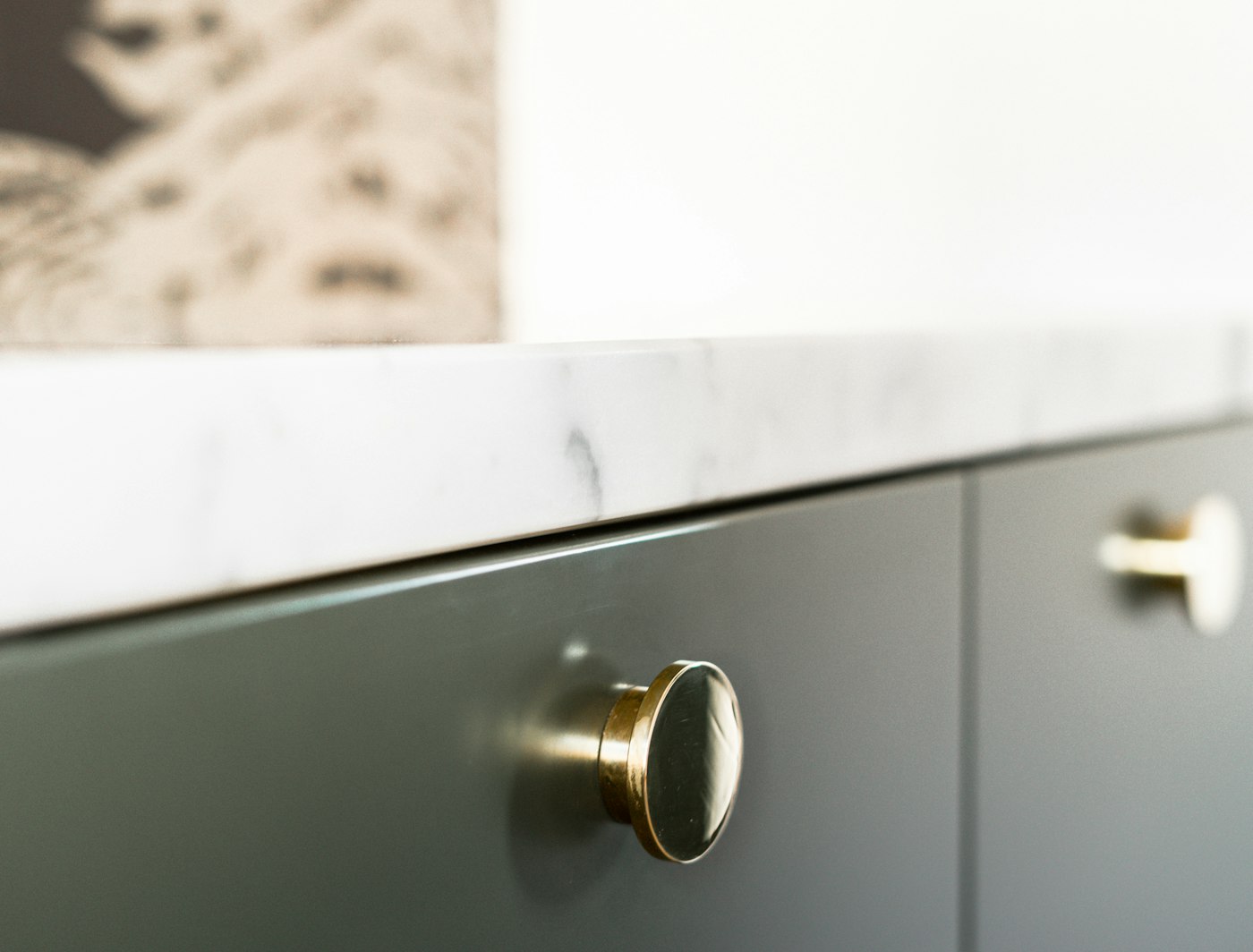
Swap the hardware on a set of cabinets and the kitchen changes character. Slim bar pulls read modern; cup pulls and round knobs feel traditional; oversized handles can make simple slab doors look custom. Because hardware is relatively easy to change, it is also one of the first places to look for a quick refresh. But it rewards some thought, since it affects comfort and daily use as much as looks.
Knobs, Pulls and When to Use Each
Knobs are small, inexpensive and easy to install with a single hole. They suit doors well, especially in traditional kitchens, and they work on small drawers. Pulls, with two mounting points, give fingers more to grab and are better on wide or heavy drawers, where a single knob can make the drawer pull crookedly. Many kitchens use knobs on doors and pulls on drawers, which is a classic combination that also gives visual rhythm.
Other options include cup pulls, which are scooped and typically go on drawers; edge pulls, which mount along the top edge of a door or drawer for a nearly invisible look; and integrated or finger-pull designs built into the cabinet itself for a handle-free front.
Getting the Size Right
Hardware that is too small looks lost on large drawers; hardware that is too large overwhelms small doors. A common approach is to scale pulls to the drawer width, using longer pulls on wider drawers, and to keep knobs consistent in size throughout. Some kitchens use a single long pull on every drawer and door for a very uniform look, which works well with slab doors. Bring a sample home before committing, hold it against the door, and open a drawer with it. Your hand will tell you whether it is comfortable.
Finish Choices
Hardware finish does not have to match the faucet or light fixtures exactly, but it should relate to them. Common finishes include polished and brushed nickel, chrome, matte black, oil-rubbed bronze, and brass in both bright and softer antique tones. Warmer finishes flatter wood and warm whites; cooler finishes suit gray and crisp white schemes. Because hardware is touched constantly, consider how a finish wears. Some living finishes, such as unlacquered brass, are designed to darken and patina with use; others are coated to stay the same.
Placement Matters More Than You Think
Where hardware sits affects both looks and comfort. Convention places knobs and pulls on the stile opposite the hinge, near the corner, on doors. On drawers, hardware is usually centered horizontally. Tall pantry doors often take a longer pull mounted near the middle of the door height so it is reachable. Keep placement consistent across the kitchen; small variations are surprisingly noticeable.
- Use a jig or template so holes are identical on every door.
- Check that pulls on adjacent doors do not collide when both are open.
- Make sure hardware near the range will not sit in the path of hot pans.
If you are refreshing existing cabinets, measure the hole spacing on your current pulls, since matching it avoids filling and refinishing. If you are starting fresh, choose hardware before the doors are drilled. Either way, the small pieces you touch every day are worth choosing with care.
A Step-by-Step Hardware Selection Process
Choosing hardware is easier when you narrow the field in stages rather than browsing endless options.
- Count every door and drawer. Note which need knobs, which need pulls and the width of each drawer. This also tells you how many pieces to order, plus a few spares.
- Identify the style of your cabinets. Shaker, slab, raised panel and inset doors each pair naturally with different hardware shapes.
- Choose a finish that relates to your faucet, lighting and appliances.
- Order samples. Pick a few candidates and test them on your actual doors and drawers.
- Check the measurements. Confirm hole spacing, projection from the door and overall length.
- Make a placement plan. Decide exactly where each piece will go before drilling begins.
Matching Hardware to Door Styles
Shaker Doors
Shaker doors are among the most versatile. Simple bar pulls, round knobs, cup pulls on drawers and even latches can all work, depending on whether you want a modern or traditional effect.
Slab Doors
Flat slab doors look sleek with long bar pulls, edge pulls or finger pulls. Oversized hardware can add a custom, architectural look on otherwise plain fronts.
Raised Panel Doors
These traditional doors often suit decorative knobs, bail pulls and cup pulls in warm or antique finishes.
Inset Cabinets
Inset cabinetry, where doors sit flush within the frame, is often paired with latches, cup pulls and smaller knobs that reflect its furniture-like character.
Ergonomics and Everyday Use
Hardware is something you will touch countless times, so comfort matters as much as looks.
- Projection: Pulls should stand far enough from the door for fingers to fit comfortably, but not so far that they snag clothing.
- Edge shape: Sharp-edged pulls look crisp but may be less comfortable on frequently used drawers.
- Grip: Pulls are generally easier than knobs for anyone with limited hand strength, and longer pulls let you open heavy drawers with less effort.
- Weight: Solid hardware feels substantial and is less likely to bend or loosen.
Common Hardware Mistakes
- Ordering before measuring hole spacing on existing cabinets, which can leave old holes exposed.
- Using one tiny knob on a wide drawer, which can make it hard to open evenly.
- Forgetting appliance panels. Panel-ready refrigerators and dishwashers may need special appliance pulls rated for heavier doors.
- Mixing too many styles. More than two hardware shapes in one kitchen can feel busy.
- Drilling without a template. Even slight differences in placement are noticeable when doors line up side by side.
Hardware Questions We Hear
Can I mix knobs and pulls in the same finish?
Yes. Using knobs on doors and pulls on drawers in the same finish is a classic approach that keeps the kitchen cohesive while adding variety.
Should island hardware match the perimeter?
It can, but an island is also an opportunity for contrast, especially if the island is a different color or wood. Using the same shape in a different finish, or the same finish in a larger size, keeps a connection.
What if my new pulls do not fit the existing holes?
Old holes can be filled and touched up, or backplates can sometimes cover them. On painted cabinets, filling and refinishing usually gives the cleanest result.