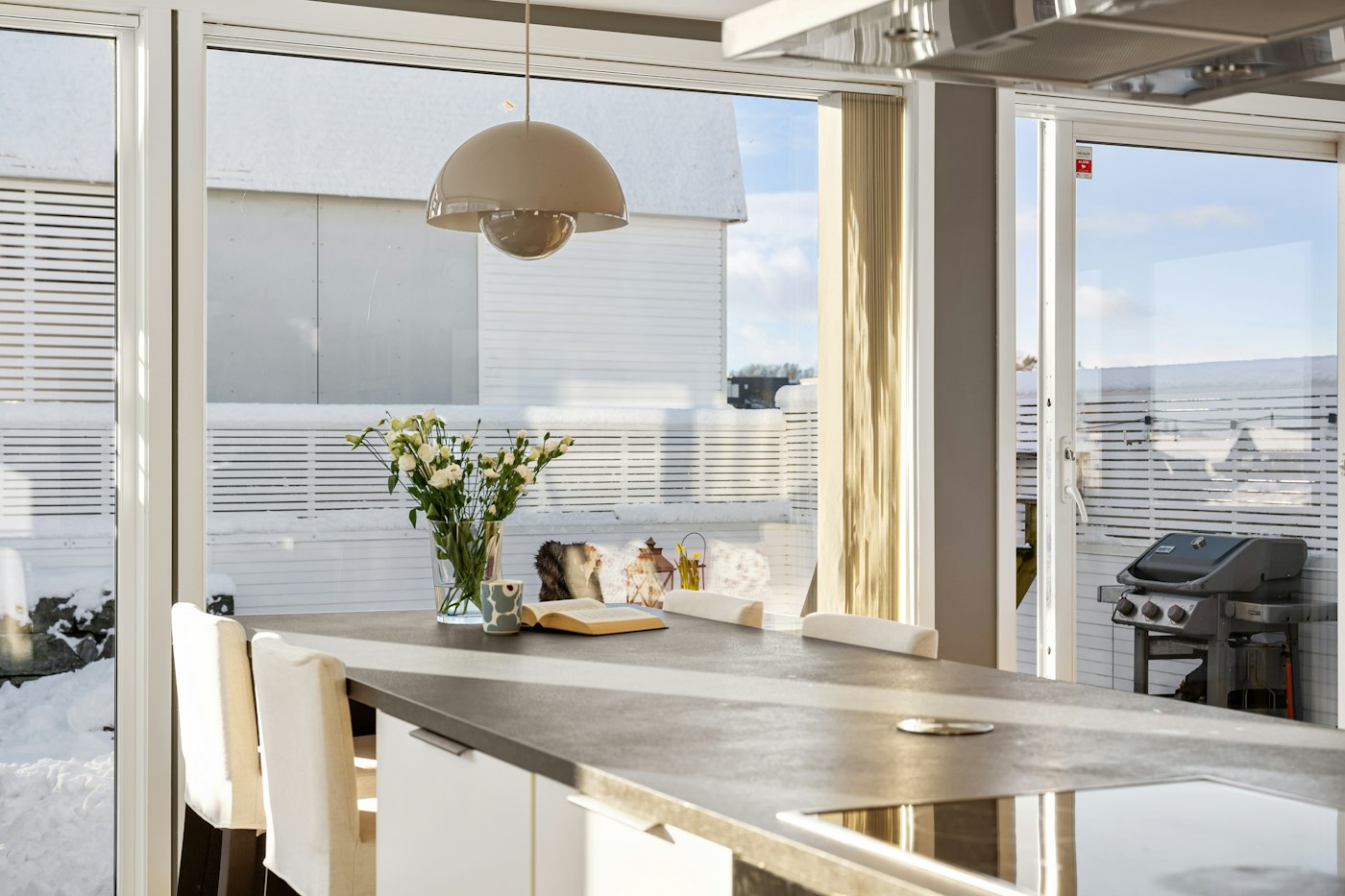
Nothing improves a kitchen like daylight. It makes colors truer, food look better and the room feel larger, and in March, when the sun finally climbs higher, a kitchen that stays dim is easy to notice. A remodel is the best chance to change that. Depending on where your kitchen sits in the house, there are several ways to bring more natural light inside.
Start With the Windows You Have
Before adding openings, look at the existing ones. Heavy valances, deep-set blinds and bulky window trim can block a surprising amount of light. Window boxes and shrubs outside may have grown into the view. Sometimes the simplest improvement is to replace an old window with a new one that has slimmer frames and more glass area, or to swap a double-hung unit over the sink for a casement or picture window that does not split the view with a horizontal rail.
Enlarging or Adding Windows
If your kitchen has an exterior wall, enlarging a window or adding a new one is often possible. The limiting factors are what is inside the wall, such as plumbing, wiring or structure, and how the window fits the cabinet layout. A common move is a long, low window above the counter, running the length of the sink wall, which brings in light without giving up upper cabinets on other walls. Another is a tall window or glass door at the end of a kitchen that opens to a patio. Because exterior walls carry loads, any new or enlarged opening needs a proper header, and that is work for a licensed contractor and, in most places, a permit.
Skylights
When a kitchen sits under the roof, a skylight can deliver more light than a window of the same size, because overhead light is not blocked by neighboring houses or trees. Fixed skylights simply let in light. Venting skylights open to release heat and cooking odors, which is especially useful in a kitchen. Modern units have insulated glass, flashing kits designed for the roof type and optional shades for bright afternoons. Placement matters: a skylight on a north-facing slope gives soft, even light, while a south- or west-facing one brings more warmth and glare. A light shaft, the boxed passage from roof to ceiling, can be flared wider at the ceiling to spread the light farther into the room.
Tubular Daylighting Devices
Sometimes called sun tunnels or solar tubes, these small domes on the roof capture daylight and channel it through a reflective tube to a diffuser in the ceiling. They are much smaller than a skylight, need no light shaft, and can reach interior kitchens that sit under an attic. They are a practical choice for a pantry, a hallway or a kitchen in the middle of a single-story home. The light is diffuse rather than a view, and output depends on the tube length and the weather.
Making Light Go Farther
- Light-colored counters, backsplashes and cabinets reflect daylight deeper into the room.
- A pass-through or interior window to an adjacent sunny room borrows its light.
- Glass-front upper cabinets or open shelves near a window keep the wall from feeling heavy.
- A semi-gloss or satin finish on the ceiling bounces more light than flat paint.
Natural light is a feature you cannot buy at the end of a project, so it belongs at the beginning of the plan. If you are considering a new opening or a skylight, a professional can look at your roof, your walls and your sun exposure and tell you what is realistic. Our contact page is the easiest way to start that conversation.
Planning for Daylight Step by Step
Because daylight decisions affect structure, roofing and cabinet layout, they need to be made early. Here is the order we recommend.
- Observe the light. Spend a few days noticing when and where sunlight enters the kitchen, and where the darkest corners are.
- Identify the exterior walls and roof above. Note which walls face outside, what is above the kitchen and which direction each faces.
- Review the cabinet plan. Decide which walls must keep upper cabinets and which could give up some storage for windows.
- Consider privacy and views. A larger window that faces a neighbor’s wall may need frosted glass or a higher sill.
- Compare options. Weigh window changes, skylights and tubular devices for each part of the room.
- Plan the structure. Have a professional evaluate headers, roof framing and any permits needed.
- Coordinate with lighting. Electric lighting should complement daylight, with switching that allows you to turn off fixtures near windows on bright days.
Balancing Daylight With Comfort
Heat and Glare
More glass brings more light but can also bring heat in summer and glare on bright days. Low-emissivity glass coatings, overhangs, shades and careful skylight placement help manage these effects.
Fading
Strong sunlight can fade wood floors, fabrics and some cabinet finishes over time. Window films and glass coatings designed to reduce ultraviolet light can help protect finishes.
Energy Use
Windows and skylights with good insulating performance reduce heat loss in winter and heat gain in summer. Look at energy ratings when comparing products.
Common Daylighting Mistakes
- Adding a skylight without considering heat gain, especially on south- and west-facing slopes.
- Placing a window where a backsplash outlet or range hood needs to go.
- Overlooking window treatments. Plan for shades or blinds that fit the window and do not interfere with the faucet or cabinets.
- Using dark finishes in a room with limited light, which absorbs much of what comes in.
- Forgetting maintenance. Skylights and sun tunnel domes need periodic inspection and cleaning to perform well.
Daylight Questions We Hear
Do skylights leak?
Properly installed skylights with flashing designed for the roof type are built to stay watertight. Many leaks attributed to skylights trace back to improper installation or aging flashing. Periodic inspection helps catch problems early.
Can I add a sun tunnel to a two-story home?
Tubular daylighting devices work best where there is a relatively short, clear path from the roof to the ceiling. In a two-story home, they are usually most practical for rooms on the top floor.
Will a bigger window make my kitchen colder?
Modern insulated windows perform much better than older single-pane units. A larger, efficient window can feel more comfortable than a small, drafty one.