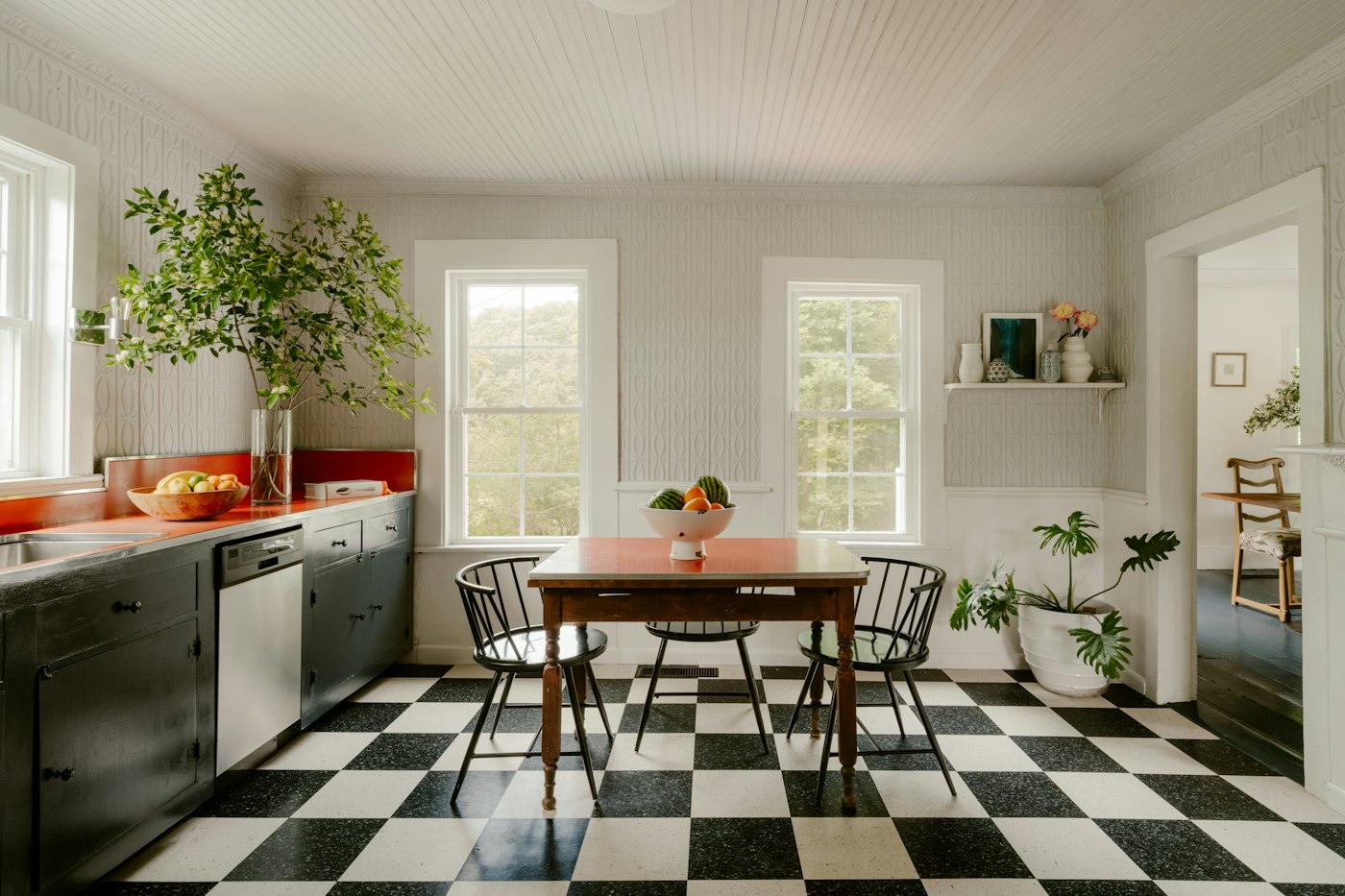
Most flooring conversations circle the same options: hardwood, tile, carpet and vinyl plank. Three other materials deserve a place in the discussion. Cork, bamboo and linoleum are each made largely from renewable plant sources, each has a long history in homes, and each brings qualities the mainstream choices cannot. They are not right for every room, but they are often right for the room you are trying to make warmer, quieter or more distinctive.
Cork
Cork flooring comes from the bark of the cork oak, which is stripped from the living tree and regrows, so the material is harvested repeatedly without felling the tree. The bark is ground, pressed with binders and formed into tiles or planks, often with a wear layer of natural cork veneer on top. The result is a floor with a honeycomb structure full of tiny air pockets, which is why cork is soft underfoot, quiet, warm to the touch and insulating.
Those same air pockets make cork vulnerable. Heavy furniture dents it, pet claws can scratch it, and it fades in direct sun. It must be sealed, and spills should be wiped promptly, though sealed cork tolerates kitchen use well. Cork suits kitchens where you stand for long periods, home offices, playrooms and bedrooms. It comes in natural honey tones and in stained colors, and in both glue-down tiles and floating click planks.
Bamboo
Bamboo is a grass that reaches harvestable size in a few years, far faster than hardwood trees. Flooring is made by slicing and laminating the stalks. Traditional horizontal and vertical bamboo shows the plant’s characteristic nodes and is moderately hard. Strand-woven bamboo shreds the fibers and compresses them under heat and pressure with resin, producing a very dense plank that is harder than many hardwoods and takes stains and finishes well.
Bamboo behaves like wood: it expands and contracts with humidity, so it needs acclimation before installation and can gap or cup in very dry or very damp conditions. Quality varies widely among manufacturers, so look for reputable brands with clear specifications on hardness and finish. Bamboo works anywhere hardwood would, with a cleaner, more contemporary grain. Carbonized bamboo, heated to darken it, is softer than natural bamboo.
Linoleum
True linoleum is often confused with vinyl, but it is a different material entirely. Invented in England in the 1860s, it is made from linseed oil, pine resin, wood flour, cork dust and mineral pigments pressed onto a jute backing. It is naturally antistatic, resilient, warm underfoot and very long-lived; the linseed oil continues to cure for years, so the floor actually hardens with age. Its color runs through the full thickness, so scratches and wear are far less visible than on a printed surface.
Linoleum comes in sheets, tiles and click planks and in a vast range of colors, including the marbled patterns familiar from mid-century kitchens and schools. It needs a smooth, dry subfloor and periodic application of a protective finish. It is less suited to very wet rooms than tile or vinyl, but it is a fine choice for kitchens, mudrooms, laundry rooms and playrooms. A faint linseed smell when new fades over time.
Choosing Among Them
- Want softness, quiet and warmth in a kitchen or office? Cork.
- Want a hard, modern, wood-like floor with a renewable story? Strand-woven bamboo.
- Want color, resilience and a floor that ages gracefully? Linoleum.
Each of these materials rewards a bit of extra research into brands, finishes and installation. Order samples, walk on them in socks and bare feet, set a chair leg on them, and imagine them in your light. The right one can give a room a character that the usual suspects simply cannot.
Installing Natural Floors the Right Way
All three of these materials are more forgiving to live with than to install. Most of the problems we see with cork, bamboo and linoleum trace back to the day they went down, not to the years afterward. A few steps make the difference.
- Acclimate the material. Bamboo and cork planks should sit in the room, out of their sealed packaging or as the manufacturer directs, long enough to adjust to the home’s normal temperature and humidity. Running the heating or air conditioning as you normally would during that period matters, because a floor acclimated to an empty, closed-up house will move once you move in.
- Check the subfloor. Linoleum and glue-down cork telegraph every bump, seam and nail head, so the subfloor needs to be flat, clean and dry. Concrete slabs should be tested for moisture before anything is glued to them.
- Leave expansion space. Floating cork and bamboo planks need a gap at the walls, hidden by baseboard or shoe molding. Pinning a floating floor under heavy cabinets or tight trim is a common cause of buckling.
- Follow the finish schedule. Some cork and linoleum products arrive prefinished; others need a site-applied finish after installation. Skipping or rushing that step leaves the floor unprotected from the first spill.
- Keep the paperwork. Warranties for these products usually depend on approved adhesives, underlayments and cleaners. Save the installation instructions with your house records.
Living With Them Day to Day
The care routine for natural floors is simple, but it is different from what many people use on vinyl or tile.
- Felt pads everywhere. Put felt pads under chairs, tables and anything that slides. On cork especially, swap hard casters for wide, soft ones.
- Mats at the doors. Grit tracked in from outside acts like sandpaper on any finish. A good mat inside and outside each entry adds years to a floor.
- Damp, not wet. Clean with a barely damp mop and a cleaner the manufacturer approves. Steam mops and soaking wet mops can force moisture into seams and break down finishes.
- Manage the sun. Cork and some stained bamboo fade in direct light. Shades or window film on a sunny exposure help, and moving rugs occasionally prevents a visible outline.
- Refresh the finish. When the surface starts to look dull or worn in traffic lanes, a maintenance coat of the recommended finish restores protection before the material itself is damaged.
Common Mistakes to Avoid
A few choices undermine these floors more often than any others:
- Buying on price alone, especially with bamboo, where cheap product can be soft, poorly glued or finished with a thin coat that wears quickly.
- Assuming linoleum and vinyl are interchangeable and cleaning linoleum with harsh, high-pH products that dry it out.
- Putting cork or bamboo in a full bathroom or below-grade space that floods or stays damp.
- Skipping samples and choosing a color from a screen, where honey cork or carbonized bamboo can look very different from the real thing.
Questions Homeowners Ask
Can these floors go over radiant heat?
Many cork, bamboo and linoleum products can, but not all, and there are usually limits on surface temperature. Check the manufacturer’s guidance before you commit.
Are they good for allergies?
Hard, smooth floors of any kind hold less dust than carpet. Linoleum is naturally antistatic, which helps it shed dust. If air quality is a priority, ask about the adhesives and finishes as well as the flooring itself.
Can I mix them in one house?
Yes. A cork floor in the kitchen, bamboo in the living areas and linoleum in the laundry room can work well together, as long as the transitions are planned and the colors relate. We are glad to help you lay out where each one belongs.