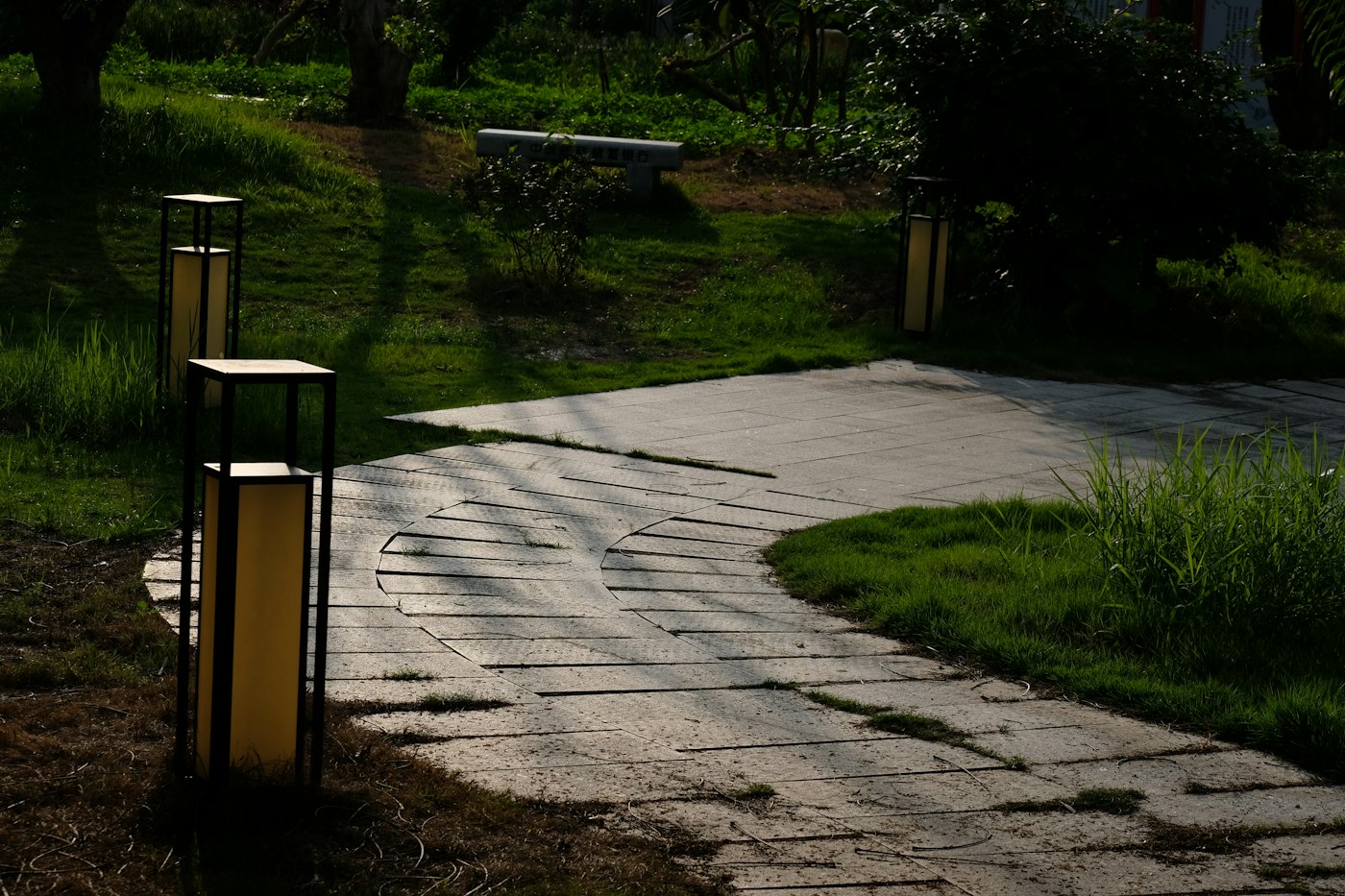
Lighting is the finishing layer of any outdoor project, and the one most often left until the end or skipped entirely. Yet it is what lets you use a deck after dinner, find the steps without a phone flashlight and see your home at night the way you see it in daylight. As in a kitchen, the best results come from layering several kinds of light rather than installing one bright fixture.
Path and Step Lighting
Path lights guide people from the driveway to the door and from the house to the patio. The common mistake is to line them up like a runway on both sides of a walk. Fewer fixtures, staggered and aimed at the ground, light the path just as well and look far more natural. Step lights recessed into risers or mounted on the sides of stairs mark each tread, which is a safety matter on a deck or a sloped yard. Low fixtures with shielded tops keep light on the ground and out of eyes.
Accent, Feature and Living-Area Lighting
Accent lighting is what makes a yard look designed. Uplights at the base of a tree reveal its canopy; a wash of light across a stone wall shows its texture; a small spotlight on a sculpture or a specimen plant gives the eye a place to rest. Downlights mounted high in a tree create a soft moonlight effect over a seating area. Restraint matters: a few well-placed accents are more beautiful than a yard lit from every angle, and leaving some areas dark adds depth.
Where people cook, eat and gather, light needs to be practical. A grill needs a bright, focused light; a dining table wants a softer, lower glow from a pendant under a pergola, string lights or a sconce on a nearby wall. Deck post caps, under-rail strips and recessed lights in a porch ceiling put light where feet and hands are. Dimmers and separate switches let you shift from bright to relaxed as the evening goes on.
Security Lighting Done Thoughtfully
Security lighting is often the brightest and least attractive light in a neighborhood. It does not need to be. Motion-activated fixtures at entries, the garage and dark corners provide light when it is needed and darkness when it is not, and warm-white bulbs are less harsh than cool blue-white ones. Shielded fixtures that aim light downward reduce glare for you and your neighbors and help preserve the night sky. Many communities have guidelines on outdoor lighting, so it is worth a quick check.
Low Voltage or Line Voltage
- Low-voltage systems step household power down through a transformer and run thin cable just below the surface. They are safe to handle, flexible to rearrange and the standard for landscape lighting. Many homeowners install them without an electrician, though a well-planned layout and a correctly sized transformer matter.
- Line-voltage fixtures run on full household current and are used for porch lights, floodlights, outlet-powered features and anything needing more power. They require an electrician and permits in most areas.
- Solar fixtures need no wiring but give modest, variable light; they suit marking a path more than lighting it.
Planning Points
Choose fixtures rated for wet locations and made of materials that weather well; brass and copper develop a patina, while powder-coated aluminum keeps its color. Use warm color temperatures that flatter plants and stone. Put circuits on timers or photocells so the lights come on at dusk without a thought. Plan the wiring before the patio is paved or the deck boards go down, since running cable afterward is far harder. Walk the yard at night with a flashlight to test where light is needed before anything is installed; what you discover will shape a better plan than any drawing.
Planning a Lighting Layout Step by Step
A lighting plan does not need to be complicated, but it does need to be done in the right order. This is the process we follow with homeowners.
- Start with safety. Mark every place someone could trip or misjudge a step: stairs, changes in grade, the edge of a deck, the path from the car to the door. These locations get light first.
- Add the living areas. Note where you cook, dine and sit, and decide what kind of light each needs: bright and focused, soft and low, or adjustable.
- Choose a few features. Pick two or three things worth seeing at night, such as a favorite tree, the front of the house or a stone wall. Resist the urge to highlight everything.
- Look from inside. Much of the time you see the yard through a window. Stand at the kitchen sink and in the living room and note which views you want lit.
- Group into zones. Put the path, the living area and the accent lights on separate circuits or controls so each can be used on its own.
- Size the system. Add up fixture wattage for low-voltage runs and choose a transformer with room for future additions.
- Test before you bury. Lay fixtures out temporarily, connect them and look at the effect after dark before cable is buried or boards go down.
Common Lighting Mistakes and How to Avoid Them
- Too bright. Outdoors, small amounts of light go a long way because your eyes adjust to the dark. Start low and add only if needed.
- Visible bulbs. Glare from a bare source makes it harder to see. Choose shielded fixtures and aim them so the light, not the bulb, is what people notice.
- Mixed color temperatures. A yard with some cool white fixtures and some warm ones looks patchy. Choose one color temperature and stick with it.
- Lighting the neighbors. Floodlights aimed outward spill into the yards and windows next door. Aim fixtures down and inward.
- Forgetting growth. A fixture placed in front of a young shrub may be buried within a few seasons. Leave room and plan to adjust.
- Cheap connectors. Many low-voltage problems come from poor wire connections that corrode. Use connectors designed for direct burial.
Keeping the System Working
Outdoor lighting needs a little attention each season. In spring, walk the yard at dusk and look for dark fixtures, tilted stakes and lenses clouded with dirt or mineral deposits. Trim plants that have grown over fixtures, re-aim uplights as trees mature and reset timers when the time changes. After a major storm, check for exposed cable and loose posts on deck lights.
Questions Homeowners Ask
Can we add lighting to an existing deck or patio?
Often, yes. Surface-mounted step and post lights can be added to many decks, and path lights can be installed beside existing walkways. Running wire under a finished patio is harder, so planning ahead during new construction is always easier.
Should lights stay on all night?
Most landscape and accent lighting only needs to run for a few hours after dusk. Security and entry lights can switch to motion activation for the rest of the night, which saves energy and keeps the yard darker.
Are smart controls worth it?
Apps and smart transformers make it easy to adjust schedules, dim zones and turn lights on remotely. A simple timer or photocell also works well. Choose whichever you will actually use, and we can help you plan the layout either way.