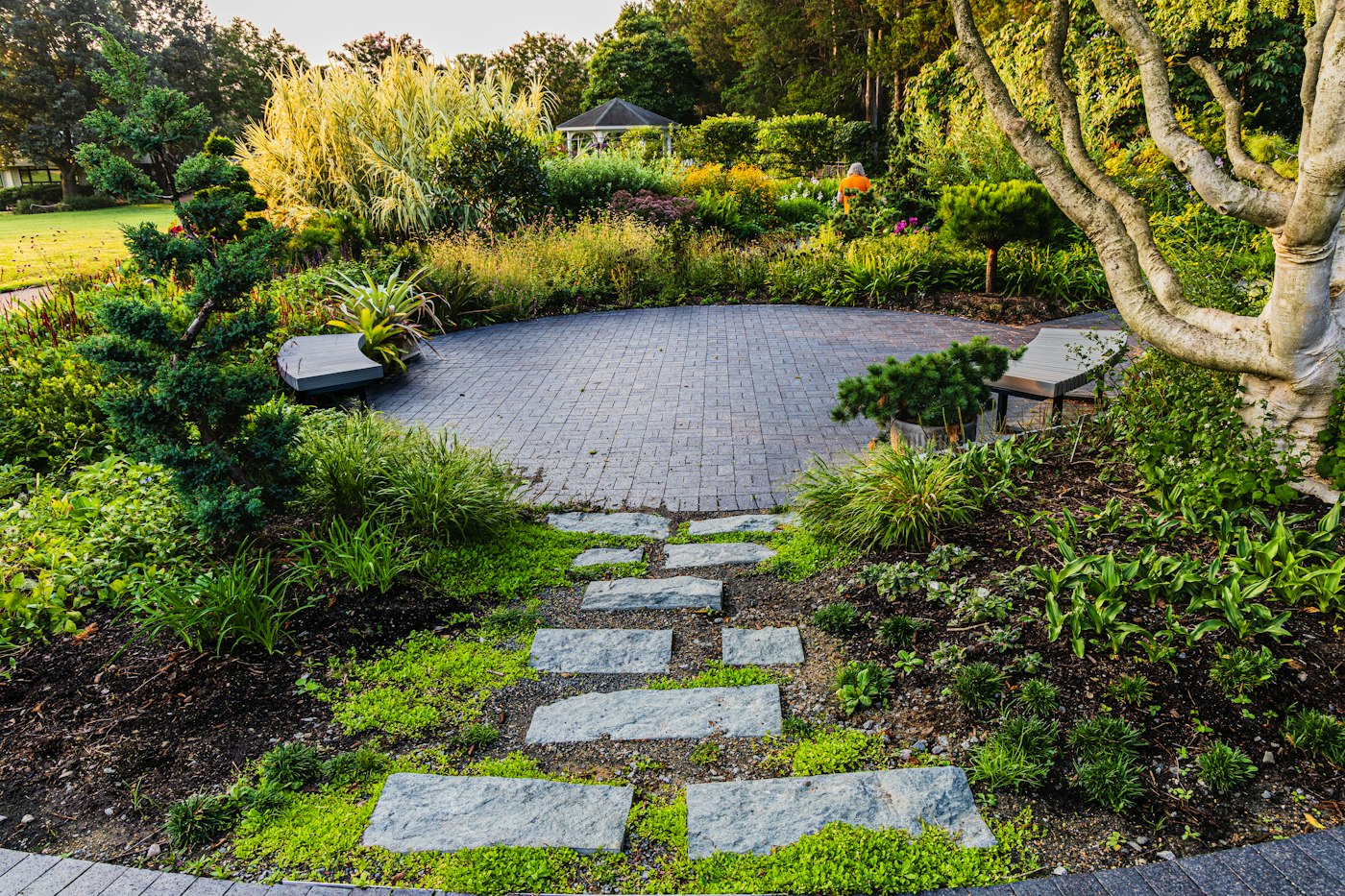
A patio is mostly surface, so the material you walk on is the decision that matters. Each of the common choices has a distinct character, a different installation process and its own way of aging. The right one depends on your climate, your soil, the style of your house and how much maintenance you are willing to do. Whichever you choose, the invisible part, the base beneath, determines whether it looks good in ten years.
Concrete Pavers
Manufactured concrete pavers come in many shapes, sizes, colors and textures, from tumbled cobbles to large smooth slabs. They are laid individually on a compacted gravel base and a layer of bedding sand, with the joints filled with sand or polymeric sand that hardens to resist weeds and ants. Because each paver is separate, the surface can flex with freezing and thawing without cracking, and a damaged or settled area can be lifted and reset. Pavers need an edge restraint to stay tight, periodic joint sand replenishment and occasional cleaning or sealing if you want to maintain the color. Clay brick pavers offer a classic look and hold their color indefinitely. Porcelain pavers, a newer option, are dense, stain-resistant and available in wood and stone looks.
Poured Concrete
A poured concrete slab is a continuous surface, economical for large areas and smooth for furniture. It can be finished in many ways: a broom finish for traction, a smooth trowel, exposed aggregate, or stamped and colored to resemble stone, brick or wood. Concrete must be properly reinforced, placed on a compacted base and cut with control joints to manage the cracking that all concrete eventually does. Repairs are harder than with pavers, because a cracked or settled section cannot be lifted and reset, and stamped patterns are difficult to match. Sealing helps stamped and colored concrete keep its appearance.
Natural Flagstone
Flagstone is flat natural stone such as bluestone, sandstone, limestone or slate, laid either irregularly, with shapes fitted like a puzzle, or in cut rectangular pieces. It can be dry-laid on a gravel and sand base, with joints of sand, gravel or low plants, or mortared on a concrete slab for a more formal, stable surface. Stone offers color variation and texture that no manufactured product quite matches, and it ages gracefully. It is heavier to work with, the irregular versions take skilled fitting, and some stones flake in freeze-thaw climates or become slippery when wet. Regional stone usually suits the local landscape and costs less to transport.
Gravel
A gravel patio is the simplest to install: an edged area filled with compacted crushed stone or pea gravel over a weed barrier and a coarser base. It drains beautifully, suits informal and cottage gardens, and makes a pleasant sound underfoot. Chairs sink a little, tables may wobble, and gravel migrates into the lawn and the house unless the edging is firm. Angular crushed stone locks together better than round pea gravel. Gravel also makes a handsome setting for stepping stones or a frame around a smaller paved area.
The Base Is Everything
- Excavate to the right depth and remove organic soil, which settles.
- Install a compacted gravel base thick enough for your soil and climate.
- Slope the surface slightly away from the house so water drains.
- Use edge restraints and, where needed, a geotextile fabric to keep the base from mixing with the soil.
Most patio failures, from heaving pavers to cracked slabs, trace back to an inadequate base rather than the surface material. When comparing contractors, ask how they prepare the base and how they handle drainage; the answers tell you more than the brochure of surface options does. A patio built on a solid base will carry whichever surface you love for a very long time.
Matching the Surface to How You Use the Patio
Before you fall for a material, think about what will happen on the patio day to day. The answer narrows the choice quickly.
- Dining and furniture. If tables and chairs will move often, choose a flat, even surface: pavers, poured concrete or cut flagstone. Irregular stone and gravel can make furniture wobble.
- Bare feet and pools. Light colors stay cooler in sun, and textured finishes offer better traction when wet. Some dark stones and stamped concrete get uncomfortably hot.
- Grilling. Grease and food stains show most on light, porous surfaces. Sealed pavers, porcelain or a darker concrete finish forgive more.
- Heavy shade. Surfaces that stay damp under trees can grow moss or algae. Choose materials that can be cleaned easily and that drain well.
- Kids and pets. Gravel is easy to install but tends to travel. A firm, smooth surface is easier for strollers, bikes and toy cars.
Questions to Ask Before You Hire
When you talk with installers, these questions help you compare more than just the price and the look.
- How deep will you excavate, and what will you do with the soil you remove?
- What type and depth of base will you install, and how will you compact it?
- Which direction will the patio slope, and where will the water go?
- What edge restraint will you use, and how is it anchored?
- How do you handle the transition to the house, steps, doors and lawn?
- If the patio settles or cracks, what is your process for repair?
- What care will the surface need, and how often?
Common Patio Mistakes
- Building too small. Furniture takes more room than it seems on paper. Lay out your table and chairs, or tape the outline on the lawn, and walk around it before you commit to a size.
- Setting the surface too high. A patio that ends up level with the door threshold or siding can direct water into the house. Leave the proper step down from the door.
- Skipping the edge. Without firm edging, pavers spread, gravel wanders and the lawn creeps in.
- Sealing too soon or too often. New concrete and some pavers need time before sealing, and too many layers can turn hazy or slippery. Follow the product guidance.
- Mixing too many materials. One main surface, with perhaps a single accent material for a border or inset, usually looks better than three competing ones.
Questions Homeowners Ask
Can we combine surfaces?
Yes. A paver border around poured concrete, flagstone set into gravel or a gravel path leading to a paved dining area can all work well and help define spaces.
Can a new patio go over an old one?
Sometimes pavers can be installed over a sound concrete slab, but height, drainage and the condition of the slab need to be evaluated first. In many cases, removal is the more reliable option.
Which surface is easiest to repair?
Pavers and dry-laid stone are the easiest, because individual pieces can be lifted, the base corrected and the pieces reset. We are glad to talk through which surface best fits your yard.