
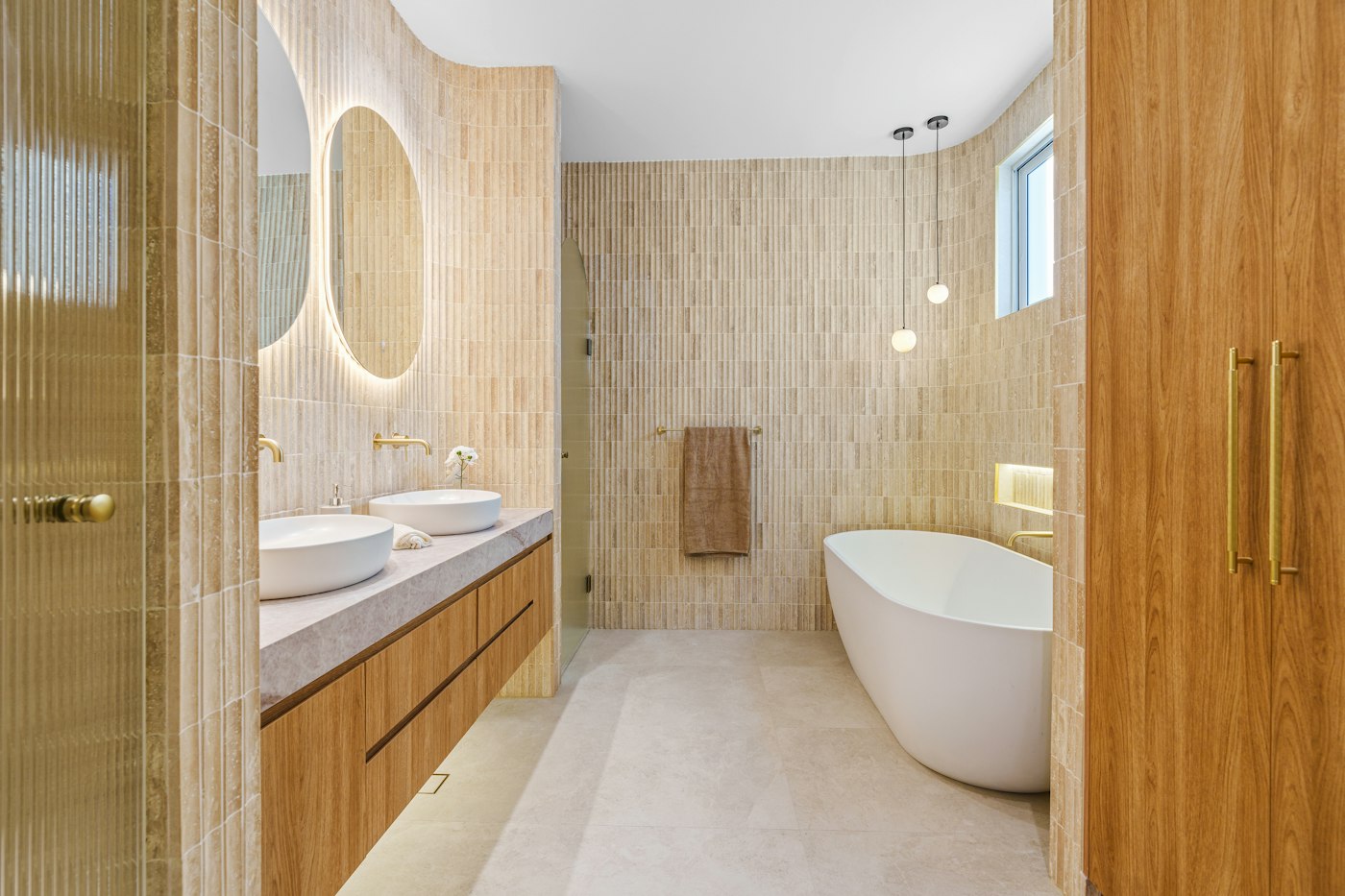
A bathroom palette has a different set of rules from a kitchen’s. The room is small, so every surface is close to the eye. Much of it is tile, which is permanent in a way paint never is. And bathrooms are redone less often than almost any other room, so a trend that dates quickly will be on display for a long time. The strategy that works is to make the lasting elements quiet and let the changeable ones carry the color.
Tile and Grout Set the Tone
Tile covers the floor and often the walls, and it is the element you will live with longest. Choosing it first and choosing it calmly pays off. Classic materials and shapes, such as white or soft-colored subway tile, marble or marble-look porcelain, hexagons, penny rounds and large-format stone looks, have stayed appealing across decades. If you want pattern or strong color in tile, limit it to a defined area: the shower floor, a niche, a single accent wall or the floor of a powder room, where it reads as a jewel rather than a commitment.
Consider the tile’s undertone as carefully as its color. A white tile with a cool blue cast and a vanity in warm cream will quarrel. Lay samples together and look at them in the bathroom’s own light.
Grout changes tile more than most people expect. Matching grout makes a wall read as a single surface and hides the grid; contrasting grout emphasizes each tile and its pattern. Mid-tone grays and warm beiges hide wear better than pure white on a floor. Choose grout with a tile sample in hand, and remember it will be on every wall and floor joint in the room.
Vanity and Countertop
The vanity is the furniture of the bathroom and a natural place for a second color or material. Painted vanities in deep blue, green, charcoal or warm gray pair well with white tile; wood vanities bring warmth to cool stone. The countertop should relate to the tile rather than compete with it; a quiet counter under a patterned backsplash, or a veined counter above plain tile, keeps the hierarchy clear.
Metal Finishes
Faucets, showerheads, lighting, hardware and accessories should feel like a family. Choosing one finish for everything is the safest route. Mixing two is common and attractive when done with intention, such as matte black lighting and hardware with a polished nickel faucet, where each finish appears more than once. Warm metals flatter warm palettes and cool metals suit cool ones, while black works nearly everywhere.
Paint, Textiles and the Changeable Layer
With the permanent elements settled, paint and textiles can be as bold as you like. A deep wall color above white wainscoting, a saturated ceiling, patterned wallpaper in a powder room, or simply colorful towels and a shower curtain bring personality that can change in a weekend. This is where trends belong, because they can leave as easily as they arrived.
A Checklist for Longevity
- Keep the tile palette to two or three colors with consistent undertones.
- Limit statement tile to one defined area.
- Choose grout deliberately and test it on a sample board.
- Pick one or two metal finishes and repeat them.
- Put the strongest color in paint and textiles, not in stone.
A bathroom built this way looks current without looking dated in ten years, and when you want a new mood, a can of paint and a set of towels will give you one. That is a palette that lasts.
Putting a Palette Together, Step by Step
With so many permanent pieces in a bathroom, the order of decisions matters. This sequence helps each choice support the next.
- Decide the mood. Bright and fresh, warm and spa-like, dark and dramatic, or classic and simple. One word or phrase helps guide every later choice.
- Choose the floor tile. It is usually the largest single surface and has to tolerate water and traffic.
- Choose wall tile to support it. Pair the wall tile with the floor so one leads and the other supports, with matching undertones.
- Select grout. Build a small sample board with the tiles and the grout options and look at it in the room.
- Pick the vanity and top. Let the vanity add your second color or material, and keep the countertop in harmony with the tile.
- Choose metals. Decide on one or two finishes and confirm that the faucets, shower trim, lighting and hardware are all available in them.
- Finish with paint and textiles. Bring the samples home and choose the wall color, towels and accessories last.
Thinking About Light
Bathrooms often have small windows or none at all, so artificial light shapes how the palette looks more than in most rooms. Warm white bulbs flatter warm palettes and skin tones; very cool bulbs can make whites look harsh and blues look cold. Look at tile and paint samples under the bulbs you plan to use, both with and without daylight. Glossy tile reflects light and brightens a small room, while matte and honed surfaces absorb it and feel softer. A dark palette in a windowless room can be beautiful but needs good layered lighting to avoid feeling closed in.
Common Mistakes That Date a Bathroom
- Trend tile everywhere. A strongly trendy tile used on every surface can make the whole room feel tied to one moment.
- Clashing whites. Bright white fixtures beside an off-white tile or vanity can make one look dingy.
- Too many patterns. A patterned floor, patterned wall tile and patterned wallpaper in a small room compete. Choose one star.
- Mismatched metals by accident. Finishes from different brands can vary even under the same name. Compare samples side by side.
- Forgetting the toilet and tub. These are usually white or biscuit, and they need to look intentional with the rest of the palette.
Questions Homeowners Ask
Is all-white still a safe choice?
A white bathroom remains timeless, but it benefits from texture and warmth: a wood vanity, a veined counter, a warm metal or a textured tile keep it from feeling sterile.
Can a small bathroom handle dark colors?
Yes. Dark paint or tile can make a small bath feel cozy and deliberate, especially in a powder room. Good lighting and a lighter floor or ceiling help balance it.
How do we coordinate a bathroom with the rest of the house?
Repeat a metal finish, wood tone or color that appears elsewhere in the home. We are happy to help you bring tile, vanity and finish samples together so your bathroom feels connected.


