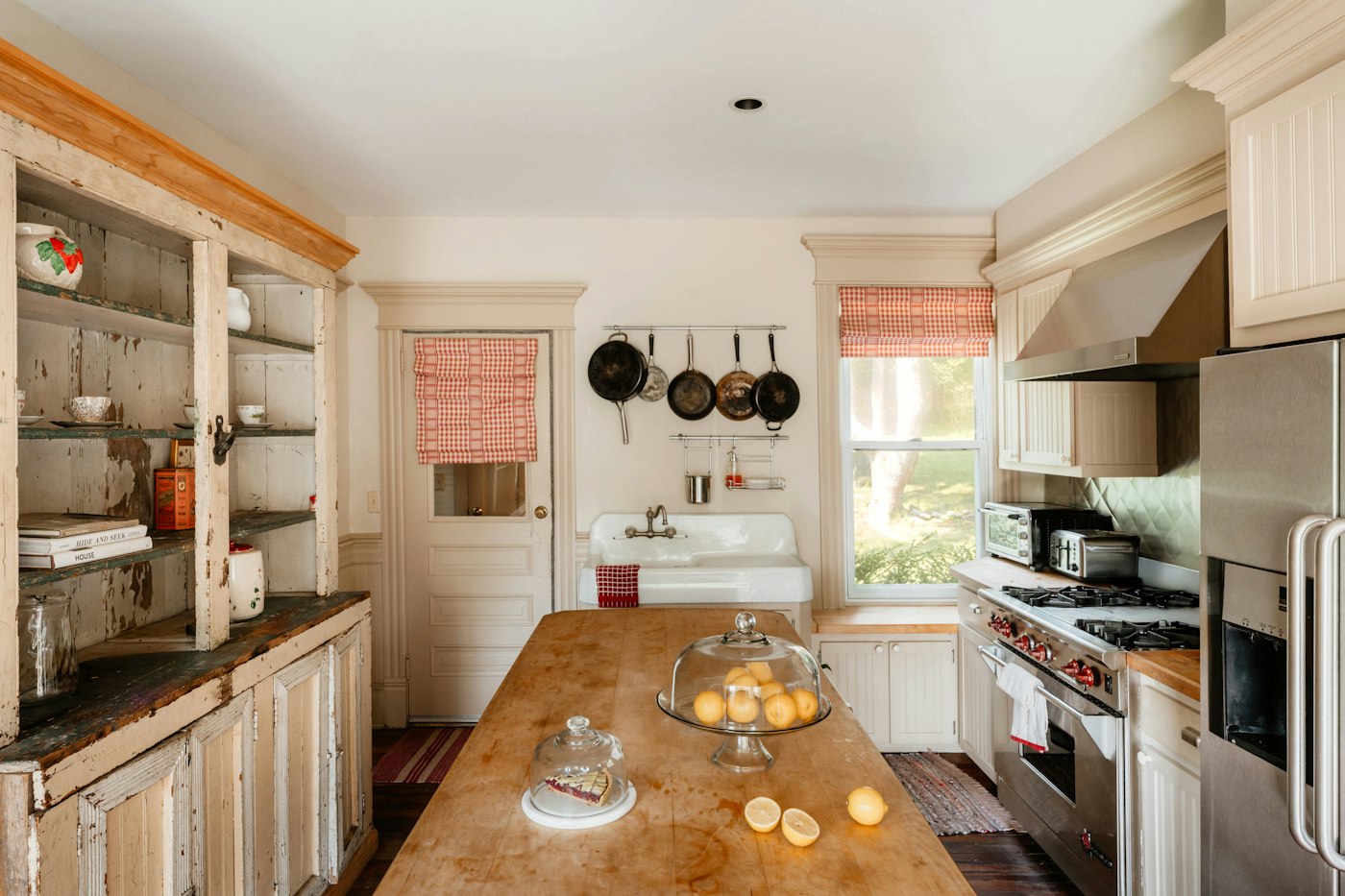
Wood is back in kitchens and living spaces after years of painted everything, and with it comes an old question: how many wood tones can one room hold? The fear is that oak floors, walnut cabinets and a maple table will clash. The reality is that mixed woods look warm and collected when a few principles guide the mix, and flat and monotonous when every piece matches exactly.
Pick a Dominant Wood
Every room with several woods needs one that leads. In most kitchens that is the floor, simply because of its area, though in a kitchen with wood cabinets and a tile floor the cabinets take the role. The dominant wood sets the temperature and the mood. Everything else is chosen in relation to it, either to harmonize quietly or to contrast deliberately.
Match Undertones, Not Colors
Wood tones have undertones, just as paint does. Some lean red or orange, like cherry and many stained oaks; some lean yellow, like natural maple and pine; some lean neutral or gray, like walnut, white oak with a matte finish, and weathered woods. Woods with the same undertone get along even when they differ in darkness. Woods with clashing undertones, such as an orange-toned floor next to a gray-washed cabinet, look accidental. Set samples side by side in daylight and ask what color family each belongs to before asking how dark it is.
Use Contrast, Grain and Finish on Purpose
Woods that are close in color but not identical are the hardest combination, because the eye reads them as a failed match. A clear difference in darkness is easier: a pale floor with dark cabinets, or a mid-tone floor with a nearly black table and light wood stools. Three steps of darkness, light, medium and dark, is a comfortable range for a room. Within that range, let one wood be clearly the lightest and one clearly the darkest.
Grain pattern is part of the mix. Oak has a bold, open grain; maple and cherry are smooth and fine; walnut falls between. Pairing a strongly figured wood with calmer ones gives each room to breathe, while several busy grains together feel restless. Finish matters too: a glossy floor and matte cabinets read as different materials even in similar colors, which can help or hurt depending on the goal. Rift-sawn and quarter-sawn boards with straight grain pair easily with almost anything.
Break It Up and Repeat It
- A rug under a table separates the table’s wood from the floor’s and makes the contrast intentional.
- Painted cabinets, a stone counter or a tile backsplash between two woods give the eye a rest.
- Repeat each wood tone at least twice in the room, such as a walnut table echoed by walnut shelves, so no wood looks like a stray.
- Metal, textiles and plants pull a mixed-wood room together as much as the woods do.
In Practice
A common successful kitchen might have a light white oak floor, a mid-tone wood island, painted perimeter cabinets and dark wood stools, with the island and stools sharing a warm undertone and the floor lighter than both. A living room might have the same floor, a walnut console and a reclaimed-pine mantel, united by a neutral rug and black metal lighting. In each case there is a leader, a clear range of light to dark, consistent undertones and some non-wood material providing relief.
Bring samples of every wood in the room to one place, including a cabinet door, a flooring plank and a photo of the furniture you own. Seeing them together is the fastest way to know whether the mix is a collection or a clash.
A Step-by-Step Way to Test a Wood Mix
Mixing woods is easier when you test the combination in a methodical way before buying anything large.
- Gather every wood. Collect samples or photos of each wood in the room: flooring, cabinets, table, chairs, shelves, trim and any large furniture.
- Sort by undertone. Lay them out in daylight and group them by red, yellow or neutral undertone.
- Sort by darkness. Within the group, arrange them from lightest to darkest. Look for clear steps between them.
- Identify the leader. Decide which wood dominates the room by area and make sure everything else relates to it.
- Remove the near-misses. If two pieces are almost but not quite the same, consider changing one so the difference is clear.
- Add the non-wood elements. Bring in paint chips, a counter sample, fabric and a metal finish to see how they tie the woods together.
- Look again at night. Check the group under your actual lighting, since warm bulbs exaggerate red and orange undertones.
Common Mixed-Wood Mistakes
- Matching by accident. Two woods that are nearly the same tone but slightly off draw attention to the mismatch.
- Too many woods with no repeat. A single wood that appears nowhere else looks like a stray. Repeat each tone at least once.
- All dark or all light. A room full of only dark wood can feel heavy; all pale woods can feel washed out. A range of light, medium and dark keeps it balanced.
- Ignoring the trim. Stained trim, doors and window casings count as woods too. Painting trim can simplify a room with many wood tones.
- Forgetting the floor transitions. Where two different wood floors meet, a threshold or a change of room helps them look deliberate.
What This Means for a Remodel
When you are replacing floors or cabinets, you have a chance to plan the wood mix for the whole space, not just the new piece. If you are keeping a dining table or heirloom furniture, bring photos or a small sample to cabinet and flooring showrooms. If floors are flowing from room to room, choose a tone that works with the furniture in every space they reach. A stain sample on the actual flooring species and board, rather than a printed chip, shows what you will really get. Refinishing an existing wood floor to a new color is also an option, which can help it pair better with new cabinets.
Questions Homeowners Ask
Should wood floors match wood cabinets?
Not necessarily. Floors and cabinets in contrasting tones often look better than an exact match, which is hard to achieve anyway.
Can we mix warm and cool woods?
It can work when the contrast is strong and deliberate, and when other elements, such as a rug or stone, bridge the two.
What if we already have mismatched woods?
Rugs, paint, repetition and a few new pieces can often pull an existing mix together. We are glad to help you look at your space and sort out the options.