
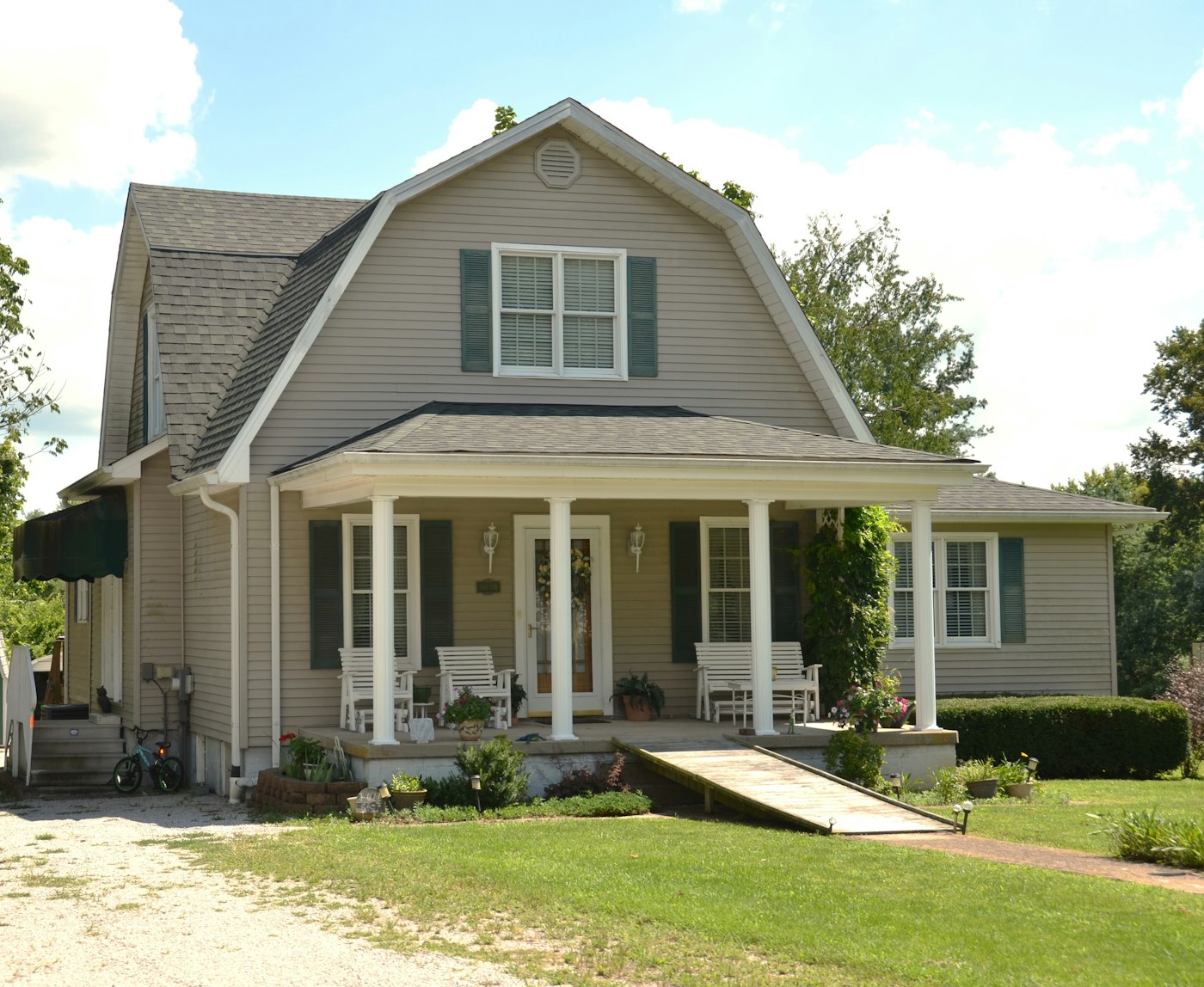
A front porch takes more weather than almost any other part of a house. Sun bakes the floor, rain blows in under the roof, and the bottoms of columns and railings sit in splashing water year after year. When a porch starts to sag, peel or feel soft underfoot, restoration can bring it back, character intact, in time for long summer evenings. It helps to look at the porch as a set of parts, each with its own common problems and choices.
The Floor
Traditional porch floors are narrow tongue-and-groove boards, usually painted, running from the house wall out to the edge so water flows along them and off the ends. The floor should slope slightly away from the house so rain drains instead of pooling. Rot usually starts at the outer edge, at board ends and wherever planters or furniture trap moisture. Damaged boards can often be replaced in sections, but soft framing underneath needs attention first.
Replacement options include painted wood in species suited to porch flooring and composite or PVC porch boards made to resemble painted tongue-and-groove. With wood, prime and paint all sides and ends of each board before installation, and keep the space beneath the porch ventilated so moisture can escape.
Columns and Posts
Columns may be structural, carrying the porch roof, or decorative wraps around a structural post. That distinction matters, because a rotted structural column has to be supported with temporary shoring before it is removed. Rot typically begins at the base, where water collects. Replacement columns are made in wood, fiberglass, PVC and composite materials, and many have vented caps and bases that let air move and water escape. If you are matching historic columns, record the diameter, taper and capital details carefully before ordering.
Railings and Steps
Railings provide safety and much of a porch’s style. Wood railings with turned or square balusters are traditional, while composite and PVC systems offer lower maintenance in similar profiles. Railing height and baluster spacing are governed by building codes, and an older porch may not meet current requirements, so ask your contractor or building department what applies when rails are rebuilt. Steps deserve the same scrutiny, since uneven risers are a common tripping hazard. A sturdy handrail is worth adding if there is none.
The Ceiling and the Haint Blue Tradition
Porch ceilings are typically beadboard or narrow tongue-and-groove boards. Stains from roof leaks show here first, so fix the roof before refinishing the ceiling. In the South, and especially in the Lowcountry of South Carolina and Georgia, porch ceilings are often painted a pale blue-green known as haint blue. The custom is commonly traced to the Gullah Geechee people of the coastal Southeast, among whom the color was said to keep away haints, or restless spirits. Other explanations have been added over time, such as the idea that the color fools insects into seeing open sky, though that belongs more to folklore than to proven fact. Today many homeowners simply love the soft, airy look.
Putting It Together
- Address the roof and gutters first so new work stays dry.
- Inspect the framing and footings before choosing finishes.
- Use corrosion-resistant fasteners rated for exterior use.
- Keep paint in good repair, since it is the porch’s main defense.
A well-restored porch is one of the most welcoming parts of a house. If yours needs attention, our contact page is the place to begin.
Inspecting Your Porch Before You Call
A thorough look at your porch helps you understand what kind of work it needs, from simple painting to structural repair. Bring a flashlight and a screwdriver, and go through the parts one at a time.
- Walk the floor slowly. Note any boards that flex, feel spongy or sound hollow. Mark them with painter’s tape so you can find them again.
- Probe suspect wood. Gently press a screwdriver into board ends, column bases and the bottoms of railings. Sound wood resists; rotted wood lets the tip sink in easily. Do not pry or damage good material.
- Look underneath. If you can see under the porch, check the joists, beams and the ledger where the porch meets the house. Look for dark staining, soft spots, sagging and signs of insects.
- Check the slope. Set a level or a marble on the floor. Water should drain away from the house wall, not toward it.
- Study the columns. Look for open joints, cracking at the bases and gaps at the top where the column meets the beam. A column that has dropped or tilted may mean a structural problem.
- Test the railings. Push firmly on rails and posts. Any movement deserves attention, especially on porches that sit well above the ground.
- Look up. Water stains, peeling paint or sagging boards on the ceiling usually point to a roof or gutter problem above.
Repair or Replace?
One of the first decisions in any porch project is how much original material to keep. Often the answer is a mix.
- Repair makes sense when damage is limited to a few board ends, a column base or a section of railing, and when the original materials have character worth preserving.
- Replace is usually the better choice when rot is widespread, when the framing beneath has failed or when previous patches have left a patchwork that no longer performs.
- Epoxy consolidants and fillers can restore small areas of decayed wood on columns and trim, keeping historic profiles intact, though they are not a fix for structural members.
- Matching profiles matters on older homes. Before discarding damaged pieces, keep a sample of balusters, trim and flooring so replacements can be milled or ordered to match.
Keeping a Restored Porch in Good Shape
- Clean gutters regularly so overflow does not pour onto the floor and steps.
- Move planters, rugs and furniture occasionally so moisture does not collect beneath them.
- Touch up paint on floorboards and the bottoms of columns as soon as wear appears.
- Keep shrubs trimmed back from the porch so air can circulate and the wood can dry.
- Check fasteners and railing connections each spring.
Questions Homeowners Ask
Can I use composite flooring on a historic porch?
Many composite and PVC porch boards are designed to mimic painted tongue-and-groove. If your home is in a historic district, check with the local review board, which may have requirements about materials.
Why does my porch floor paint keep peeling?
Peeling often traces to moisture moving through the boards from below, unprimed board ends or the wrong type of paint. Ventilation beneath the porch and coating all sides of new boards help.
Do I need a permit to restore a porch?
Painting and minor board replacement usually do not, while structural repairs, rebuilt railings and steps often do. We check local requirements as part of planning.


