
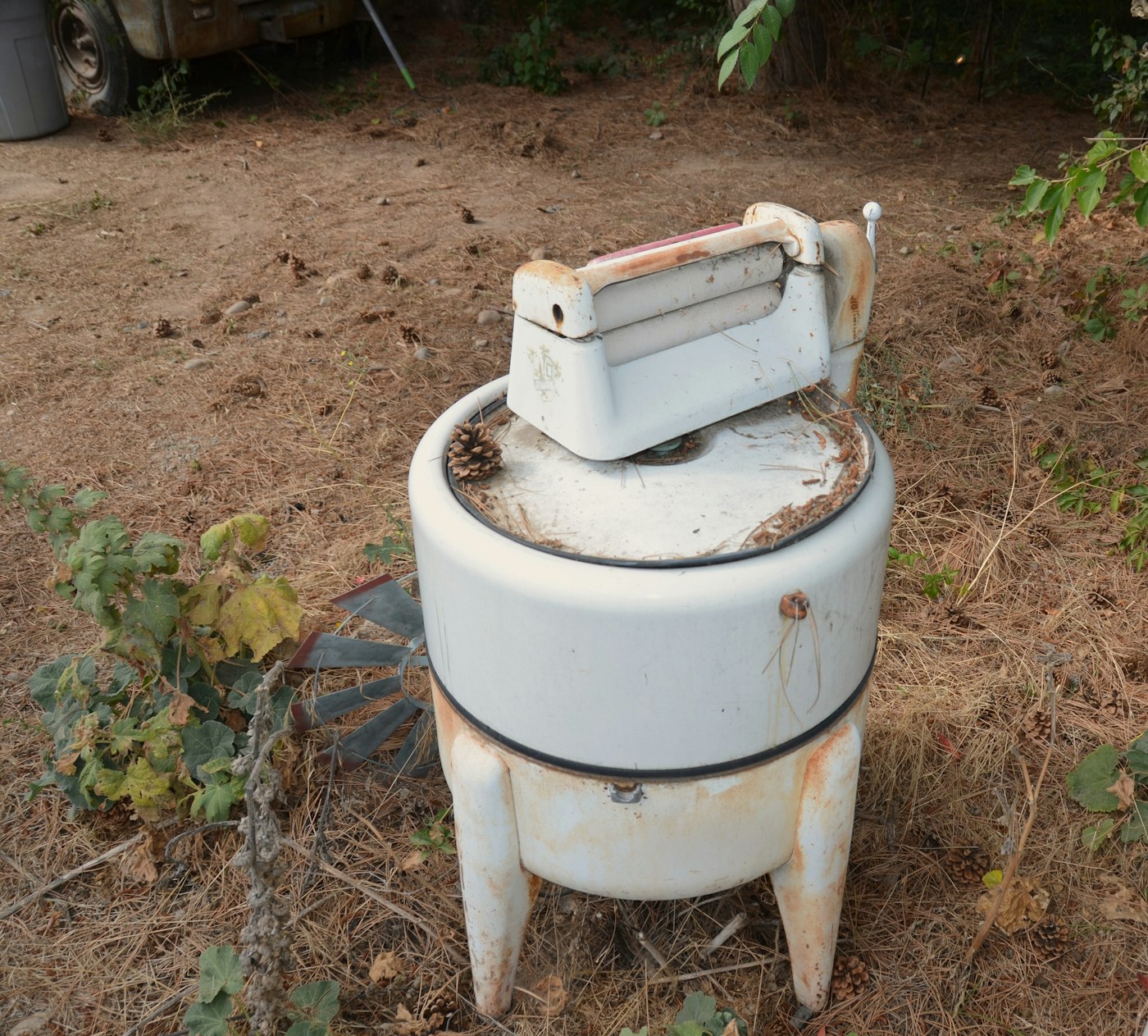
For most of American history, laundry was not a load you tossed in before work. It was a day. In many households Monday was washday, and it meant hauling water, heating it over a fire or stove, scrubbing clothes on a washboard, wringing them by hand and hanging everything on a line. Late summer, with the back-to-school laundry about to pile up again, is a fitting time to look at how that chore was mechanized and how it moved through the house, because that history explains a great deal about laundry rooms today.
Washday Before Machines
Before running water and electricity reached most homes, laundry happened wherever there was space, a fire and a way to get rid of water: the yard, a back porch, a lean-to or the kitchen itself. Clothes were soaked, scrubbed, boiled in large kettles, rinsed, wrung and often starched, then pressed with irons heated on the stove. Larger homes sometimes had a separate wash house or a laundry room near the kitchen, and wealthier households employed laundresses. For everyone else, it was among the most physically demanding jobs in the home.
The Machine Age Arrives
Hand-cranked washing machines and wringers appeared in the nineteenth century and eased some of the labor. Electric washing machines followed in the early twentieth century as homes were wired, though early models still had to be filled and drained, and clothes were fed through a wringer by hand. Automatic washers that filled, washed, rinsed and spun on their own became common in the decades after World War II, and clothes dryers gradually replaced the clothesline in many homes.
Down to the Basement, Then Back Up
Machines needed a water supply, a drain and, later, a dryer vent, and in many mid-century houses the easiest place to provide all three was the basement, near the water heater and the main drain. Laundry became a basement chore, out of sight but up and down the stairs. Houses built on slabs, common in warmer regions, put the machines in the garage, a utility room off the kitchen or a hallway closet instead.
Over the later decades of the twentieth century, builders and homeowners increasingly moved laundry to the main floor and eventually upstairs near the bedrooms, where most dirty clothes start and clean ones end up. Stackable front-loading machines, quieter motors and better leak protection made those locations more practical.
What the History Teaches
The lesson of washday is that laundry follows convenience as soon as technology allows. Each generation has moved the chore closer to where people live, and each move depended on plumbing, power and ventilation. That is still true. If you are planning a new laundry location, the questions are much the same ones earlier households faced:
- Where is the water supply, and where can the water drain?
- How will the dryer vent, or would a ventless dryer suit the space?
- How will the room handle noise, humidity and the occasional leak?
- Is there space to sort, fold and hang, the steps machines still leave to us?
Washday may be gone, but the laundry room remains the place where a house’s plumbing, wiring and daily habits meet. Planning it with that in mind makes a chore that now takes minutes a little easier still.
The Week Built Around Washday
Washday was rarely a single task. In many households it set the rhythm of the whole week. A widely repeated pattern, often found in old household advice and embroidered on kitchen towels, assigned Monday to washing and Tuesday to ironing, with mending, baking and cleaning following on other days. Families did not all follow it exactly, but it reflects how heavy the work was and how much planning it took.
Preparation often started the night before. Clothes were sorted by color and fabric, the dirtiest items were set to soak, and water was hauled or pumped and stored. On the day itself, the order mattered. Whites and the least soiled items went first, while the water was cleanest and hottest, followed by colored clothes and finally work clothes and rags. Nothing was wasted, because every bucket of water represented effort.
Drying, Ironing and Everything In Between
The clothesline was the dryer, and weather decided the schedule. A rainy Monday could push washday back or leave damp laundry hanging indoors near the stove. Ironing was its own long job. Before electric irons, heavy flatirons were heated on the stove and used in rotation, so one could warm while another was in use. Starching shirts, collars and linens added still more steps.
How Washday Shaped the House
As laundry moved indoors, houses changed to accommodate it, and some of those changes are still visible in older homes.
- Laundry chutes. Many early twentieth-century houses included a chute that dropped dirty clothes from an upstairs hall or bathroom to the basement. They saved trips on the stairs and are a sign that the laundry had moved to the lowest floor.
- Laundry tubs. Deep basins of concrete, soapstone or enameled metal held water for soaking and rinsing. Some older basements still have them, and their descendant is today’s utility sink.
- Back porches and service entries. Many houses had a rear porch or entry used for work like laundry, close to both the kitchen and the yard where clothes were hung.
- Clothesline posts. Metal or wooden posts in backyards, sometimes still standing long after the dryer arrived, are another trace of the old routine.
Bringing Old Lessons Into a New Laundry Room
Earlier generations had to plan laundry carefully because every step was hard work. Some of their habits still make sense in a modern laundry room.
- Sort before you wash. A built-in sorting station or a set of bins makes it easier to keep loads organized, just as households once sorted the night before.
- Plan a place to hang things. Not everything should go in a dryer. A rod, a drying rack or a retractable line indoors gives delicate items a place to air dry.
- Keep a soaking sink. A utility sink remains one of the most useful features in a laundry room for stains, muddy clothes and hand washing.
- Put ironing within reach. A fold-down or built-in ironing board and an outlet nearby make that task less of a production.
- Use daylight and air. A window or good ventilation helps a laundry room dry out and feel less like a closet, a modern version of working on the porch.
Questions Readers Ask
Can an old laundry chute be put back into use?
Sometimes. Chutes that pass through floors can affect fire separation between levels, so a contractor should check whether one can be restored safely or should be sealed.
Is it worth keeping an old basement laundry tub?
If it is in good condition and the plumbing is sound, an old tub can be a charming and useful feature. Have the drain and faucet checked and updated as needed.
Where does laundry belong in a house today?
Wherever the plumbing, venting and daily routine of your household line up best. For some families that is upstairs near bedrooms, and for others it is a mudroom near the back door.


