
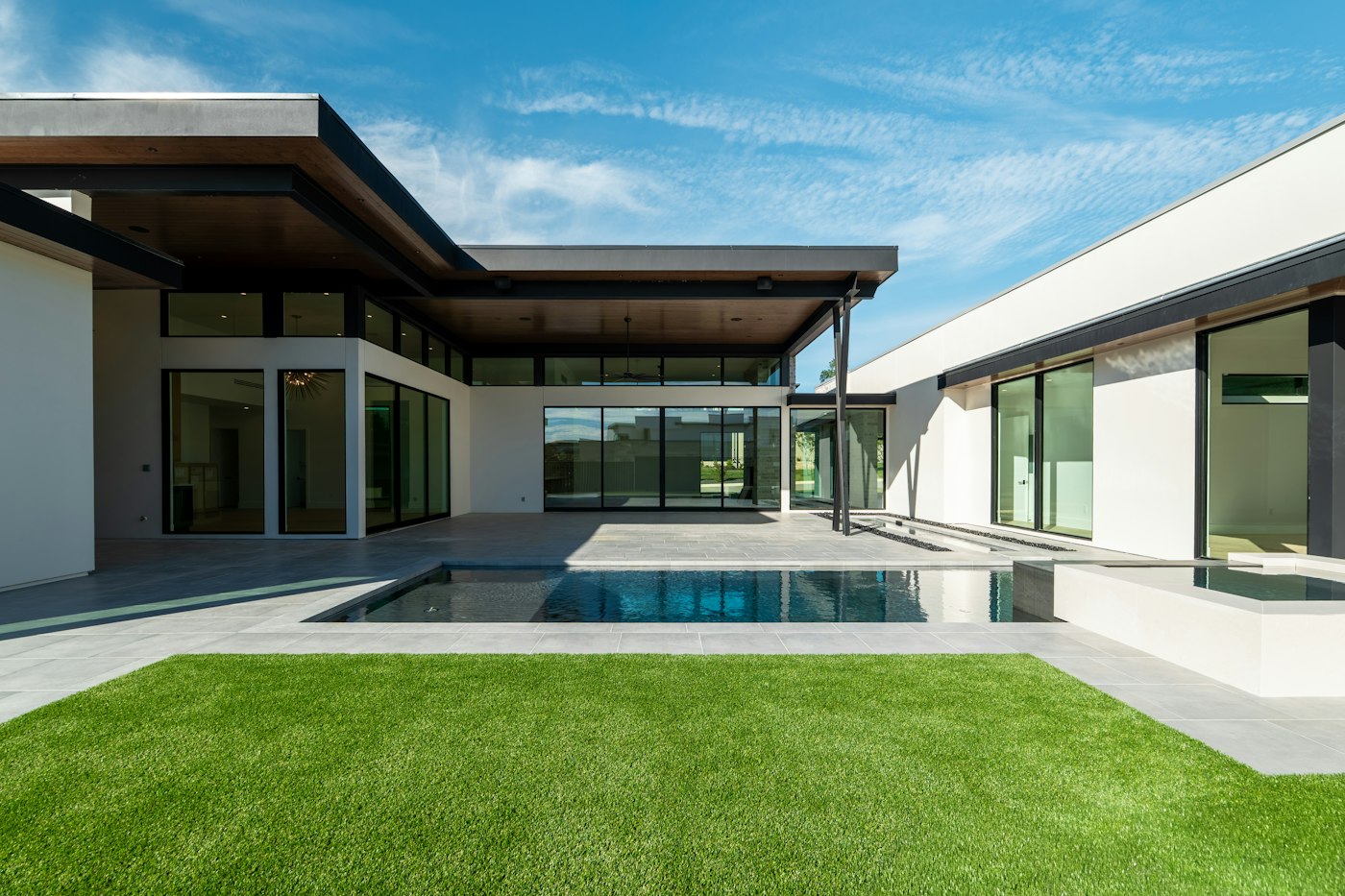
A pool deck asks more of a surface than an ordinary patio does. Bare feet cross it at midday, wet children run on it, and splashing water carries chlorine or salt onto it all summer long. A surface that looks beautiful in a catalog can be too hot to stand on in July or slick when wet. Comparing the options with those conditions in mind leads to a deck that is comfortable as well as handsome.
What a Pool Deck Must Do
- Stay reasonably cool: light colors and materials that shed heat quickly are easier on bare feet.
- Grip when wet: textured surfaces and slip-resistant finishes reduce falls.
- Resist pool chemistry: chlorine, salt and acid cleaning can stain, etch or erode some materials.
- Drain: the deck should slope away from the pool, with drains where needed, so dirty runoff does not wash back into the water.
Concrete and Coated Concrete
Poured concrete is the most common pool deck in many regions, valued for its durability and its ability to take almost any shape. A broom finish adds traction. Many decks receive a spray-applied textured coating, often called a cool deck or knockdown finish, designed to feel cooler underfoot and to add grip. Stamped and colored concrete can mimic stone or tile, though a smooth stamped surface may need a slip-resistant additive in its sealer. Concrete can crack, and salt water can be hard on some concrete surfaces over time, so good installation and regular sealing matter.
Pavers and Natural Stone
Concrete pavers offer textured surfaces, a wide palette of colors and the ability to replace individual units if one cracks or stains. Travertine is a favorite around pools because it tends to stay cooler than many other stones, absorbs splashed water quickly and has a naturally textured surface in tumbled or brushed finishes. Like other calcium-based stones, it can be affected by acids and may need sealing, particularly around salt-water pools. Some limestones, sandstones and quartzites also suit pool decks, but polished stone is a poor choice because it becomes slippery when wet. Ask suppliers whether a stone is recommended for pool use in your climate.
Porcelain Pavers
Thick porcelain pavers made for outdoor use resist stains, chemicals and fading, and they come in textured finishes with slip-resistance ratings for wet areas. They are available in stone, concrete and wood looks. As with any surface, color affects heat, so lighter tones are kinder to bare feet in sunny climates.
Wood and Composite Decking
Raised pool decks and above-ground pool surrounds are often built of wood or composite boards. Wood stays relatively comfortable to the touch but needs regular sealing and can splinter. Composite and PVC decking resist rot and need less upkeep, but many products, especially darker colors, can become very hot in direct sun. If you are considering them, ask for the manufacturer’s guidance on heat and look at lighter colors or lines designed to run cooler.
Whatever the material, plan the coping, the edge where deck meets water, as carefully as the deck itself, and confirm local requirements for pool fencing and barriers before construction. A contractor experienced with pools can help match the surface to your climate, your pool and the way your family uses the water.
Matching the Surface to How Your Family Swims
The right deck depends as much on habits as on looks. Before choosing, think through how the pool is actually used.
- Young children who run and jump. Traction comes first. Textured finishes, rounded coping edges and a lighter color that stays cooler are worth prioritizing.
- Afternoon swimmers in full sun. Heat underfoot will be your biggest concern. Light-colored coated concrete, travertine and pale porcelain usually perform better than dark materials.
- Evening entertaining. A deck that hosts dinners and gatherings may justify finer materials such as stone or porcelain, along with low-voltage lighting set into steps and edges.
- Salt-water pools. Ask suppliers specifically about salt resistance and sealing for any stone or concrete surface.
- Homes surrounded by trees. Leaves and debris stain some surfaces. Materials that clean easily, or that hide occasional stains, are a practical choice.
Planning Steps for a New or Resurfaced Deck
- Measure the space you need. Plan room for lounge chairs, a table and walking paths around them. Many decks end up too narrow on the side where people actually gather.
- Look at drainage first. Confirm how water will leave the deck, where drains go and where they discharge in the yard.
- Choose the coping. Decide on a coping material and edge profile that are comfortable to sit on and grip, and that tie the deck and pool together visually.
- Test samples outdoors. Leave samples in full sun for an afternoon and step on them barefoot. Wet them and test traction with your feet, carefully.
- Plan the edges and transitions. Think about where the deck meets lawn, planting beds and the house, and how mulch and soil will be kept off it.
- Confirm fencing and barriers. Gate locations and barrier requirements can affect where the deck can extend.
Mistakes We Help Homeowners Avoid
- Picking a dark color for drama. A charcoal deck can look striking but may be uncomfortable for bare feet on sunny days.
- Using a glossy sealer. High-gloss sealers can make even textured concrete slick when wet. Ask for slip-resistant additives.
- Letting sprinklers hit the deck. Repeated irrigation spray can stain stone and concrete and encourage algae in shaded corners.
- Skipping expansion joints. Concrete decks need properly placed joints to control cracking. They should be planned, not added as an afterthought.
- Ignoring maintenance needs. Every surface requires some care. Choose one whose upkeep matches the time you want to spend.
Questions Homeowners Ask
Can an old concrete deck be resurfaced instead of replaced?
Often, yes, if the slab is structurally sound. Coatings, overlays and even pavers or porcelain set over the existing slab may be options, depending on its condition and height at doors and coping.
How often does a pool deck need sealing?
It depends on the material, the sealer and exposure. Follow the manufacturer’s guidance, and watch for water no longer beading on the surface.
What is the coolest deck surface?
Lighter colors and certain materials, such as many travertines and coated concrete finishes, tend to stay more comfortable, but no surface stays cool in full summer sun. Shade structures help.


