
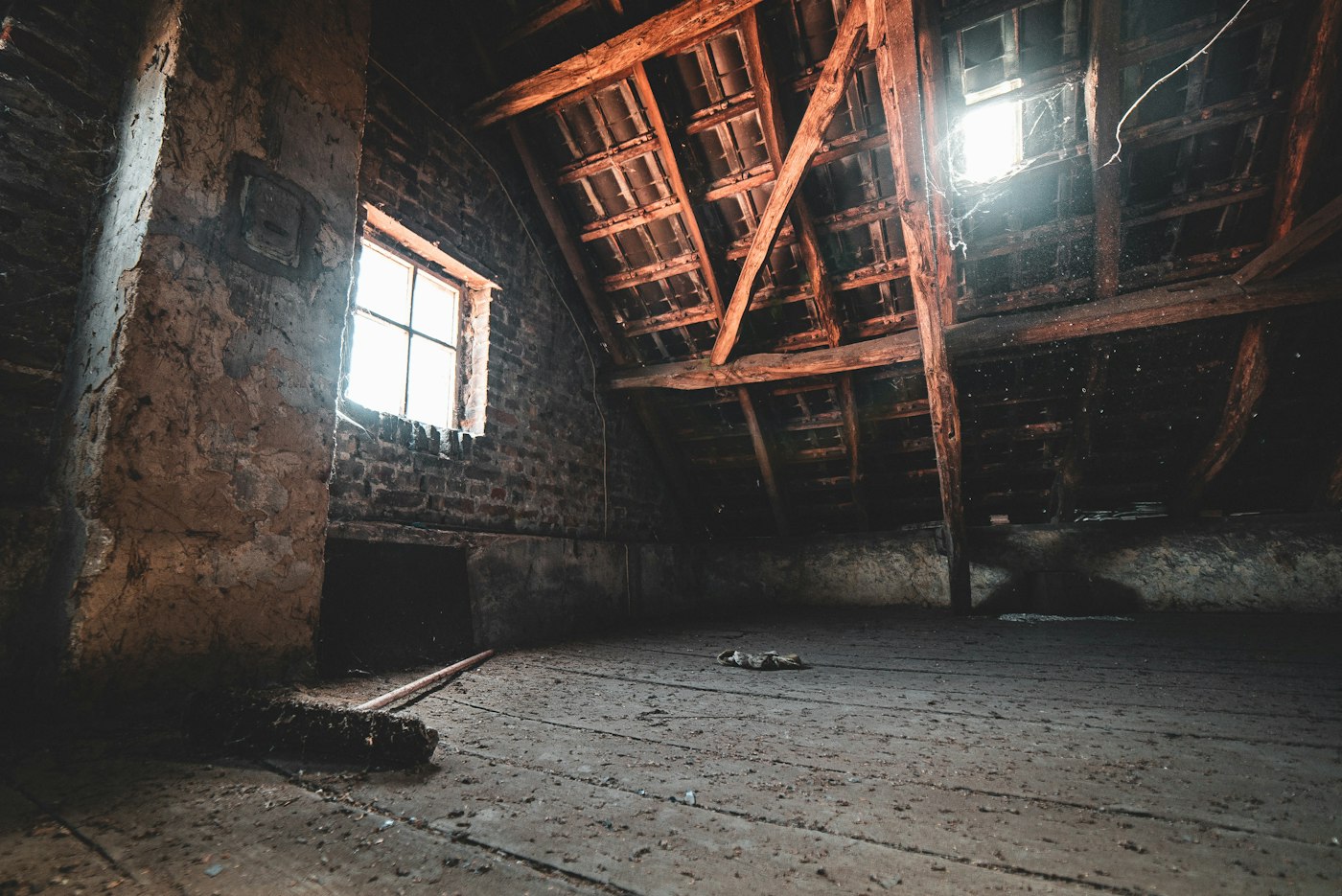
The attic is the original overflow closet. Holiday decorations, keepsakes and the baby clothes nobody is ready to give away tend to end up there. But an attic is also where much of the house’s insulation lives, and in July it is one of the hottest places on the property. Storage that ignores those facts can make the house less comfortable, damage what is stored and even strain the ceiling below. A little planning makes attic storage work.
Know What the Framing Can Carry
Many attics are framed with ceiling joists sized to hold up drywall and insulation, not heavy boxes. Homes built with engineered roof trusses have relatively slender bottom members and diagonal webs that leave limited open space, and trusses should never be cut or modified without an engineer’s approval. Before loading up an attic, ask a contractor whether the framing can handle storage, and how much. Keeping heavier items near the walls that support the ceiling, rather than in the middle of long spans, is a sensible habit.
Do Not Crush the Insulation
Insulation works because it traps air. Boxes or plywood laid directly on top of it compress it and reduce its effectiveness, and walking on it does the same. In many attics the insulation is deeper than the joists are tall, so simply nailing plywood across the joists squashes the layer beneath.
A better approach is a raised storage platform. Elevated supports, sold as attic storage stilts or built from lumber, lift the floor above the full depth of the insulation and leave it intact beneath a sturdy deck. If the attic needs more insulation, add it before building the platform. Keep any platform clear of soffit vents and baffles so air can still move through the attic.
Safe Access
- Pull-down ladders should be rated for the weight of a person carrying a load and installed to the manufacturer’s instructions.
- Insulated hatch covers and weatherstripping keep the attic opening from becoming a large air leak.
- Lighting on a switch near the access makes the attic safer to navigate.
- A clear walkway from the hatch to the storage area avoids stepping between joists, where a foot can go through the ceiling.
What Not to Store Up There
Attic temperatures swing widely, from summer heat to winter cold, and humidity can run high. Candles, photographs, important papers, electronics, vinyl records, paint, adhesives and many plastics do poorly in that environment. Aerosols and flammable liquids do not belong in a hot attic at all. Fabric and paper invite pests unless sealed in sturdy bins. Save the attic for durable, lightweight seasonal items, and keep valuables and documents in conditioned closets instead.
Watch for Signs of Trouble
While you are up there, look for daylight around vents or roof penetrations, stains on the roof sheathing, damp or matted insulation and evidence of animals. Storage should never block access to ductwork, wiring junctions or equipment. If an attic is part of a broader remodel, a remodeling professional can help balance storage, insulation and ventilation so all three work together.
Building a Raised Storage Platform: The Process
When homeowners ask us to make an attic usable for storage, we follow a sequence designed to protect the insulation, the framing and the ceiling below.
- Inspect the attic. We look at the framing type, the current insulation depth and condition, ventilation paths, roof sheathing and any signs of leaks or pests.
- Confirm load limits. We determine what the framing can safely carry, and whether an engineer should review it, before planning the size and location of the platform.
- Air seal the attic floor. Gaps around light fixtures, plumbing stacks, wiring holes and the top plates of walls let conditioned air leak into the attic. Sealing them is easiest before anything is built over them.
- Bring insulation to the right depth. If the insulation is thin, compressed or damaged, it is topped up or replaced so the platform sits over a complete layer.
- Install the supports and deck. Raised supports are fastened to the joists, and decking is laid on top, high enough to clear the insulation fully.
- Add access and lighting. An insulated, weatherstripped hatch or a rated ladder, a switched light and a clear walkway finish the job.
Packing for the Attic
How you store things matters as much as where. A few habits keep stored items in better shape and the attic easier to use.
- Use sturdy, lidded plastic bins. They resist pests and moisture better than cardboard, which also attracts insects.
- Label every container on two sides. You should be able to see what is inside without moving everything else.
- Keep loads light. Bins that one person can carry safely on a ladder are best. Heavy items belong in a garage or basement.
- Store the most-used items nearest the hatch. Holiday decorations and seasonal clothing come and go every year; keepsakes can go farther back.
- Leave space around equipment. Keep at least a clear path to any air handler, ductwork, bath fan, junction box or roof vent.
- Keep a written inventory. A simple list of what is in each bin saves time spent searching in a hot attic.
Mistakes to Avoid
- Laying plywood directly over the insulation. It compresses the layer and reduces its effectiveness, sometimes considerably.
- Blocking soffit vents. Boxes or platforms pushed to the eaves can stop air from entering the attic, leading to heat buildup and moisture problems.
- Using the attic in the heat of the day. Summer attics can become dangerously hot. Plan trips for early morning.
- Leaving the hatch uninsulated. An uninsulated hatch is one of the largest single air leaks in many homes.
- Storing near recessed lights. Some older recessed fixtures get hot, and items should never be stacked against them.
Questions Homeowners Ask
Can I store things in an attic with blown-in insulation?
Yes, on a properly raised platform. Blown-in insulation is especially easy to disturb, so access paths and platforms should be planned carefully.
Does a storage platform affect my roof ventilation?
It should not, as long as it stays clear of the eaves and baffles and does not block ridge or gable vents.
Is attic storage worth it if my attic has trusses?
Often there is limited but useful space between the webs near the center. A contractor can show you what is practical without modifying the trusses.


