
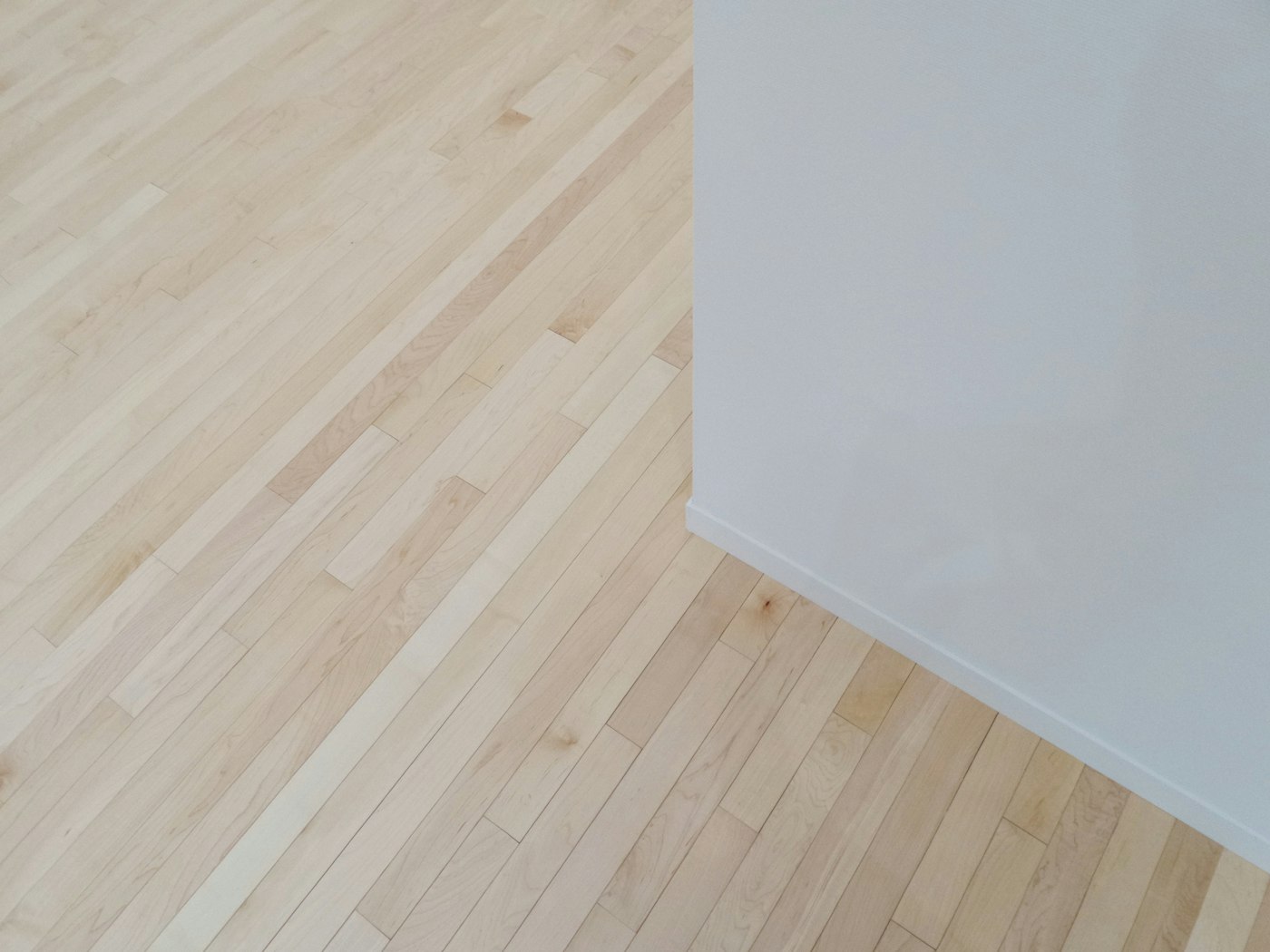
Hardwood floors wear in a predictable way. The finish dulls first, especially in traffic paths and in front of the sink. Then scratches begin to reach the wood, and finally boards turn gray where the finish is gone entirely. The good news is that solid hardwood, and many engineered floors, can be renewed rather than replaced. The question is how much renewal the floor needs: a light screen and recoat, or a full sand and refinish.
What a Screen and Recoat Involves
A screen and recoat, sometimes called a buff and coat, renews the protective finish without removing it. The floor is cleaned thoroughly, then abraded lightly with a buffer and a fine abrasive screen or pad so that a fresh coat will bond. One or more new coats of finish go on top. Because the wood itself is not sanded, the color stays the same and almost no material is removed. The job is quicker and less disruptive than a full refinish, and done periodically it can keep a floor’s finish healthy for years.
It has limits. A recoat cannot remove deep scratches, gray worn areas, stains or dents, and it cannot change the color. It also depends on the new finish bonding with the old one. Floors that have been waxed or treated with certain polishes and cleaning products may not accept a new coat, so a flooring professional typically tests the surface first.
What a Full Sand and Refinish Involves
A full refinish sands the floor down to bare wood, removing the old finish along with surface damage, then applies stain if desired and several coats of new finish. It can erase deep scratches, even out wear patterns and change the floor’s color entirely. It also takes longer, creates more dust even with modern dust-collecting sanders, and removes a layer of wood each time. Solid hardwood can usually be sanded several times over its life. Engineered flooring varies widely: some products have a thick wear layer that tolerates sanding, while others have a thin veneer that may allow one light sanding or none at all.
How to Tell Which Your Floor Needs
- If the floor looks dull and has light surface scratches but the color is even, a recoat may be enough.
- If the finish is worn through to bare wood, especially where the wood has grayed or darkened, a full refinish is usually needed.
- Deep scratches, pet stains and water damage call for sanding, and sometimes for board replacement.
- If you want a different color, only a full sanding will get you there.
Why Summer Can Be a Good Time
Floor finishing requires clearing the rooms, keeping traffic off the floor while it cures and ventilating well, especially with solvent-based finishes. Summer makes some of that easier, because windows can stay open and households can spend more time outdoors or away. Heat and humidity affect drying and curing, though, so follow the finish manufacturer’s guidance on temperature and humidity, and plan furniture and rugs around the full cure time, which is longer than the time it takes for the floor to feel dry.
Whichever route you choose, felt pads, entry mats and gentle cleaning products help the new finish last. A flooring or remodeling professional can assess your floor and recommend the approach that preserves the most wood for the future.
Simple Tests You Can Try at Home
Before calling for an assessment, a few quick checks can tell you a lot about the condition of your floor and its finish.
- The water drop test. Place a few drops of water in a worn area and in a protected area, such as under a rug or inside a closet. If the water beads, the finish is still intact. If it soaks in quickly and darkens the wood, the finish is gone in that spot.
- The scratch check. Run a fingernail across a scratch. If your nail catches and the scratch shows lighter or grayish wood, it has gone through the finish into the wood and will not disappear with a recoat.
- The board-edge look. Remove a floor vent or look at a threshold to see the edge of a board. On engineered flooring, this can show the thickness of the wear layer, which tells a professional whether sanding is possible.
- The product history. Think back to what has been used to clean or polish the floor. Waxes, oil soaps and “restorer” polishes can affect whether a new coat will stick. Mention them to your flooring professional.
Preparing Your Home for Floor Work
- Clear the rooms completely. Furniture, rugs, curtains that touch the floor and anything stored on the floor need to be moved out.
- Plan your path. Decide how you will get to bedrooms, bathrooms and the kitchen while floors are being finished and curing. Some households work room by room; others leave for a few days.
- Make arrangements for pets. Pets should stay away from the work area and off newly finished floors until the finish is ready for traffic and claws.
- Turn off HVAC if advised. Some finishers ask that heating and cooling systems be turned off or adjusted during application to reduce dust and drafts. Follow their guidance.
- Protect adjoining rooms. Doorways, vents and built-ins near the work area can be covered to limit dust.
Mistakes That Shorten the Life of a New Finish
- Putting rugs down too soon. Area rugs placed before the finish has fully cured can trap solvents and cause discoloration or a mismatch in sheen. Ask how long to wait.
- Dragging furniture back in. Lift furniture instead of sliding it, and add fresh felt pads before it goes back.
- Wet mopping. Standing water damages wood and finish. Use a slightly damp microfiber mop and a cleaner recommended for the finish.
- Skipping entry mats. Grit tracked in from outside acts like sandpaper on a fresh finish.
- Waiting too long between recoats. Once the finish wears through, the next step is a full sanding. Recoating while the finish is still intact preserves wood.
Questions Homeowners Ask
How often should a floor be recoated?
It depends on traffic, pets and how the floor is cared for. A floor in a busy kitchen may need it sooner than one in a guest room. Watch for dulling in traffic paths as a sign it is time.
Can I refinish just one room?
Yes, though matching the color and sheen of adjoining rooms can be challenging if the floor runs continuously. Ending at a doorway or threshold usually helps.
Are water-based finishes as durable as oil-based?
Many modern water-based finishes perform very well and dry faster with less odor. Oil-based finishes tend to add an amber tone. A flooring professional can help you weigh the look and durability for your home.


