
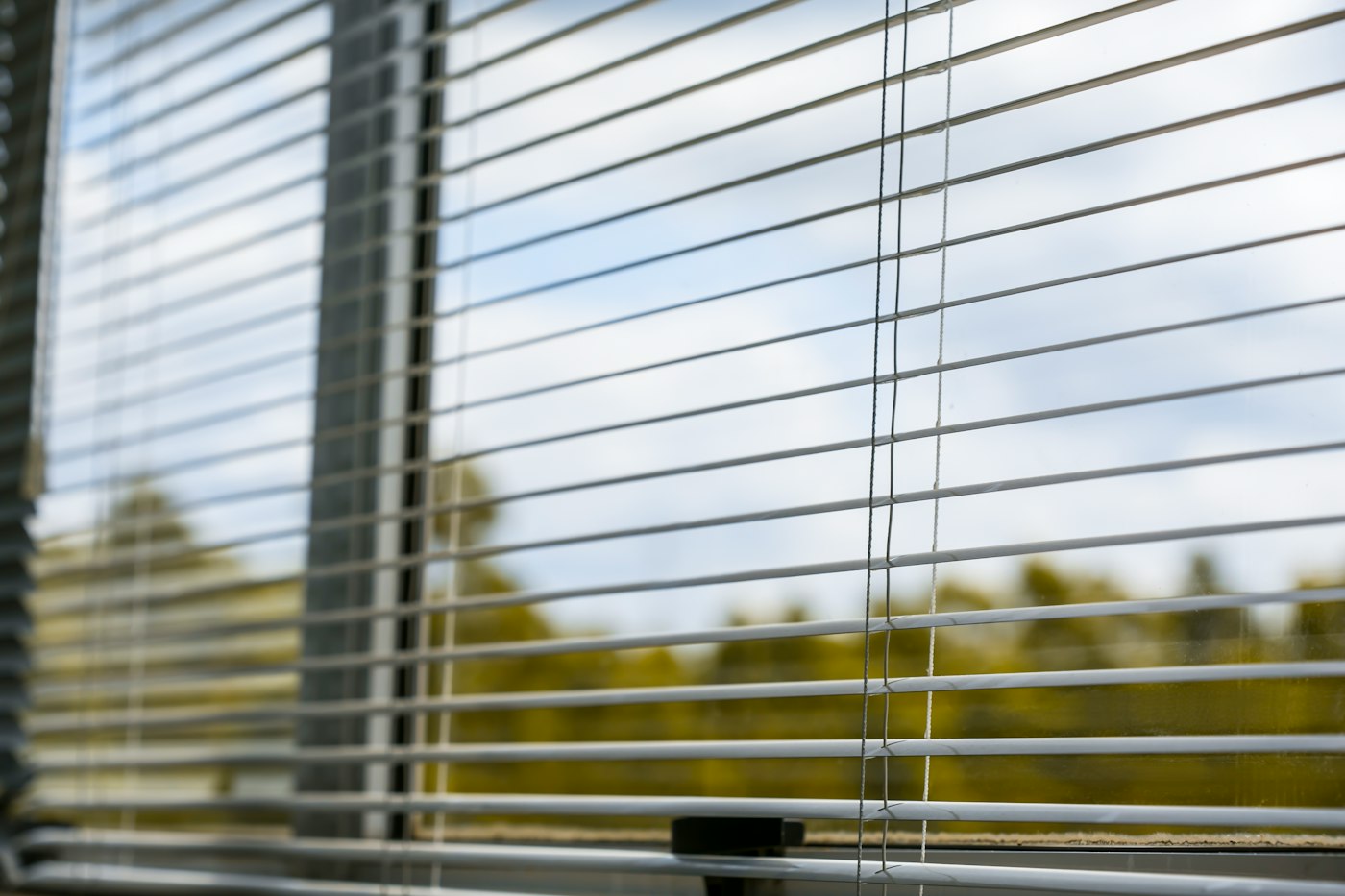
Window coverings help with summer heat only when they are closed at the right time, and that is where good intentions often fall apart. Nobody wants to walk through the house at two o’clock lowering every west-facing shade. Motorized shades take over that job. They can lower on a schedule, respond to a button by the door or follow the sun automatically, and they remove dangling cords from the room at the same time.
How Motorized Shades Are Powered
- Battery motors run on replaceable batteries in the headrail or a separate battery wand. They need no wiring, which makes them practical in existing homes, and battery life varies with use and shade size.
- Rechargeable motors are topped up with a charging cable from time to time, and some can be paired with a small solar panel mounted at the window.
- Plug-in motors use a low-voltage power supply plugged into a nearby outlet, which works well where an outlet is close and the cord can be hidden.
- Hardwired motors connect to wiring run to each window during construction. They never need charging and give the cleanest result, but that wiring is far easier to install while walls are open.
Ways to Control Them
Most systems offer a handheld remote, and many add wall keypads that look like light switches. App control and integration with smart-home systems allow schedules, scenes and voice commands. The most useful setting for summer heat is a schedule tied to the sun: east-facing shades lower in the morning, west-facing ones in the afternoon, and everything rises again once the sun has moved on. Some systems use sun sensors or astronomical timers that adjust to the season automatically.
Why a Remodel Is the Time to Plan
If you are opening walls or ceilings, adding windows or building an addition, it costs little to run wiring for hardwired shades or to add outlets near the tops of windows. Window heads and ceilings can also be framed with recessed pockets that hide the shade rollers entirely, giving a clean look when the shades are up. Tall windows, skylights and windows above stairs or tubs are prime candidates, since they are hard to reach any other way. Discuss motorization with your contractor and window covering supplier before drywall, even if you install the shades later.
Safety and Practical Points
Corded window coverings pose a strangulation hazard to young children, and the U.S. Consumer Product Safety Commission recommends cordless coverings in homes where children live or visit. Motorized shades are one way to remove cords altogether. Look for motors quiet enough for bedrooms, and ask how the system behaves during a power outage or when batteries run low. Compare warranties on both the motor and the fabric, and choose fabrics, whether cellular, solar screen or room-darkening, based on the heat and light control each room needs.
Motorized shades turn window coverings into part of the home’s cooling strategy, quietly doing their work whether anyone remembers or not. If you are planning a remodel and want to build them in, our contact page is a good place to start.
Setting Up a Sun Schedule That Works
A good schedule is what turns motorized shades from a novelty into a comfort tool. Here is a simple way to build one for your home.
- Walk the house on a sunny day. Note when direct sun enters each room. East rooms get it in the morning, south rooms through the middle of the day and west rooms in late afternoon.
- Group shades by exposure. Put all east-facing shades in one group, all west-facing shades in another and so on. Most systems let you control groups together.
- Set times or sun-based triggers. Lower each group shortly before direct sun arrives and raise it after the sun has moved off the windows. If the system offers sunrise and sunset offsets, use those so the schedule adjusts through the year.
- Add privacy scenes. Create an evening scene that lowers street-facing and bedroom shades at dusk, when lights inside make rooms visible from outside.
- Allow for exceptions. Make sure wall keypads or remotes can override the schedule when someone wants the view or daylight.
- Review seasonally. In winter you may want shades on south-facing windows open during sunny days to let in warmth, then closed at night.
What to Discuss With Your Contractor Before Drywall
- Which windows will get motorized shades now, and which might later? Wiring for future shades costs much less while walls are open.
- Will shades be hardwired, plug-in or battery powered at each window? Each choice affects whether wiring or an outlet is needed near the window head.
- Do you want recessed pockets at the window heads? These must be framed into the ceiling or header before drywall.
- Where will wall keypads go? Common spots include beside room entries and next to the bed.
- Will shades connect to a home automation hub, and where will that hub be located?
- How deep are the window jambs, and are they deep enough for the shade and motor you plan to use?
Mistakes to Avoid
- Picking the motor before the fabric. Heavy fabrics and wide shades need motors with enough torque. Choose fabric and size first.
- Forgetting the low battery reality. Battery shades are convenient, but batteries in a dozen windows need to be changed or recharged at some point. Hardwiring makes more sense in large installations.
- Mixing incompatible systems. Shades from different manufacturers may not work with the same controls. Stick to one system or confirm compatibility.
- Overcomplicating the controls. A schedule that runs quietly in the background and a simple button by the door are usually more useful than a phone app no one opens.
Questions Homeowners Ask
Can I motorize the shades I already own?
Some shade designs can be retrofitted with motors, but many cannot. Your window covering supplier can tell you whether your existing shades are compatible, or whether replacement makes more sense.
What happens during a power outage?
Battery and rechargeable shades continue to work. Hardwired shades stop until power returns, unless connected to a backup source.
Are motorized shades loud?
Many modern motors are quiet, but noise levels vary. Ask to hear a demonstration, especially for bedrooms, and listen to the shade both raising and lowering, since the sound can differ in each direction.


