
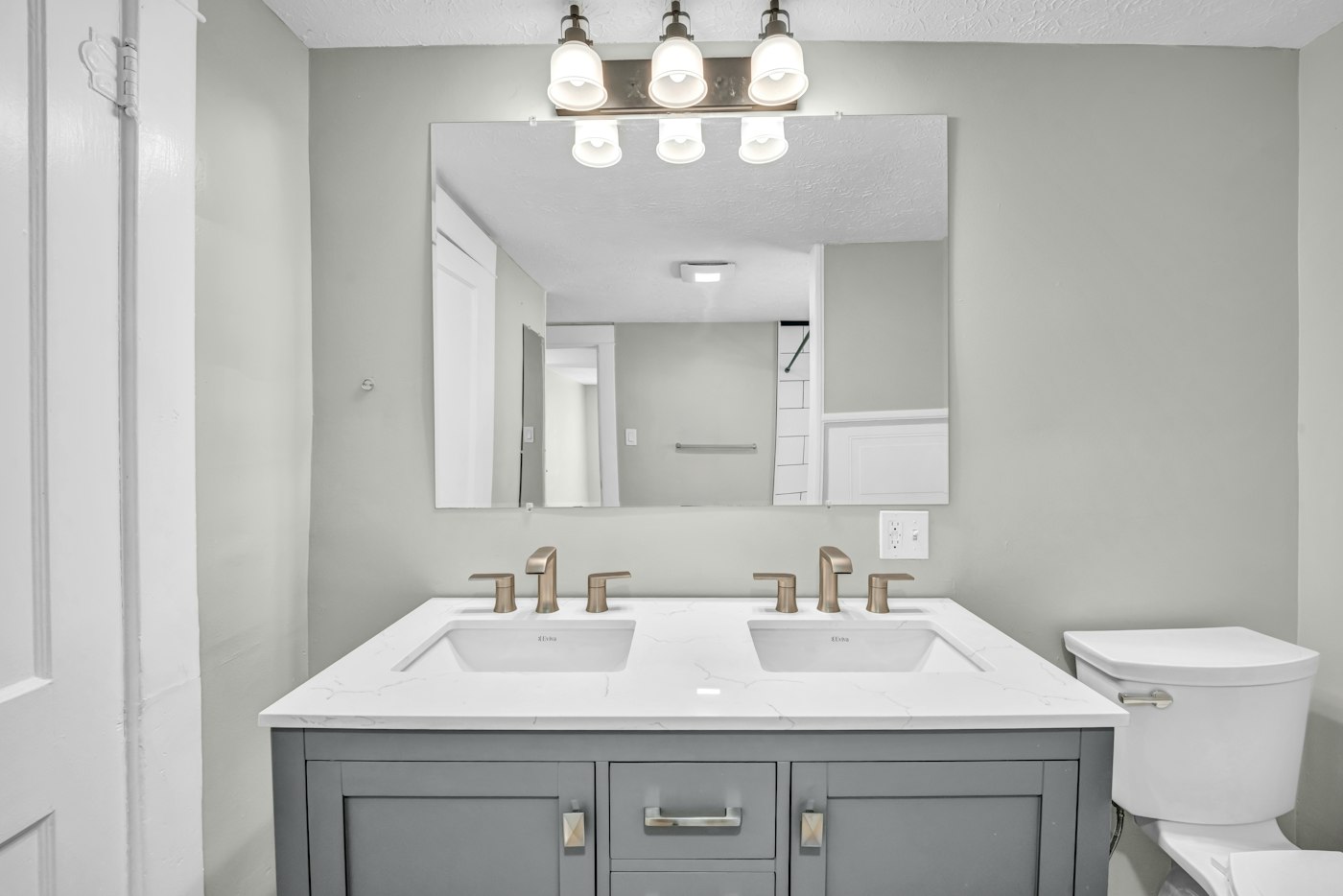
Bathroom countertops lead a different life from kitchen counters. They rarely face knives or hot pans, but they do face standing water, toothpaste, hair dye, nail polish remover, curling irons and cleaners every day. Before summer guests fill the house, a tired vanity top is one of the quickest ways to refresh a guest bath. Vanity tops are also small, so a premium material may be more within reach than in a kitchen, and remnants from larger slabs can sometimes be an option. Here is how the common choices compare.
Cultured Marble
Cultured marble is a cast material made of crushed stone and resin, usually finished with a clear protective gel coat. It is often molded with an integrated sink, so there is no seam where sink meets counter and nothing for grime to collect in. It is relatively affordable and easy to clean. The gel coat can scratch, dull or crack with hard impacts or high heat, such as a hot styling tool left lying on it, and repairs tend to show. Quality varies among manufacturers.
Quartz
Engineered quartz combines crushed quartz with resins and pigments. It is nonporous, so it needs no sealing and resists stains from cosmetics and toiletries well, and it comes in consistent colors and patterns, including convincing marble looks. Quartz is less tolerant of high heat than natural stone, so hot tools should rest on a mat or holder. It is a dependable choice for nearly any bathroom.
Solid Surface
Solid surface materials are made from acrylic or polyester resins and mineral fillers. They are smooth and nonporous and can be formed with seamless integrated sinks. Their great advantage is repairability: because the color runs all the way through, scratches and minor burns can usually be sanded out. They scratch more easily than stone or quartz and can be damaged by high heat.
Natural Stone
Granite is durable and heat resistant and, depending on the stone, needs periodic sealing. Marble brings classic beauty to a bath, where acids are less common than in a kitchen, though some cosmetics, cleaners and toiletries can still etch or stain it. Soapstone, quartzite and other stones appear in baths as well. Stone tops usually pair with undermount sinks, and a vanity-sized piece can generally be cut without seams.
Other Options and How to Choose
- Porcelain slabs: thin, dense, stain resistant and heat tolerant, with stone and concrete looks.
- Laminate: the most economical, available in many patterns, but vulnerable at seams and edges where water sits.
- Sealed wood: warm and furniture-like, but it needs a waterproof finish and attention around the sink.
For a guest bath used occasionally, a durable, low-maintenance top such as quartz or cultured marble is easy to keep looking fresh. For a primary bath, consider who uses hot tools, how much counter space is needed and whether an integrated or undermount sink suits your cleaning habits. Bring samples home and test them with the products that live on your counter. A remodeling professional can help match the top to the vanity, the sink and the rest of the room.
Choosing the Sink and Edge Along With the Top
A vanity top is never chosen alone. The sink style, faucet holes and edge profile all affect how the bathroom looks and how easy it is to keep clean.
- Integrated sinks. Molded from the same material as the top, as with cultured marble and solid surface. With no seam or rim, they are the easiest to wipe clean, but if the sink is damaged, the whole top may need replacing.
- Undermount sinks. Mounted beneath a stone, quartz or porcelain top. They allow you to sweep water and debris straight into the bowl. The exposed edge of the cutout must be finished and polished.
- Drop-in sinks. Set into a cutout with a rim resting on the top. They work with almost any material, including laminate, but the rim can collect grime.
- Vessel sinks. Sit on top of the counter. They make a statement but raise the height of the bowl, so the vanity may need to be lower. They can also be more prone to splashing.
- Faucet drilling. Decide on a single-hole, centerset, widespread or wall-mounted faucet before the top is fabricated, since the holes are cut to match.
- Edges. Eased and slightly rounded edges are comfortable and resist chipping. Sharp square edges look crisp but chip more easily in stone and quartz.
Planning Steps for a Vanity Top Replacement
- Measure the vanity carefully. Measure width and depth, and note whether the top will butt against walls on one, two or three sides. Older walls are often out of square, which the fabricator needs to know.
- Check the vanity’s condition. A new top on a vanity with a swollen or wobbly base will not last. Look for water damage under the sink before investing in a new top.
- Choose the sink and faucet. Have the actual sink or its template and the faucet specifications ready for the fabricator.
- Plan the backsplash. Decide whether you want a matching backsplash, a tile backsplash or none. A short matching splash protects the wall at the joint.
- Think about the plumbing. Replacing a top is a good time to replace old shutoff valves and supply lines under the sink.
Mistakes to Avoid
- Setting hot tools directly on the counter. As noted above, heat can damage many materials. A heat-resistant mat or a wall-mounted holder solves the problem.
- Using abrasive cleaners. Scouring powders scratch cultured marble and dull many finishes. Mild, non-abrasive cleaners are safer for nearly every material.
- Skimping on the caulk joint. The joint where top meets wall needs a good bead of bathroom-grade sealant to keep water out of the wall and vanity.
- Choosing a dark, glossy top for a busy bath. Water spots and toothpaste show readily on dark polished surfaces.
Questions Homeowners Ask
Can I use a kitchen countertop remnant for my vanity?
Often, yes. Fabricators frequently have remnants of stone and quartz in sizes that suit vanities. Ask what they have in stock.
How long does it take to replace a vanity top?
Prefabricated tops can sometimes be installed quickly. Custom-fabricated tops require templating and fabrication time first, so plan for the bathroom sink to be out of service for a period.
Which material is most forgiving of nail polish remover?
Many materials can be affected by solvents. Quartz and porcelain are generally resistant, but wipe up spills promptly on any top and check the manufacturer’s care guide.


