
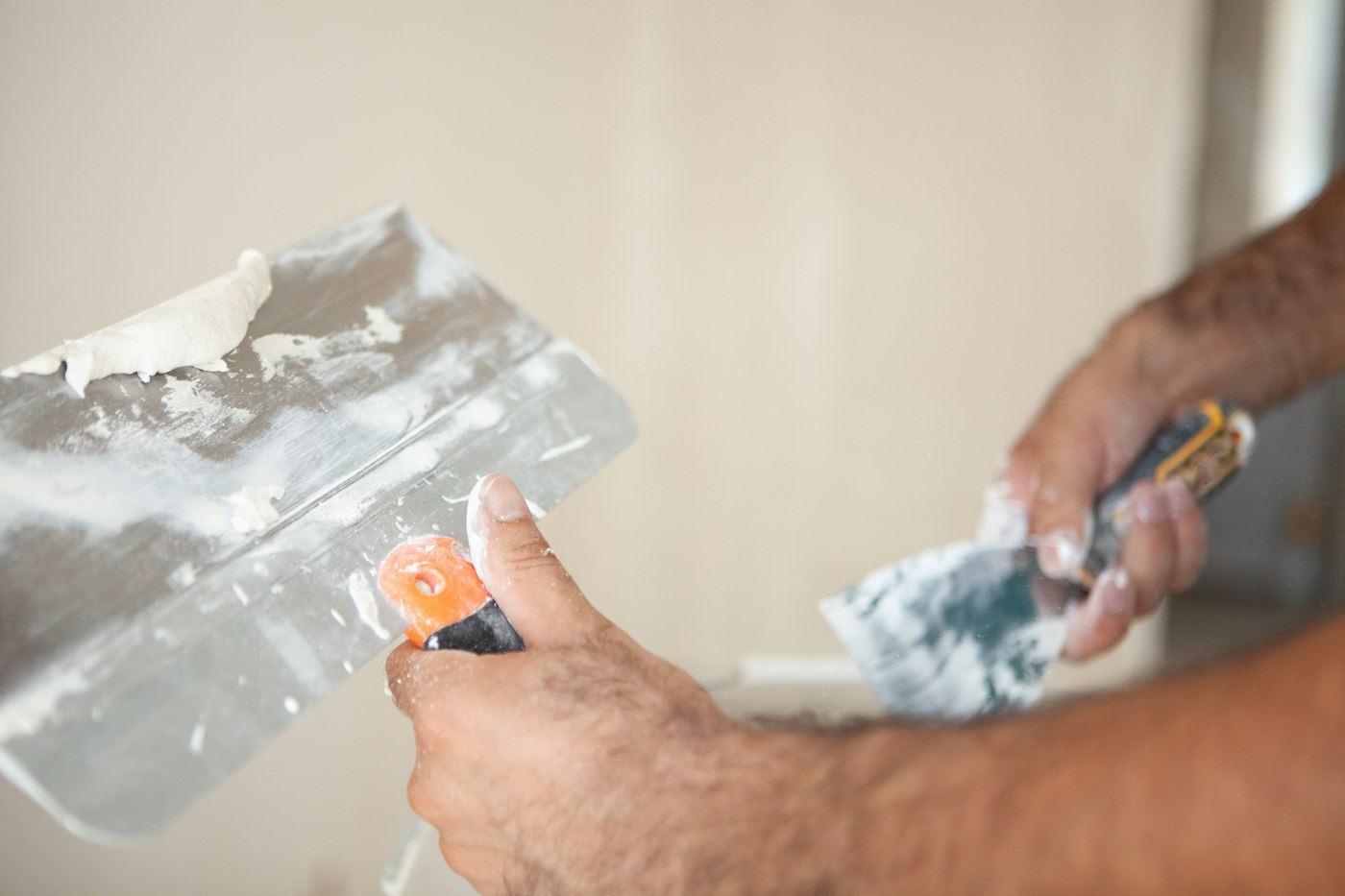
Knock on a wall in an older house and it often sounds different from one in a newer home: harder, denser and less hollow. That is because many homes built before the middle of the twentieth century have plaster walls, while most newer homes have gypsum drywall. Summer is a popular season for projects in older homes, and knowing which kind of wall you have, and how each behaves, matters the moment a remodel involves hanging cabinets, running new wiring or opening a wall.
How Plaster Walls Were Built
Traditional plaster was applied by hand in several coats over a base called lath. For much of American history, lath meant narrow strips of wood nailed across the studs with small gaps between them. The first coat of plaster was pressed into those gaps, where it oozed behind the strips and hardened into keys that locked the plaster to the wall. Later coats built up thickness and a smooth finish. Early plasters were typically lime-based, often mixed with animal hair or fiber for strength, and gypsum plasters became common later. Over time, metal lath and gypsum board lath replaced wood strips in many homes.
The Rise of Drywall
Gypsum board, a core of gypsum pressed between sheets of heavy paper, was developed in the United States in the late nineteenth and early twentieth centuries. It was slow to catch on, partly because many builders and buyers considered plaster superior. During and after World War II, the demand for fast, economical construction pushed drywall into the mainstream. Large sheets could be nailed or screwed to studs, taped at the seams and finished in a fraction of the time plaster required, without waiting for wet coats to dry. By the postwar building boom, drywall had become the standard.
How the Two Compare
- Hardness: plaster is harder and more resistant to dents than standard drywall.
- Sound: plaster’s mass helps it reduce sound passing between rooms.
- Repairs: drywall is quick and easy to patch, while plaster repair is a more specialized skill.
- Movement: plaster can crack as a house settles, and broken keys can let it loosen from the lath.
- Speed: drywall is far faster and less expensive to install today.
Remodeling With Plaster
Plaster walls in good condition are worth keeping in many older homes for their character and solidity. Cracks can often be repaired, and loose plaster can frequently be reattached with plaster washers or adhesive systems rather than torn out. When a wall must be opened for plumbing or wiring, cutting plaster is dustier and harder than cutting drywall. Some homeowners cover damaged plaster with a thin layer of drywall instead of removing it, which avoids heavy demolition but adds thickness at trim and outlets.
In older homes, test painted surfaces for lead before sanding or demolition, and be aware that some older wall and ceiling materials can contain asbestos. Work that disturbs lead paint in older homes should be handled by a contractor certified under the EPA’s lead-safe renovation rules. If you are planning a remodel in an older home and want advice on its walls, our contact page is a good place to start.
How to Tell What Your Walls Are Made Of
Before any remodeling work begins, it helps to confirm what kind of walls you have. A few simple observations usually tell the story.
- The knock test. Plaster sounds solid and dense when you knock. Drywall sounds more hollow between studs.
- The push test. Press firmly with your palm. Drywall may flex slightly between studs; plaster typically does not.
- Look at outlets and switches. With the power off at the breaker, remove a cover plate. The edge of the wall around the box shows its thickness and layers. Plaster on wood lath often shows several layers and visible strips of wood, while drywall shows a single, uniform board with paper faces.
- Check the attic or basement. Where the backs of walls or ceilings are visible, you may see wood lath and plaster keys or the back of gypsum board.
- Consider the age of the house. Homes built before the mid-twentieth century often have plaster, while most built afterward have drywall. Many older homes have both, because remodels replaced some walls along the way.
Working With Plaster During a Remodel
- Test before you disturb. Have painted surfaces tested for lead and suspect materials tested for asbestos before cutting, sanding or demolition.
- Map the damage. Note cracks, bulges and areas that sound loose when tapped. Loose areas may need reattachment before any other work.
- Plan wiring and plumbing routes carefully. Electricians and plumbers can often fish wires and run lines through existing cavities with small openings rather than large cuts, saving more of the original wall.
- Use the right tools for cutting. Score and cut plaster carefully to avoid cracking the surrounding wall. Dust control matters even more than with drywall.
- Hang cabinets and shelves properly. Locate studs before drilling, and use fasteners long enough to pass through the thicker plaster layers into framing.
- Match patches. Small patches can be made with plaster or joint compound, but blending texture and thickness takes skill so the repair disappears.
Mistakes to Avoid
- Removing plaster that could be saved. Tearing out sound plaster creates enormous dust and debris, and the walls lose some of their sound control and character.
- Drilling without locating framing. Plaster walls make studs harder to find with some stud finders. Look for nail patterns or use a finder designed for plaster.
- Using drywall screws on loose plaster alone. Screws without wide washers can pull through. Plaster washers spread the load.
- Ignoring the thickness difference. New drywall next to old plaster may not sit flush. Shims or a thicker board can help match the surface.
Questions Homeowners Ask
Is plaster worth keeping?
In many older homes, yes, when it is in reasonable condition. It is durable, quiet and part of the house’s character.
Can I paint over cracked plaster?
Fine cracks can be repaired and painted. Wider cracks or loose areas should be stabilized first, or the cracks will return.
Does drywall over plaster cause problems?
It can work well, but door and window trim, outlet boxes and switch plates may need extensions to account for the extra thickness. We look at those details before recommending this approach for a room.


