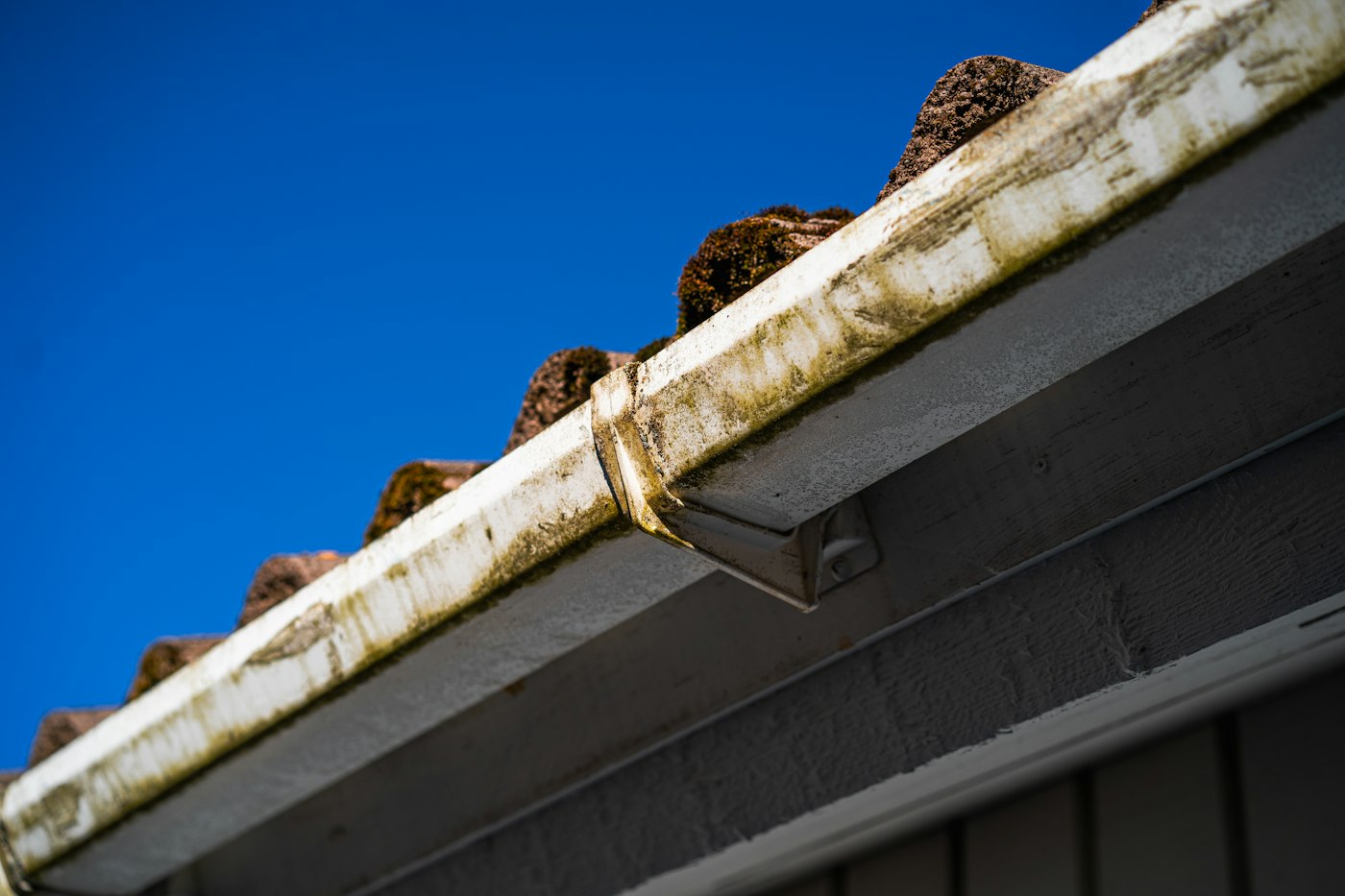
Gutters do quiet, essential work. Every time it rains, they collect hundreds of gallons of water off your roof and send it away from your siding, windows and foundation. When they clog, all that water goes where it should not. Fall is gutter cleaning season, and our advice is to clean now and again after leaf drop. While you are at it, check downspout extensions so the water you collect actually ends up away from the house.
Why Clean Twice in the Fall
One cleaning is rarely enough this time of year. Here is why we recommend two:
- The first cleaning, now, clears out everything that built up over spring and summer: seed pods, twigs, shingle grit, nests and the first early leaves. It also gives you a chance to spot damage while the weather is good enough to repair it.
- The second cleaning, after leaf drop, handles the heavy load of fall leaves. If you skip it, gutters go into winter packed with wet debris, which holds water against the fascia and can freeze solid.
Homes with many nearby trees may need more frequent attention. If you see water pouring over the edge during a moderate rain, the gutters are telling you they need cleaning.
What Clogged Gutters Cost You
A clogged gutter is not just an eyesore. Overflowing water causes problems all the way from the roofline to the basement:
- Fascia and soffit rot. Water sitting in gutters soaks the boards behind them.
- Roof edge damage. Backed-up water can work under the edge of the roof covering.
- Siding and paint damage. Overflow streaks siding, peels paint and stains trim.
- Foundation problems. Water dumped at the base of the wall saturates soil, which can lead to basement leaks, crawlspace moisture and settling.
- Landscape erosion. Waterfalls off the roof wash out mulch, soil and plantings.
- Ice buildup. In freezing weather, clogged gutters can fill with ice, adding weight and pulling hangers loose.
- Pests. Damp debris attracts insects and gives birds and rodents a place to nest.
How to Clean Gutters Safely
Gutter cleaning is simple work, but it happens on a ladder, which is where the risk lives. Safety comes first.
Set up
- Use a sturdy extension ladder on firm, level ground, and keep three points of contact.
- Consider a ladder stabilizer so the ladder does not rest directly on the gutter.
- Wear gloves; gutter debris often hides sharp screws and broken fasteners.
- Have a bucket or tarp ready to catch debris.
- Stay clear of overhead power lines.
Clean
- Start near a downspout and scoop debris out by hand or with a gutter scoop.
- Work along the run, moving the ladder often instead of overreaching.
- Flush the gutter with a garden hose, watching that water flows toward the downspout.
- If a downspout is clogged, flush it from the top or bottom, or use a plumber’s snake to clear it.
- Watch for standing water, which signals that a section is sagging or sloped the wrong way.
Two-story homes, steep roofs or unstable ground are good reasons to hire the job out. A fall from a ladder can cause serious injury.
Check Downspout Extensions
A clean gutter only solves half the problem. If the downspout empties right next to your foundation, the water still ends up against the house. That is why checking downspout extensions is part of every gutter cleaning.
- Make sure every downspout has an extension, splash block or underground drain.
- A common guideline is that extensions should carry water at least four feet from the house.
- Confirm extensions are still attached. They get kicked loose, mowed over and moved for yard work.
- Look at where the water lands. The ground should slope away from the house so the water keeps moving.
- If you have underground drains, run water through them and confirm it comes out at the other end.
Inspect While You Are Up There
Since you are already on the ladder, take a few minutes to look for damage:
- Sagging sections or gutters pulling away from the fascia
- Loose or missing hangers and spikes
- Leaking seams, corners and end caps
- Rust, holes or cracks
- Soft or stained fascia boards behind the gutter
- Shingle granules collecting in the gutter, which can be a sign of an aging roof
Small leaks can often be sealed with gutter sealant once the gutter is clean and dry. Sagging sections usually need new hangers and sometimes a corrected slope.
Should You Consider Gutter Guards?
Gutter guards can reduce how often you need to clean, especially on homes surrounded by trees. They come in several styles, from simple screens to micro-mesh and solid covers. No guard is completely maintenance free; most still need periodic cleaning on top and occasional checks underneath. They are worth considering if you are cleaning frequently, but they work best paired with properly sloped gutters and solid downspout extensions.
Common Mistakes
- Cleaning once in early fall and skipping the post-leaf-drop round
- Leaning the ladder against a weak gutter section
- Clearing the gutter but leaving the downspout clogged
- Letting extensions stay detached after yard work
- Ignoring standing water that points to slope problems
What to Do This Week
- Clean gutters now and mark your calendar to clean again after leaf drop.
- Flush every downspout and confirm water flows freely.
- Check downspout extensions and reattach or replace any that are missing.
- Note sagging sections, leaks and soft fascia for repair.
- Decide whether gutter guards make sense for your home.
AX Home Pro handles repairs, improvements and maintenance for homeowners. Request an estimate to get started.