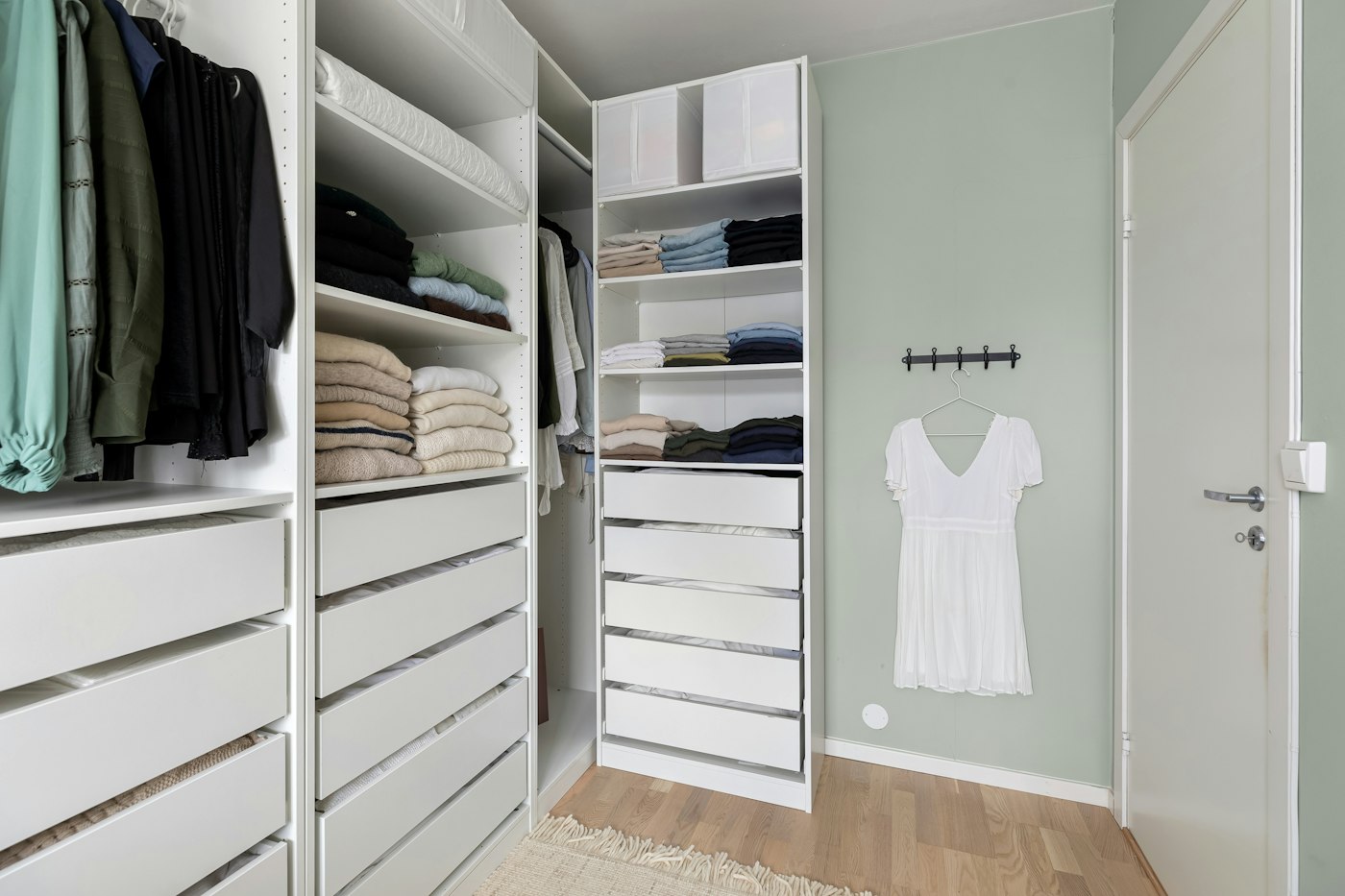
Most closets are built the same way: one rod, one shelf above it, and a lot of wasted space. Clothes get crammed together, shoes pile up on the floor, and the top shelf becomes a stack of things nobody can reach. A well-planned closet system changes that. Double rods, adjustable shelves and drawers double usable space, turning the same footprint into storage that actually fits how you live.
Why Standard Closets Waste Space
A single hanging rod set high on the wall leaves a large empty zone underneath shirts, jackets and folded pants. The lone shelf above is often too deep for neat stacks and too high for daily use. Corners go unused. Shoes, bags and accessories have no dedicated home, so they end up on the floor. The result is a closet that feels full long before it really is.
Closet systems solve this by dividing the space into zones sized for what you actually store.
The Three Building Blocks
Double rods
Most shirts, blouses, jackets and folded trousers are short enough to hang on two rods stacked one above the other. Installing double rods in part of the closet can nearly double hanging capacity in that section. Keep one section of single, full-height rod for dresses, long coats and robes.
- Use the upper rod for items you wear less often or for adult clothing, and the lower rod for daily wear or for children.
- Leave enough clearance so clothes on the top rod do not drag on the rod below.
- Consider a pull-down rod for very high spaces.
Adjustable shelves
Fixed shelves force your belongings to fit them. Adjustable shelves fit your belongings. They let you set spacing for sweaters, jeans, handbags, shoes or storage bins, then change it as your needs change.
- Use shallower spacing for shoes and taller spacing for folded sweaters or bins.
- Stack folded items no higher than you can easily lift without toppling the pile.
- Add shelf dividers to keep stacks neat.
Drawers
Drawers bring dresser storage into the closet. They are ideal for socks, undergarments, accessories, workout clothes and anything that looks messy on an open shelf. Built-in drawers can free up floor space in the bedroom by replacing a separate dresser.
- Use shallow drawers for jewelry, ties and belts.
- Use deeper drawers for sweaters, sleepwear and folded items.
- Add drawer organizers for small items.
Planning Your Closet System
A good closet starts with a plan, not a catalog. Follow these steps before you buy anything.
- Empty and edit. Take everything out. Donate or discard what you no longer use. There is no point in organizing items you do not want.
- Take inventory. Group what is left: long hanging, short hanging, folded, shoes, accessories, bags and seasonal items.
- Measure. Record the width, depth and height of the closet, plus the location of the door, light fixture, outlets and any obstructions.
- Map zones. Assign each group a zone. Put daily items at the easiest height, and seasonal or rarely used items up high.
- Choose components. Decide where double rods, single rods, shelves, drawers and accessories go.
- Plan for change. Choose adjustable components where you can, so the closet adapts to new wardrobes, growing kids or a change in who uses the room.
Useful Extras
- Shoe shelves or cubbies, angled or flat, to get shoes off the floor
- Pull-out hampers that keep laundry contained
- Valet rods for planning outfits or hanging dry cleaning
- Belt, tie and scarf racks mounted on side panels
- Hooks for bags, robes and frequently used items
- Corner shelving to make use of awkward spaces
- Better lighting, since a well-lit closet is easier to use and keep organized
Beyond the Bedroom
The same principles work all over the house:
- Kids’ closets benefit from low rods they can reach, plus adjustable components that grow with them.
- Entry and coat closets work better with hooks, a shoe shelf and a shelf for bins of hats and gloves.
- Linen closets become far more useful with adjustable shelves spaced to fit towels, sheets and supplies.
- Pantry closets can use shallow shelves so nothing gets lost in the back.
Installation Considerations
Closet systems range from simple wire shelving to custom-built wood units. Whatever you choose, installation matters. Shelves and rods loaded with clothing are heavy, so systems need to be anchored into wall studs or a properly mounted rail. Walls should be level and in good condition; a fresh coat of paint before installation is easy when the closet is empty. If you are adding lighting, use fixtures suited to closet use and keep them clear of stored items.
Keeping it organized
A closet system works best when it gets a quick reset now and then. Use matching slim hangers to save rod space, return items to their zones, and do a seasonal swap so off-season clothing moves to upper shelves or bins. Once or twice a year, pull out anything that has not been worn and decide whether it stays.
Common Mistakes
- Organizing before decluttering
- Installing only double rods and forgetting space for long garments
- Choosing fixed shelves that cannot adapt
- Making shelves too deep, so items get lost in the back
- Overloading shelves or rods mounted only to drywall
- Ignoring the space above the top shelf and in corners
What to Do This Week
- Pick one closet and empty it completely.
- Donate or discard what you no longer use.
- Sort what remains into hanging, folded, shoes and accessories.
- Measure the space and sketch zones for double rods, adjustable shelves and drawers.
- Decide whether to install it yourself or have it built.
AX Home Pro handles repairs, improvements and maintenance for homeowners. Request an estimate to get started.