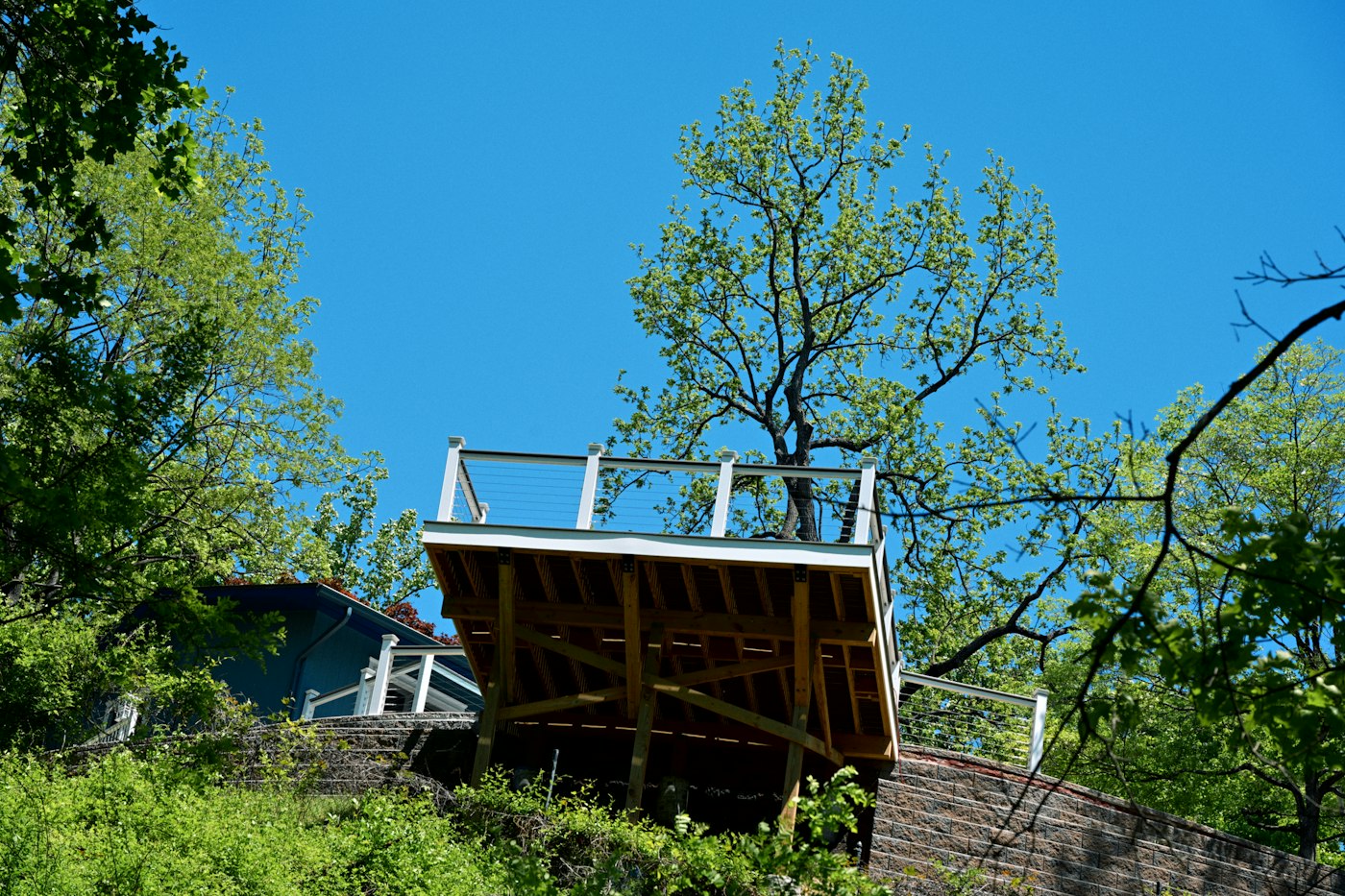
A deck takes a beating that most of the house never sees. Sun, rain, snow, foot traffic and the slow work of moisture all act on it at once, and much of the damage happens underneath, where nobody looks. Before the season’s first cookout, it is worth spending an hour with a flashlight, a screwdriver and a critical eye. Most decks pass with a few small fixes. The ones that do not usually show their problems to anyone who looks closely.
Start where the deck meets the house
On an attached deck, the ledger is the most important connection in the structure. It is the board fastened to the house that carries one end of the joists. Look at how it is attached. Through-bolts or structural screws spaced along its length are what you hope to see. A ledger held only by nails is a concern worth raising with a professional.
Check above the ledger for flashing, a strip of metal or membrane that sheds water away from the joint. Without it, water can soak the ledger and the house framing behind it, causing rot that is invisible from the yard. Dark staining, soft wood or peeling paint on the siding just above or below the deck are clues that water has been getting in.
Posts, beams and joists
Walk underneath and look at each post where it meets the ground or footing. Wood that sits in soil or in a puddle tends to rot from the bottom up. Press a screwdriver into the base of each post and along the lower edges of beams and joists. Sound wood resists. Rotted wood lets the tip sink in with little effort.
Look for posts that lean, beams that sag and joists that have split or pulled away from their hangers. Notice whether the deck sways when several people walk across it. Some movement is normal on a tall deck, but noticeable side-to-side wobble suggests it needs more bracing.
Hardware and fasteners
Joist hangers, post bases and brackets are usually galvanized or stainless steel to resist corrosion. That matters because modern pressure-treated lumber can be hard on ordinary metal. Look for rust, flaking or hardware that has visibly thinned, and check that every hanger hole meant to hold a fastener actually has one. Popped nails and loose screws on the surface are easy fixes, and they are also a reminder to look at the connectors below.
Railings and stairs
Grab each railing post and push firmly. A guard that moves under your hand will not stop someone who stumbles into it. Check that balusters are secure and none are missing, since gaps are a particular danger for small children. Local building codes set minimum guard heights and maximum openings, and your building department can tell you what applies.
On stairs, check that the stringers are solid, the treads are firmly attached and not cracked, and the handrail is continuous and easy to grip. Good lighting on the steps matters for evening gatherings.
- Surface: loose boards, splinters, raised fasteners and slippery algae in shady spots.
- Structure: soft wood, sagging, leaning posts and corroded hardware.
- Safety: wobbly guards, missing balusters and dark or uneven steps.
When to call a professional
Surface repairs are reasonable weekend projects. Structural concerns are not. If you find rot in the ledger, posts or beams, a ledger attached with nails, significant corrosion or a railing that moves, have a qualified contractor or inspector take a look before the deck hosts a crowd. Sometimes the answer is a targeted repair, and sometimes it is a rebuild. Either way, it is better to know before the party than after.
A Step-by-Step Inspection Walk
A systematic walk keeps you from missing anything and makes it easier to describe what you find to a professional. Bring a flashlight, a screwdriver, a notepad and a phone for photos.
- Look from a distance. Stand in the yard and look at the deck as a whole. Notice sagging, leaning posts or an uneven railing line.
- Inspect the ledger. Check the attachment, the flashing and the siding around it.
- Go underneath. Probe posts, beams and joists with the screwdriver, focusing on ends, joints and areas that stay damp.
- Check the footings. Look for posts that have sunk, shifted or lost contact with their bases.
- Examine the hardware. Look at hangers, brackets and bolts for rust and missing fasteners.
- Walk the surface. Check boards for soft spots, cracks and raised nails or screws.
- Test the railings and stairs. Push on guards, check balusters and walk the stairs carefully.
- Record what you find. Write down and photograph any concerns so they can be reviewed later.
Simple Maintenance That Keeps a Deck Safe
- Keep it clean. Sweep leaves and debris regularly, especially from the gaps between boards, so water can drain and wood can dry.
- Manage water. Make sure gutters and downspouts do not dump water onto or under the deck.
- Refinish wood surfaces. A good finish slows weathering and moisture damage.
- Clear the ground underneath. Keep soil, mulch and vegetation away from posts and beams so they can dry.
- Tighten fasteners. Drive popped nails, replace them with screws where appropriate and tighten loose bolts.
- Watch heavy loads. Hot tubs, large planters and outdoor kitchens add significant weight. Ask a professional whether the deck was designed to support them.
Common Mistakes
- Only looking at the surface. Most structural issues are underneath.
- Painting over problems. Stain and paint can hide soft or cracked wood, but they do not fix it.
- Mixing metals. Using fasteners that are not compatible with the hardware or treated lumber can speed corrosion.
- Delaying repairs. Small issues such as a loose railing or a cracked board become bigger and more expensive with time.
- Overloading the deck. Large gatherings, heavy furniture and hot tubs add stress the deck may not have been designed for.
Questions Homeowners Ask
How often should a deck be inspected?
A quick look each spring is a good habit, with a more thorough inspection every few years or whenever you notice a change.
Can an old deck be repaired instead of replaced?
Often, if the main structure is sound. Replacing boards, railings or a few joists can extend its life. Widespread rot or a failing ledger usually means rebuilding.
What about composite decks?
Composite boards resist rot, but the framing underneath is usually wood and still needs inspection. We are glad to inspect your deck and recommend the right next step.