
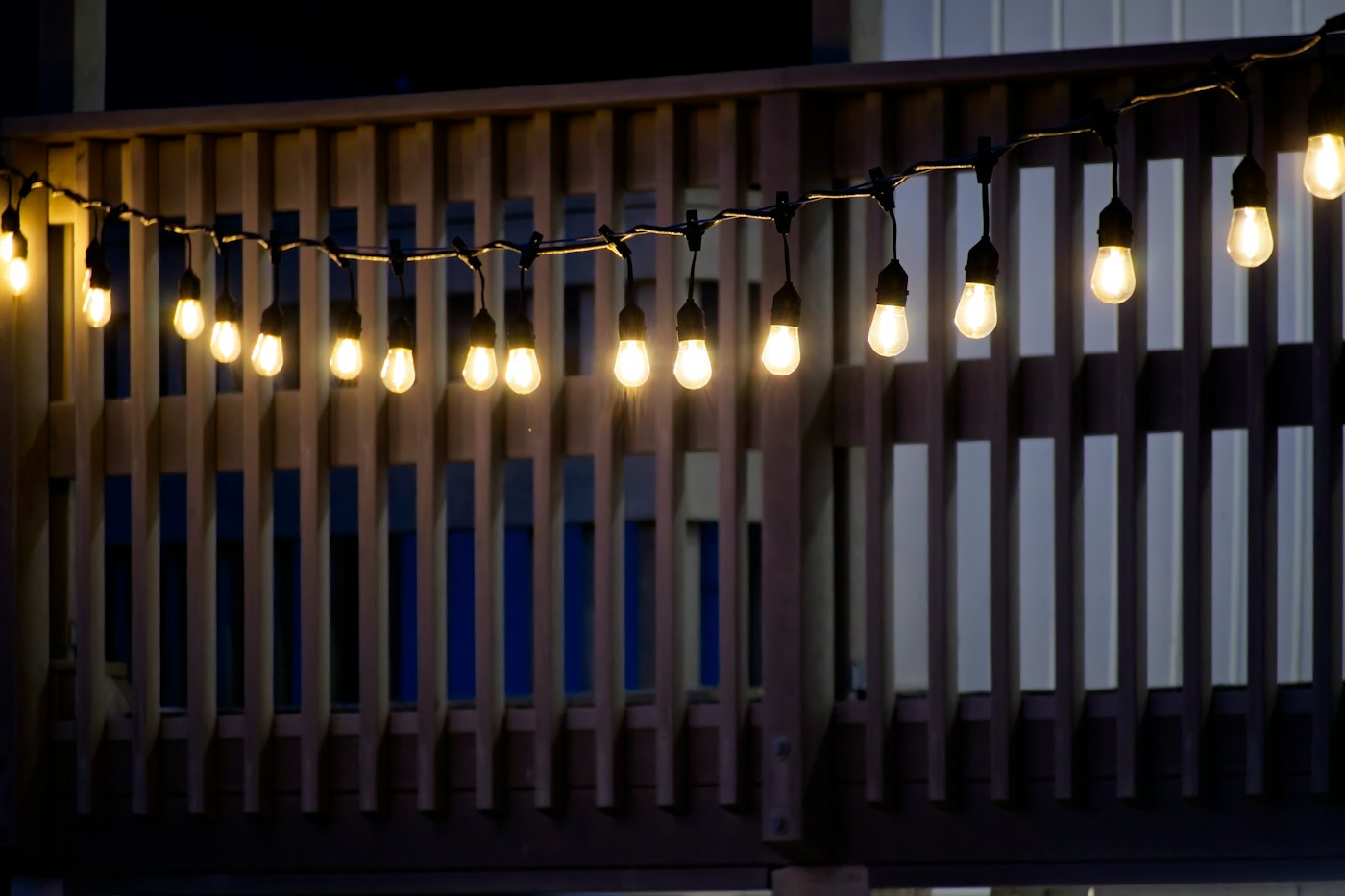
Low-voltage path lighting, motion security lights and string lights for patios: those three types of lighting can transform how you use and enjoy your backyard. Without good lighting, your yard effectively disappears when the sun goes down. Steps and paths become tripping hazards, the patio sits unused and dark corners feel less secure. With a thoughtful lighting plan, your outdoor space becomes usable well into the evening, safer to walk through and more welcoming. Here’s how to plan backyard lighting, what each type does best and how to avoid common mistakes.
Start With a Lighting Plan
Before buying fixtures, walk your yard at dusk and after dark. Think about how you use the space and what you need to see.
- Where do people walk? Paths, steps, the route from the driveway to the back door, the walk to the trash cans.
- Where do you gather? Patios, decks, outdoor dining areas, a fire pit.
- What needs security lighting? Doors, gates, side yards, the garage and dark corners.
- What would you like to show off? A favorite tree, garden beds, an architectural feature.
- Where is power available? Note exterior outlets and their locations.
Good outdoor lighting usually combines layers: functional light for safety, ambient light for gathering and accent light for beauty. You don’t need to light everything brightly. Often, softer, well-placed light looks better and feels more comfortable than a few harsh floodlights.
Low-Voltage Path Lighting
Low-voltage lighting systems run on a transformer that plugs into a standard outdoor outlet and reduces household current to a lower voltage. Fixtures connect to a low-voltage cable that can be buried shallowly along beds and paths.
Why low-voltage works well for paths
- Safer to work with than line-voltage wiring
- Flexible: fixtures can be moved and added as your landscape changes
- Efficient, especially with LED fixtures
- Timers and photocells on the transformer turn lights on at dusk and off at a set time
Planning tips
- Space path lights so pools of light overlap slightly or alternate sides of the path, rather than lining them up like a runway.
- Light steps and changes in elevation for safety, using step lights or well-placed path lights.
- Size the transformer for the total wattage of your fixtures, with some room to grow.
- Consider voltage drop on long cable runs, which can make distant lights dimmer. Proper cable sizing and layout help.
- Choose fixtures rated for outdoor use and wet locations.
Solar path lights are an easy option where running cable is difficult, but they’re generally dimmer and depend on sun exposure.
Motion Security Lights
Motion-activated lights turn on when they detect movement, providing bright light exactly when it’s needed. They’re useful for:
- Back and side doors
- Garage doors and driveways
- Side yards and gates
- Dark areas along the house
Getting motion lights right
- Adjust sensitivity and range so lights aren’t triggered constantly by passing cars, swaying branches or small animals.
- Aim fixtures down toward the area you want to light, not out toward neighbors or the street.
- Set the on-time to a duration that makes sense for the location.
- Mount at an appropriate height per the manufacturer’s directions for good coverage.
- Consider fixtures with dusk-to-dawn dim modes, which provide low light all night and brighten when motion is detected.
Many motion lights are hardwired, replacing existing exterior fixtures. Others are battery or solar powered. Hardwired installation involves line-voltage electrical work, which should be done safely and to code.
String Lights for Patios
String lights create an inviting, relaxed atmosphere over a patio, deck, pergola or outdoor dining area. They provide soft ambient light that’s ideal for evenings outside.
Installation tips
- Choose outdoor-rated lights, preferably commercial-grade strands with durable sockets and shatter-resistant bulbs.
- Don’t hang lights by their own cord over long spans. Use a guide wire, a steel cable stretched between anchor points, and attach the lights to it. This reduces strain and sagging.
- Anchor securely. Attach to sturdy points such as the house’s framing, a pergola or posts set in the ground or in heavy planters. Eye hooks and turnbuckles help keep the wire taut.
- Plan the pattern so lights hang at a comfortable height, clear of heads.
- Use GFCI-protected outdoor outlets and outdoor-rated extension cords if needed.
- Add a dimmer or smart plug to control brightness and scheduling.
Safety and Common Mistakes
- Use GFCI protection for all outdoor outlets.
- Use weatherproof outlet covers that protect plugs even while in use.
- Call 811 before digging to have underground utilities marked, even for shallow trenches.
- Hire a licensed electrician for new outdoor circuits, outlets and hardwired fixtures.
- Too much light. Overly bright fixtures create glare and harsh shadows.
- Ignoring light pollution. Shielded fixtures aimed downward keep light where you want it and avoid bothering neighbors.
- Cheap fixtures that fail quickly in the weather.
Bringing It Together
A well-lit backyard often combines all three: low-voltage path lighting guiding you safely from the house to the patio, motion lights covering doors and side yards, and string lights overhead for evenings with family and friends. Add a few accent lights on trees or garden features, put everything on timers or smart controls, and your yard becomes an extension of your home after dark.
What to Do This Week
- Walk your yard after dark and note dark paths, steps, doors and gathering areas.
- Locate exterior outlets and check that they’re GFCI-protected.
- Sketch a simple plan with path lights, motion lights and string lights.
- Adjust any existing motion lights for sensitivity and aim.
- Decide which parts you’ll do yourself and which need professional installation.
From installing posts and anchors for string lights to adding fixtures and outdoor improvements, we can help. AX Home Pro handles repairs, improvements and maintenance for homeowners. Request an estimate to get started.


