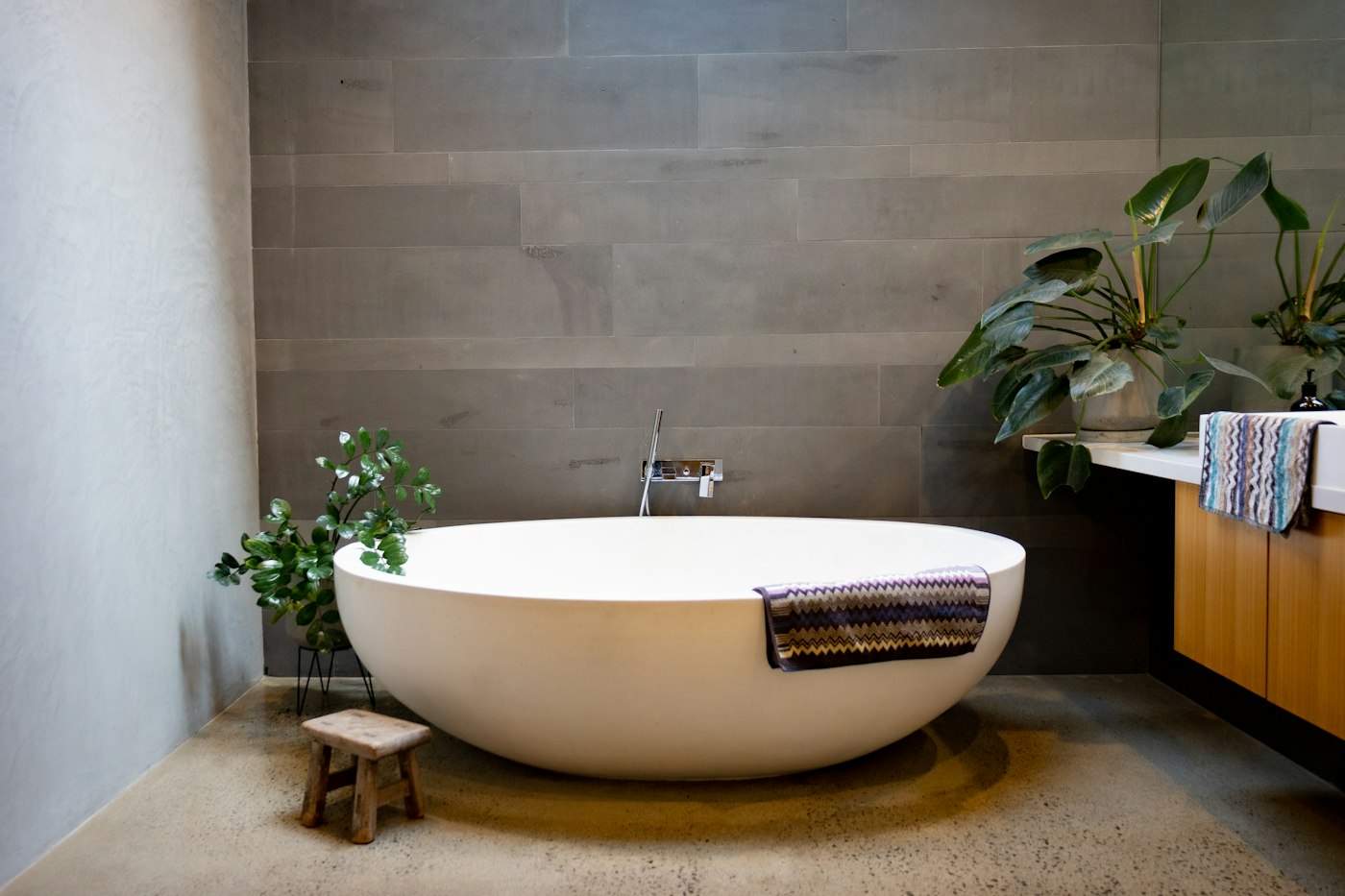
The bathroom floor has the hardest job of any floor in the house. It takes dripping bodies, overflowing tubs, steam, spilled products and constant cleaning, and it does so in a room where a slip has real consequences. Water tolerance is the first filter for any bathroom flooring choice; comfort, looks, slip resistance and maintenance follow. Here is how the common options measure up.
Porcelain, Ceramic and Stone Tile
Tile is the standard for a reason. Porcelain absorbs almost no water, resists stains and scratches, and comes in nearly every look, including convincing wood and stone. Ceramic is similar at a lower density. Tile pairs with electric radiant heat, which solves its one real drawback, a cold surface, and it lasts for decades. Choose a floor-rated tile with adequate slip resistance for wet areas, and remember that grout is the maintenance point; sealing cement grout or using epoxy grout keeps the floor looking clean. Smaller tiles and mosaics add grip and suit sloped shower floors.
Marble, limestone, slate and travertine bring depth and character that manufactured tile approaches but does not match. Stone is porous to varying degrees and needs sealing, and polished stone can be slippery when wet; honed or tumbled finishes are safer underfoot. Some stones etch when exposed to acidic products, which are common in bathrooms. Stone works beautifully in a primary bath that is cared for and less well in a children’s bath where the floor sees everything.
Vinyl Plank, Sheet Vinyl and Linoleum
Modern luxury vinyl has a waterproof core and a printed, textured surface that imitates wood or stone, and it has become one of the most popular bathroom floors. It is warm and quiet underfoot, soft enough to be comfortable, easy to clean and simple to install, often as a floating click-together floor. Its limitations are the seams, through which standing water can eventually reach the subfloor if a floor is left wet, and the fact that a floating floor needs the right transitions and expansion room. Look for products rated for bathrooms and consider gluing down planks in very wet areas.
Sheet vinyl has the fewest seams of any resilient floor, which is a major advantage where water pools, and it is economical and soft. Linoleum, a natural material made from linseed oil and other plant ingredients, is resilient and attractive but needs a protective finish and is better suited to a powder room or a bathroom without a tub than to a splash-prone family bath.
Wood and Laminate
Solid hardwood and water are a poor match, and in a full bathroom the risk of cupping, staining and finish failure is high. Engineered wood with a good factory finish tolerates humidity better but still dislikes standing water. Both can work in a powder room or a bathroom used by careful adults, with rugs at the tub and quick cleanup of spills. Laminate traditionally swelled at the seams when wet; newer water-resistant laminates improve on this but should be chosen with the manufacturer’s bathroom rating in hand.
Other Options
- Sealed cork is warm and soft but needs vigilant sealing in a wet room.
- Polished or sealed concrete suits modern baths and takes radiant heat well, though it is hard and cold without it.
Making the Decision
Think about who uses the room and how. A family bath with small children and a tub wants tile or a well-installed resilient floor with few seams. A primary bath with a glass shower and careful adults can accommodate stone or even engineered wood. In every case, plan slip resistance, a sloped and waterproofed shower floor, and a sound, flat subfloor beneath. Floors in bathrooms do not fail because the material was wrong as often as they fail because water found a path beneath them, so the installation deserves as much attention as the choice.
What Goes Under the Floor
A bathroom floor is only as good as the layers beneath it. Whatever surface you choose, these steps protect it and the house.
- Inspect the subfloor. Remove the old floor and check for soft spots, rot or old water damage, especially around the toilet and tub. Repair or replace damaged sections.
- Check for flatness and stiffness. Tile and stone need a stiff floor to prevent cracking. Resilient floors need a flat, smooth one to prevent bumps showing through.
- Add the right underlayment. Tile typically goes over cement board or an uncoupling membrane. Resilient floors may need plywood underlayment or a self-leveling compound.
- Waterproof where it matters. In wet areas, waterproofing membranes beneath tile add a layer of protection.
- Plan the radiant heat. If you want heated floors, install the heating mats before the finish floor and test them before covering.
- Seal the edges. Caulk around the tub, shower and toilet base and at the walls to keep water from reaching the subfloor.
Slip Resistance in Practice
Slips are the biggest safety concern on a bathroom floor. Textured or matte finishes offer more grip than polished ones. Smaller tiles mean more grout lines, which add traction, especially in a shower. Ask your supplier about a tile’s slip resistance for wet areas and compare products. Bath mats with nonslip backing, grab bars near the tub and toilet and good lighting further reduce risk, especially for children and older family members. If anyone in the household has mobility concerns, it is worth planning a curbless shower or other accessible features at the same time the floor is replaced.
Common Bathroom Flooring Mistakes
- Covering a damaged subfloor. A new floor over a soft or rotted subfloor will fail and can hide ongoing leaks.
- Leaving gaps around the tub. A tight seal where the floor meets the tub or shower prevents water from seeping down.
- Using the wrong tile. Wall tile is not always rated for floors. Check the rating before buying.
- Floating floors under the toilet. Some manufacturers have specific guidance for installing around toilets. Follow it closely.
- Skipping transitions. Thresholds and transition strips protect edges and help keep water from spreading into adjoining rooms.
Questions Homeowners Ask
Can we install new flooring over the old?
Sometimes, depending on what is there and how much height the new floor adds. Removing the old floor lets you inspect the subfloor, which is often the wiser choice in a bathroom.
Is heated flooring worth it?
Many homeowners find a warm floor one of the most appreciated upgrades in a bathroom. It needs a dedicated circuit and a thermostat.
Which floor is easiest to clean?
Large porcelain tiles with narrow, sealed grout lines, sheet vinyl and well-sealed resilient planks are the easiest. We are glad to help you choose a floor that fits your bathroom and your household.