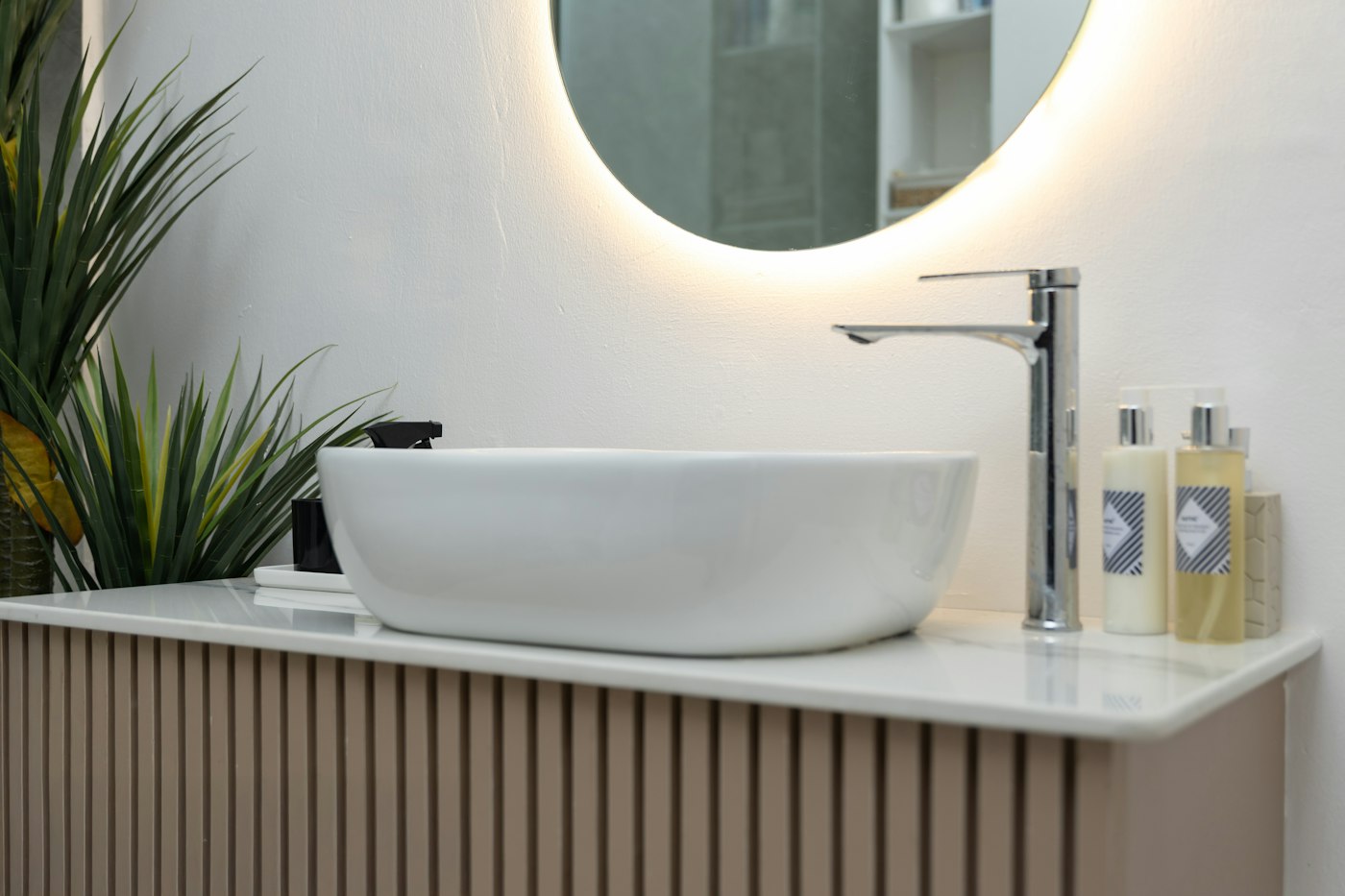
Many bathrooms are lit by a single ceiling fixture that casts shadows under the eyes and makes the mirror hard to use. A remodel is the moment to fix that. Thoughtful bathroom lighting layers several sources, each with a job: light for the mirror, light for the room, light for the shower and, in the best cases, a way to turn it all down for a late-night soak.
Light at the Mirror Comes First
The most important light in a bathroom is the one you see your face by. The best position for it is on either side of the mirror, roughly at eye level, so the light reaches both sides of the face evenly and fills in shadows. Wall sconces flanking the mirror do this well. A single fixture above the mirror is common and workable, especially when the mirror is wide, but it lights the forehead more than the chin. Combining an overhead vanity light with side sconces gives the most even result.
Lighted mirrors and medicine cabinets with built-in LED strips are another option, offering soft, even light from the mirror itself. Whatever you choose, look for a warm-white color temperature and a high color rendering index so skin tones look natural.
Lighting the Room
General light for the whole bathroom usually comes from the ceiling, either a flush-mount fixture, one or more recessed lights, or in larger rooms a small chandelier or pendant placed well away from the tub and shower. Recessed lights should be positioned to light the floor and the room’s edges rather than sitting directly above the vanity, where they create downward shadows. In a small bathroom, the vanity lights may provide enough general light on their own.
Shower and Tub Lighting
A shower with no light of its own feels like a cave, especially behind a tiled wall or frosted glass. A recessed fixture rated for wet or damp locations, as appropriate for the spot, makes the shower brighter and safer. Fixtures over a tub or in a shower have specific requirements, and an electrician will know what is allowed in your area. A lit niche or a strip of LED under a floating bench is a small luxury that makes a big impression.
Controls and Mood
Dimmers transform a bathroom. Bright light for morning routines and soft light for a bath are both possible from the same fixtures. Separate switches for the vanity, ceiling and shower lights let you use only what you need. Some homeowners add a low-level night light, such as a plug-in or an LED strip under the vanity toe kick, so a midnight trip does not require the full glare.
- Put vanity lights on their own dimmer.
- Consider a motion-activated night light for a hall bath.
- Make sure the exhaust fan is on a separate switch or timer.
Fixtures and Finishes
Lighting also carries style. Sconce shapes, glass colors and metal finishes should relate to the faucet and hardware without needing to match exactly. Keep scale in mind: a pair of sconces should suit the mirror width and the ceiling height. Choose fixtures rated for bathroom humidity, and plan electrical boxes before tile goes up, since moving a sconce after the wall is finished is far harder than moving it on paper.
Planning a Bathroom Lighting Layout Step by Step
A good lighting plan starts on paper, well before any fixtures are ordered. Here is the process we use.
- Sketch the bathroom with the vanity, mirror, shower, tub, toilet and any windows.
- Mark the mirror area and decide on side sconces, an overhead vanity light, a lighted mirror or a combination.
- Locate general lighting so the floor and room edges are evenly lit without shining directly down on someone at the mirror.
- Add shower and tub lighting with fixtures rated for the location.
- Consider accent lighting for a niche, under the vanity or along a floating bench.
- Plan switches and dimmers so each layer can be controlled separately, with switches located conveniently at the door and vanity.
- Coordinate with the exhaust fan and any heated floor controls so the wall near the door does not become crowded with switches.
Lighting by Bathroom Type
Primary Bathrooms
Larger bathrooms benefit from all the layers: sconces or a lighted mirror at each sink, recessed lights or a decorative fixture for general light, shower lighting and low-level night lighting. Dimmers on several circuits help create a relaxing atmosphere.
Hall and Family Bathrooms
These bathrooms need bright, even light for busy mornings. A pair of sconces or a wide vanity light, a flush-mount ceiling fixture and a shower light usually cover the needs. A night light helps children find their way.
Powder Rooms
Powder rooms are a chance for character. Decorative sconces, a statement pendant or a lighted mirror can set the tone, as long as the light at the mirror remains flattering.
Understanding Light Quality
- Color temperature: Warm-white light generally feels more flattering and relaxing in bathrooms. Keep color temperature consistent across fixtures so the room does not look mismatched.
- Color rendering: A high color rendering index helps makeup, skin tones and finishes look true.
- Diffusion: Frosted or opal glass softens light and reduces glare. Clear glass with exposed bulbs can be striking but may be harsh at eye level.
- Brightness: The mirror area usually needs the most light. Dimmers allow the same fixtures to serve both bright and soft needs.
Common Bathroom Lighting Mistakes
- Relying only on a ceiling fixture, which creates shadows on the face.
- Placing recessed lights directly over the vanity edge, casting harsh downward shadows.
- Mounting sconces too high or too far apart to light the face evenly.
- Choosing fixtures not rated for humidity, which can corrode or fail.
- Mixing color temperatures so one fixture looks blue and another yellow.
- Forgetting to plan electrical boxes before tile or a mirror is installed.
Bathroom Lighting Questions We Hear
Can sconces be mounted on a mirror?
Some mirrors are designed to accommodate sconces mounted through the glass. This requires careful planning between the mirror fabricator and the electrician.
Is a lighted mirror enough on its own?
In a small bathroom it may provide sufficient vanity light, but most bathrooms still benefit from a separate general light.
Do I need an electrician for new bathroom lighting?
Yes. Bathroom wiring has specific code requirements for wet areas and circuit protection, so new fixtures and circuits should be installed by a licensed electrician.