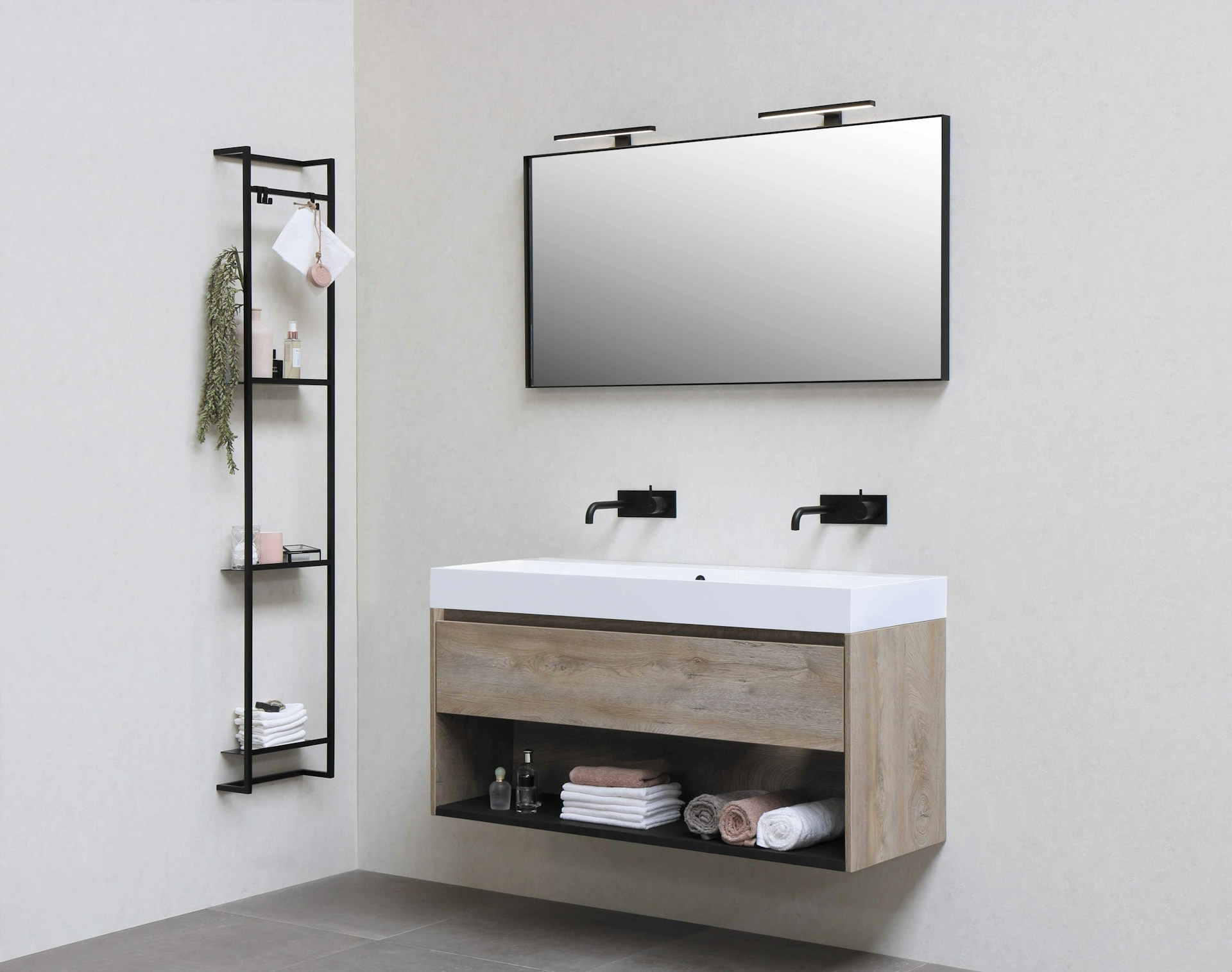
Most bathrooms rely on the vanity for storage, and most vanities run out of room quickly. Towels, extra toilet paper, cleaning supplies, first aid kits, hair tools and everyone’s toiletries add up, and summer guests bring bags of their own. The good news is that walls, corners and the space above the toilet offer far more storage potential than most bathrooms use.
The linen closet
A linen closet in or near the bathroom is the most valuable storage a bath can have. If you are remodeling, look for ways to borrow a little space from an adjacent closet or hallway. Even a shallow closet holds a surprising number of towels and supplies.
Inside, adjustable shelves fit tall bottles and stacks of towels without wasted space. Pull-out baskets or drawers near the floor keep cleaning supplies and bulk items within reach. Shelf depth matters: very deep shelves become black holes where things disappear, while moderate depths keep everything visible.
Recessed cabinets and niches
Interior walls are usually framed with studs that leave cavities deep enough for shallow cabinets or open niches. A recessed cabinet beside the vanity or behind the door adds storage without using floor space, and recessed shelves near the tub keep everyday items close.
Before cutting into a wall, find out what is inside. Plumbing, wiring, ductwork and fan vents often run through bathroom walls. Exterior walls contain insulation and are generally poor candidates for recessed storage, and some walls are load-bearing. A contractor can check with a quick investigation.
Tower cabinets and built-ins
Tall, narrow cabinets fill corners and the space beside a vanity with vertical storage. Some sit on the countertop between two sinks, and others run floor to ceiling. Glass doors show off neatly folded towels, while solid doors hide the less attractive necessities.
In larger bathrooms, a built-in cabinet wall or a vanity with a matching linen tower creates a furniture-like look and abundant storage. A built-in bench with drawers below works as both seat and storage.
Over the toilet and on the walls
- Shelves or a shallow wall cabinet above the toilet use space that usually sits empty; keep them high enough to avoid bumped heads.
- Hooks on the back of the door hold robes and towels without taking wall space.
- A narrow rolling cart can slip between the vanity and the wall or tub.
- A rail with hanging baskets keeps bath products organized near the tub.
Making the vanity work harder, too
Storage beyond the vanity works best when the vanity itself is organized. Drawer dividers keep small items sorted, a U-shaped drawer can wrap around the sink plumbing, and some vanities offer an outlet inside a drawer for hair tools, which an electrician should install to meet code. Toe-kick drawers in the base can hold flat items like spare bath mats.
When planning, take inventory of what actually needs to live in the bathroom and assign a home to each category. Storage designed around what you own works better than storage added wherever it happens to fit.
Taking a Storage Inventory
Before adding any cabinets or shelves, spend a few minutes listing everything that actually needs to live in or near the bathroom. Group items into categories:
- Daily use: toothbrushes, toothpaste, soap, skincare, hairbrushes and medications taken every day.
- Weekly use: cleaning supplies, extra toiletries, hair tools and grooming kits.
- Backup supplies: extra toilet paper, tissues, soap and toothpaste.
- Linens: bath towels, hand towels, washcloths and bath mats.
- Occasional items: first aid supplies, guest toiletries, seasonal items and travel bags.
Daily items belong closest to where they are used, in the vanity drawers or a recessed cabinet beside the mirror. Weekly items can go in lower cabinets or a tower. Backup supplies and linens suit a linen closet or a high cabinet. Occasional items can live farther away, such as a hall closet.
Planning Recessed Storage, Step by Step
- Pick the wall. Interior walls are generally better candidates than exterior walls.
- Check what is inside. Look for signs of plumbing, wiring and ducts, such as fixtures, outlets or vents on either side of the wall. A contractor can make a small inspection opening if needed.
- Locate studs. Recessed cabinets and niches are usually sized to fit between studs, or framing must be modified.
- Consider the other side. A recessed cabinet in a wall shared with a bedroom or closet takes depth that might matter on that side too.
- Waterproof niches in wet areas. Shower niches need to be integrated into the waterproofing system, sloped so water drains out.
- Plan lighting. A niche or recessed cabinet near the mirror benefits from good light, and some medicine cabinets come with built-in lighting and outlets.
Mistakes That Waste Storage Space
- Fixed shelves at the wrong heights. Adjustable shelves adapt to tall bottles and towel stacks.
- Deep shelves without pull-outs. Items in the back disappear. Pull-out baskets or shallower shelves solve this.
- Open shelving for everything. Open shelves look good with neatly folded towels but quickly look cluttered with mixed items.
- Storing medications in a humid bathroom. Heat and humidity can affect some medicines. Check labels, and ask a pharmacist about the best place to keep yours.
- Ignoring the back of the door. Hooks and over-the-door racks are simple and inexpensive.
Making It Work for Guests
When summer visitors arrive, a little planning helps them feel at home. Clear a shelf or drawer for their use, set out fresh towels on a dedicated hook or shelf, and make sure extra supplies are in plain view. A small basket with travel-size toiletries can be a welcome touch.
Questions Homeowners Ask
Can a recessed cabinet go in a wall with plumbing?
Not directly in front of pipes. Sometimes the cabinet can be placed in a different stud bay, or plumbing can be rerouted during a remodel.
Are built-ins worth it in a small bathroom?
Often, yes. Built-ins can be tailored to tight spaces where off-the-shelf furniture does not fit.
How do I keep linen closets organized?
Group linens by type or by room, use bins for smaller items, and label shelves so everyone puts things back in the right place.
Is a medicine cabinet still worth installing?
Many homeowners find it one of the most useful features in a bathroom. Recessed models keep a slim profile, and mirrored doors serve double duty. Check the wall first, since surface-mounted versions are an option when a wall cannot be opened.