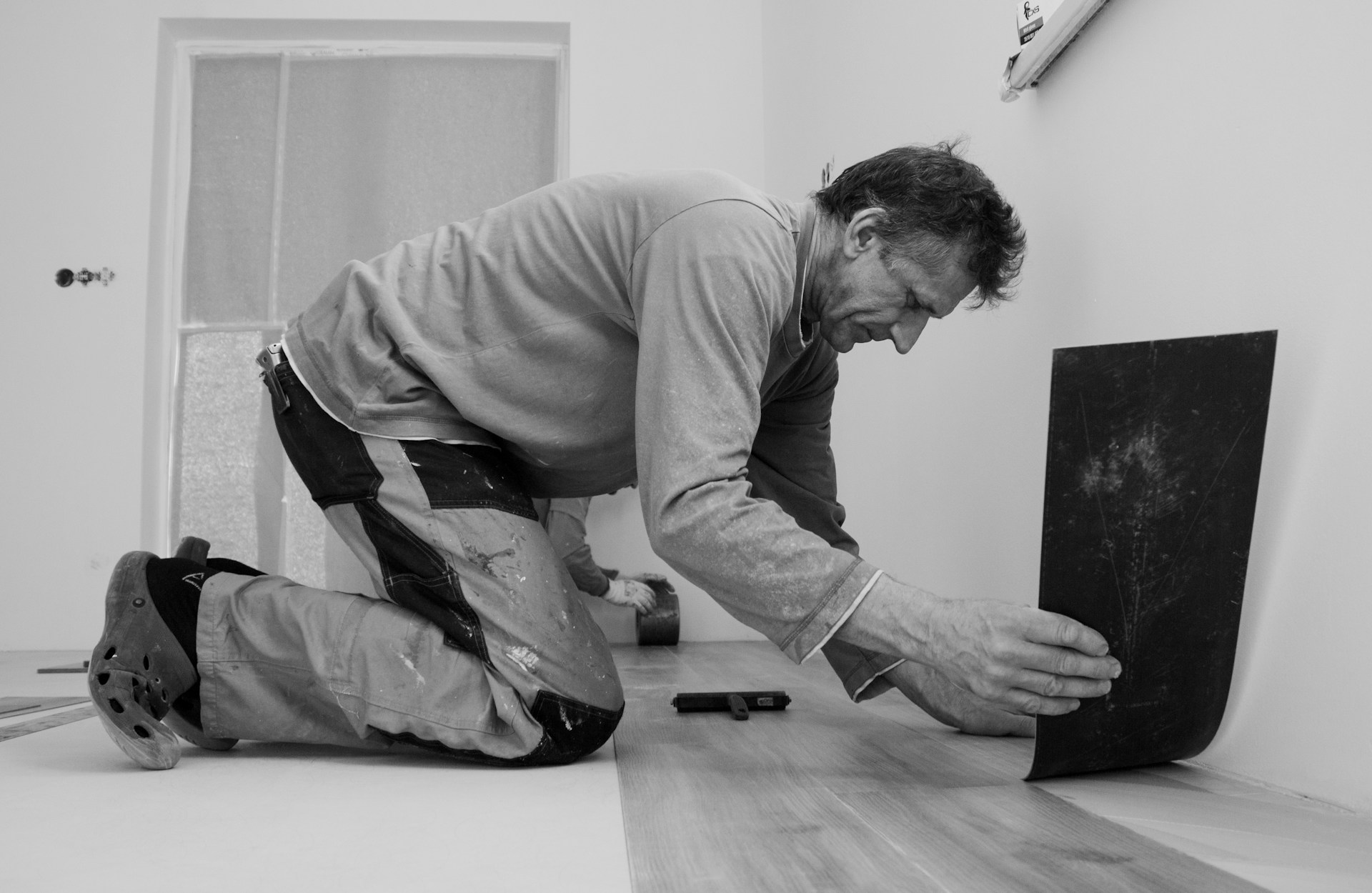
Homeowners naturally focus on the flooring they can see: the species, the color, the plank width. But many flooring problems, from gaps and cupping to squeaks and failed adhesives, trace back to steps taken before the first board was laid. In humid summer months those steps matter more than ever, and knowing what should happen helps you ask an installer the right questions.
Acclimation
Acclimation means letting flooring adjust to the conditions in the home where it will live. Wood delivered from a warehouse may hold more or less moisture than the house, and installing it before it adjusts can lead to shrinking or swelling afterward.
For acclimation to mean anything, the house must be at normal living conditions, with the heating or air conditioning running and wet work such as drywall finishing and tile setting already complete. Many installers measure the moisture content of the flooring and the subfloor with a meter rather than relying on a set number of days.
Requirements vary by product. Engineered wood, laminate and vinyl plank each come with their own instructions, and some need little or no acclimation. Follow the manufacturer’s directions, since they usually affect the warranty.
Testing wood subfloors
Over plywood or OSB, installers compare the moisture content of the subfloor with that of the flooring. If the difference is too large, installation should wait. A subfloor that reads high may point to a damp crawl space or basement that should be addressed first.
This is also the time to confirm that the subfloor is flat, solid and securely fastened. Screwing down loose spots reduces squeaks, and grinding high spots or filling low ones keeps floating floors from flexing and tile from cracking.
Testing concrete slabs
Concrete can look dry and still release moisture for a long time, especially a new slab or one without a vapor barrier beneath it. Moisture rising through a slab can break down adhesives, cup wood and encourage mold under floor coverings. Professional installers use standardized tests, such as relative humidity probes placed in the slab or surface emission tests, and compare the results with the flooring manufacturer’s limits.
When readings are high, the options include vapor retarders, moisture-mitigating adhesives or sealers, or choosing a flooring product suited to the conditions.
Underlayment and vapor retarders
- Floating floors often go over a foam, felt, cork or rubber underlayment that smooths minor imperfections and reduces noise. Some products have a pad already attached.
- Over concrete, a polyethylene vapor retarder, or an underlayment with one built in, is commonly required for floating wood and laminate.
- Nail-down wood floors are often installed over underlayment paper or felt that helps manage moisture and reduce squeaks.
- Upstairs rooms and condominiums may need sound-reducing underlayment to meet building rules.
These steps can feel like delays when the flooring is stacked in the living room and summer is slipping by. But a floor installed on a dry, flat, properly prepared base looks better and lasts longer. Ask your installer how they will test, what readings they are looking for and what happens if the numbers are not right. A good installer will be glad you asked.
What Readings Mean, in Plain Terms
Installers talk about moisture readings, but the numbers are only useful in context. Here is what they are generally looking for.
- Wood flooring moisture content is the percentage of water in the boards. It is compared with the subfloor and with the range the flooring manufacturer specifies.
- Wood subfloor moisture content should be within a certain difference of the flooring. A large gap between the two means one will move toward the other after installation.
- Concrete relative humidity is measured with probes set into the slab, and results are compared with the flooring and adhesive manufacturers’ limits.
- Room temperature and humidity are recorded as well, since they determine where the flooring will settle over time.
The specific limits depend on the product, so ask your installer which manufacturer’s figures they are working from and what the results showed. A written record of readings is useful if questions come up later.
Preparing Your Home for Installation Day
Homeowners can do several things ahead of time to help a flooring installation go smoothly:
- Run the climate system normally for at least several days before the flooring arrives, and keep it running.
- Finish wet trades first. Drywall, plaster, painting and tile work release moisture. Schedule them before flooring.
- Clear the rooms. Remove furniture, rugs and items on the floor, including those in closets that will receive new flooring.
- Plan where flooring will acclimate. If it requires acclimation, it should sit in or near the room where it will be installed, not in a garage or on a porch.
- Check doors and transitions. New flooring may raise floor height. Ask about trimming doors and how transitions to other rooms will be handled.
- Arrange for pets and children. Installation involves tools, adhesives and open doors. A quiet place away from the work is safest.
Mistakes That Cause Problems Later
- Storing flooring in the garage. Garage temperature and humidity often differ from the house, so acclimation there means little.
- Installing over an uneven subfloor. Floating floors flex and click, tile cracks, and wood squeaks when the base is not flat.
- Skipping the vapor retarder over concrete. Moisture from the slab can damage flooring and adhesives.
- Doubling up underlayment. Adding a separate pad under flooring that already has one attached can make the floor too soft and void the warranty.
- Rushing a damp crawl space. Installing wood over a subfloor that reads high, before the crawl space is addressed, invites cupping.
Questions to Ask Your Installer
- What acclimation, if any, does this product require, and how will you confirm it is ready?
- How will you test the subfloor or slab, and what are the acceptable readings?
- What underlayment or vapor retarder will you use, and does it meet the manufacturer’s requirements?
- How will you check and correct flatness?
- What happens to the schedule if readings are too high?
Quick Answers
Does vinyl plank need moisture testing over concrete?
Many manufacturers still have moisture limits for vinyl, especially glue-down types. Check the product’s instructions.
Can new flooring go over old flooring?
Sometimes, if the old floor is flat, sound and allowed by the manufacturer. Often removing it is the better option.