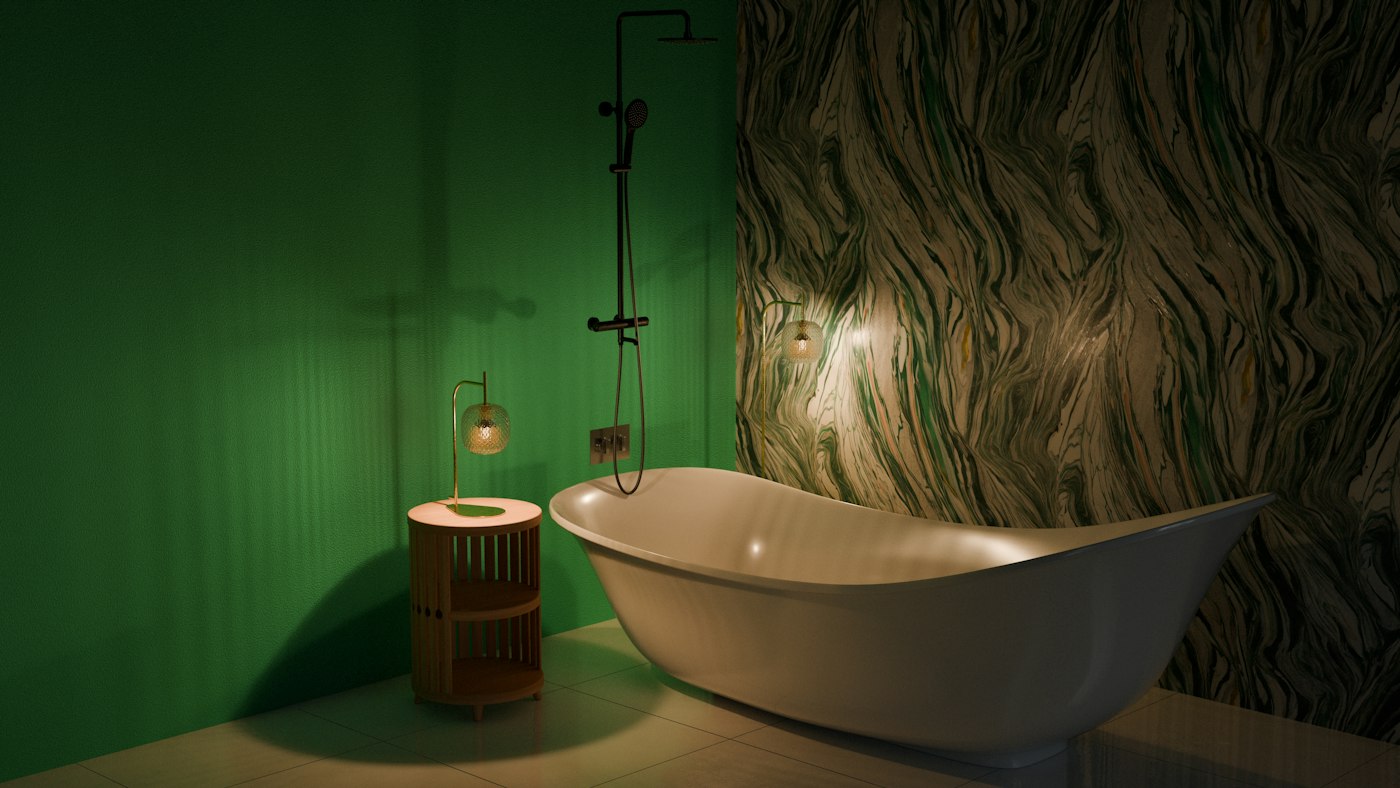
Bathroom walls lead a hard life. Every shower fills the room with steam, sinks splash, and in humid summers the air may never fully dry out. Paint alone can work well, but there are many other ways to finish bathroom walls, each with its own look and tolerance for moisture. Matching the right finish to each part of the room keeps it looking fresh and prevents peeling, staining and mildew.
Thinking in zones
A bathroom has wet zones, splash zones and dry zones. Inside the shower and around a tub, walls are soaked daily and need a waterproof assembly, typically tile or solid panels over a proper waterproofing layer. Around the sink and toilet, walls see splashes and humidity but not direct spray. Upper walls and ceilings see mostly steam. Thinking in those zones lets you mix finishes with confidence.
Tile, full height or partway up
Tile is the most durable bathroom wall finish. Porcelain and glazed ceramic resist water and stains and clean easily, and a floor-to-ceiling installation gives a seamless, spa-like look. Many bathrooms run tile to a set height instead, a tile wainscot with paint above, which protects the splash zone, costs less and has a classic look. Choose a low-maintenance grout or plan to seal it.
Wainscoting, beadboard and paneling
Wood wainscoting and beadboard bring warmth and traditional character, especially in cottages and older homes. In a bathroom they need a durable paint finish on every face and careful caulking so water cannot reach raw edges. Many homeowners choose PVC beadboard or panels instead, which look much the same once painted but will not swell or rot if water gets behind them. Board and batten and shiplap-style treatments can be built from moisture-resistant materials as well.
Paint and wallpaper
Paint remains the most common finish above the splash zone. Paints made for bathrooms contain mildewcides and are formulated to resist moisture, and satin or semi-gloss sheens wipe clean more easily than flat finishes. Preparation matters: a primer suited to the surface and completely dry walls help paint last.
Wallpaper can work beautifully in a powder room or a well-ventilated bath. Vinyl and vinyl-coated papers handle humidity far better than traditional paper, and the adhesive should be rated for damp rooms. Keep wallpaper away from direct splashes, and expect it to struggle in a bathroom with weak ventilation.
Panels, plaster and the layers behind them
- Large solid surface, cultured stone or porcelain panels cover shower and tub walls with few or no grout lines.
- Traditional lime-based plasters give a soft, seamless look in some bathrooms, but they require skilled application and sealing.
- Moisture-resistant drywall and cement board are the hidden layers that help every finish last. The right backer for each zone matters as much as the surface.
No wall finish survives a bathroom that never dries out. A properly sized exhaust fan vented outdoors, run during showers and for a while afterward, protects paint, wallpaper and grout alike, and a humidity-sensing control takes the guesswork out of it. Pair new finishes with a working fan before summer guests arrive, and the room will look good long after they head home.
Mixing Finishes in a Real Bathroom
Here is how the zone approach plays out in a typical hall bath with a tub-shower combination, a vanity and a toilet.
- Tub surround: tile or solid panels over a proper waterproofing layer, running at least to the height the showerhead requires, and often to the ceiling.
- Vanity wall: a tile backsplash or a tile wainscot that wraps the room at a consistent height, protecting the walls most likely to be splashed.
- Toilet wall and remaining walls: PVC beadboard or painted wainscoting at the same height as the tile, or simply a durable bathroom paint.
- Upper walls: bathroom paint in a satin or semi-gloss sheen, or a vinyl wallcovering if ventilation is strong.
- Ceiling: a mildew-resistant paint suited to ceilings, since steam rises and collects there first.
Carrying a single height line around the room, whether it is the top of the tile, the wainscot cap or a chair rail, ties different materials together visually and makes the room feel planned.
Installation Details That Make Finishes Last
Transitions between materials
Where tile meets paint or paneling, a clean edge matters. Bullnose tile, metal edge trim or a wood or PVC cap give a finished look and protect the edge from chipping and water.
Sealing every joint
Inside corners, the joint between tub and tile and the seam where panels meet the tub all need flexible sealant rather than grout. Grout can crack where materials move differently.
Painting every face
Wood trim and beadboard should be primed and painted on the back and edges as well as the front where possible, so moisture cannot get in from behind.
Letting walls dry before finishing
Paint, wallpaper adhesive and plaster all need dry substrates. In humid weather, give new drywall compound and primer extra time.
Mistakes We Help Homeowners Avoid
- Using a flat paint in the bathroom. Flat finishes hide imperfections but are harder to wipe clean and can show water marks.
- Choosing paper wallcovering for a busy family bath. Traditional papers can lift at the seams in steamy rooms. Save them for powder rooms.
- Running wood paneling into the shower. Even well-painted wood does not belong in a wet zone.
- Installing a fan that is too small or not vented outside. No finish survives constant humidity. Fans should be sized to the room and ducted outdoors.
- Treating the backer as an afterthought. Regular drywall in a wet zone, even under tile, is a common cause of hidden failure.
Questions Readers Ask
Can I tile over existing painted drywall?
Outside of wet zones, tile is sometimes installed over sound, properly prepared drywall. Inside a shower or tub surround, a proper backer and waterproofing are needed. Ask your installer what the tile and waterproofing manufacturers require.
Why is my bathroom paint peeling?
Common causes include constant humidity, paint applied over a glossy or dirty surface without proper prep, or moisture coming through from behind. Solving ventilation usually comes first.
Is wallpaper in a bathroom a bad idea?
Not if the room is well ventilated, the material is suited to humidity and it stays out of splash zones. Many powder rooms are ideal places for a bold pattern.
How high should a tile wainscot go?
There is no single rule. Many rooms look balanced with the top of the wainscot somewhere around a third of the wall height, aligned with a window sill or the top of the vanity backsplash. Sketch it on the wall with tape to see what looks right.