When people think about countertops, quartz and granite often come to mind first. But many other materials offer distinctive looks, practical benefits and different maintenance profiles. Whether you want warmth, seamless surfaces or an industrial edge, these alternatives are worth knowing about.
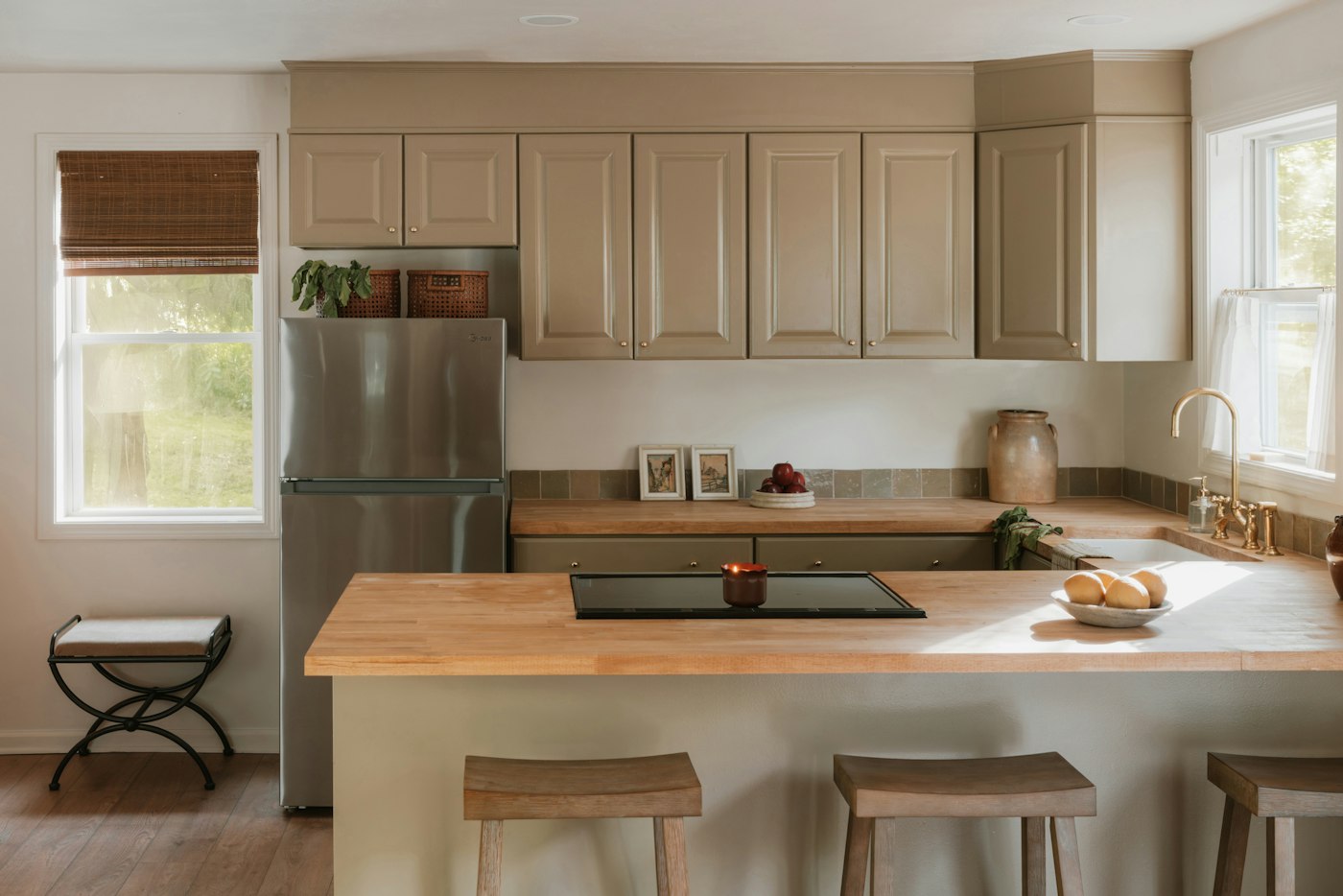
Butcher Block and Wood Countertops
Wood countertops bring natural warmth and texture to a kitchen. They are often made from hardwoods such as maple, walnut, oak or cherry, glued together into thick slabs. Wood is gentle on knives and can be used directly as a cutting surface when finished with food-safe oil, though many people prefer to use cutting boards to preserve the surface.
- Care: Oiled wood needs periodic re-oiling. Sealed wood is more water resistant but should not be cut on directly.
- Repairs: Scratches and minor stains can often be sanded out and refinished.
- Cautions: Standing water, especially around sinks, can cause damage or discoloration if the wood is not properly sealed and maintained.
Butcher block is popular on islands, where it adds warmth alongside stone or quartz perimeter counters.
Solid Surface
Solid surface countertops are made from acrylic or polyester resins and minerals. They are nonporous, so they resist stains and do not need sealing. A key advantage is that seams can be made nearly invisible, and sinks can be integrated into the countertop for a smooth, continuous look. Minor scratches can often be buffed out. Solid surface is more sensitive to heat than stone, so trivets are essential. It is available in many colors and patterns, including some that resemble stone.
Concrete
Concrete countertops can be cast in place or precast in a shop and installed. They offer a distinctive, industrial or organic look and can be customized with color, aggregates and integrated features like drainboards. Concrete is naturally porous and needs a quality sealer to resist stains. Hairline cracks can develop over time, which some homeowners consider part of the material’s character. Because it is heavy, concrete may require sturdy cabinet support. An experienced fabricator makes a big difference in the final result.
Laminate
Laminate countertops consist of a decorative layer bonded to a substrate, typically particleboard. Modern laminates offer convincing patterns that mimic stone and wood, as well as solid colors. Laminate is relatively easy to clean and maintain. It is less resistant to heat and cutting than stone, and damage is difficult to repair. Edges and seams are areas to watch for moisture, particularly around sinks.
Mixing Materials
Many kitchens combine countertop materials. A durable quartz or granite surface might cover the perimeter where most cooking and cleanup happen, while a butcher block island adds warmth, or a concrete counter anchors a bar area. Mixing materials can add visual interest and let you use each one where it performs best.
The right countertop balances how you cook, how much care you are willing to give and the look you want. If you are exploring countertop options as part of a remodel, reach out through our contact page and we can help you weigh the choices.
Matching the Material to the Way You Cook
Every countertop performs differently under real use. Thinking about your own habits is the fastest way to narrow the options.
If You Cook Daily and Cook Hot
Households that move pans straight from the stove to the counter may want to reserve wood, solid surface and laminate for areas away from the range, or commit to always using trivets. A heat-tolerant surface beside the cooktop gives you a safe landing spot.
If You Bake Often
Bakers often appreciate a large, uninterrupted work surface. A butcher block island can be pleasant for kneading and rolling, while a seamless solid surface counter is easy to scrape clean of flour and dough.
If You Have Young Children
Spills, crayons and craft projects are part of daily life. Nonporous surfaces like solid surface and laminate wipe up easily, and minor damage to solid surface can often be repaired. Concrete and oiled wood can stain more readily without consistent maintenance.
If You Entertain
A dramatic concrete or wood island can become a gathering point and a design statement. Just keep in mind that wine, citrus and oils left sitting on porous surfaces can leave marks, so coasters and quick cleanup matter.
Caring for Each Material
Following the manufacturer’s or fabricator’s care guidance is always the first rule. These general habits help as well.
- Butcher block: Wipe up water promptly, especially near the sink. Re-oil oiled surfaces when the wood starts to look dry or water stops beading. Lightly sand and refinish areas that become stained or scratched.
- Solid surface: Clean with mild soap and water or a nonabrasive cleaner. Use trivets for hot pans and cutting boards for knives. Light scratches can often be buffed out with the appropriate abrasive pad.
- Concrete: Reapply sealer on the schedule your fabricator recommends. Avoid acidic cleaners, which can etch the surface. Wipe up spills quickly, particularly oils and acidic foods.
- Laminate: Clean with mild soap and water and avoid abrasive pads. Keep standing water away from seams and edges, and never set hot cookware directly on the surface.
Common Countertop Mistakes
- Choosing a sample without seeing a full slab or installation. Concrete and wood vary a great deal across a large surface. Ask to see finished examples.
- Using butcher block around an undermount sink without a plan. Wood around a sink needs careful sealing and diligent upkeep.
- Underestimating weight. Thick concrete tops require cabinets and supports designed for the load.
- Overlooking edge and seam details. The edge profile and the location of seams affect both looks and durability.
- Mixing materials without a transition plan. Where two countertop materials meet, decide whether they will butt together, change at a corner or be separated by a range or sink.
Countertop Questions We Hear
Can butcher block be used around a sink?
It can, with proper sealing and consistent care, but it requires more attention than other materials. Many homeowners prefer to use wood on an island or a section of counter away from the sink.
Will a concrete countertop crack?
Hairline cracks can occur as concrete cures and settles. A skilled fabricator uses reinforcement and good practices to minimize them, but some variation is part of the material.
Is laminate still a good choice?
For budget-conscious projects, rental properties, laundry rooms and secondary spaces, modern laminate can be a practical and attractive option, especially with today’s more realistic patterns and edge options.
How do I decide between two materials I like?
Bring samples home, place them on your existing counters next to cabinet and flooring samples and live with them for a few days. Notice how each looks in morning and evening light and how you feel about the care each requires.