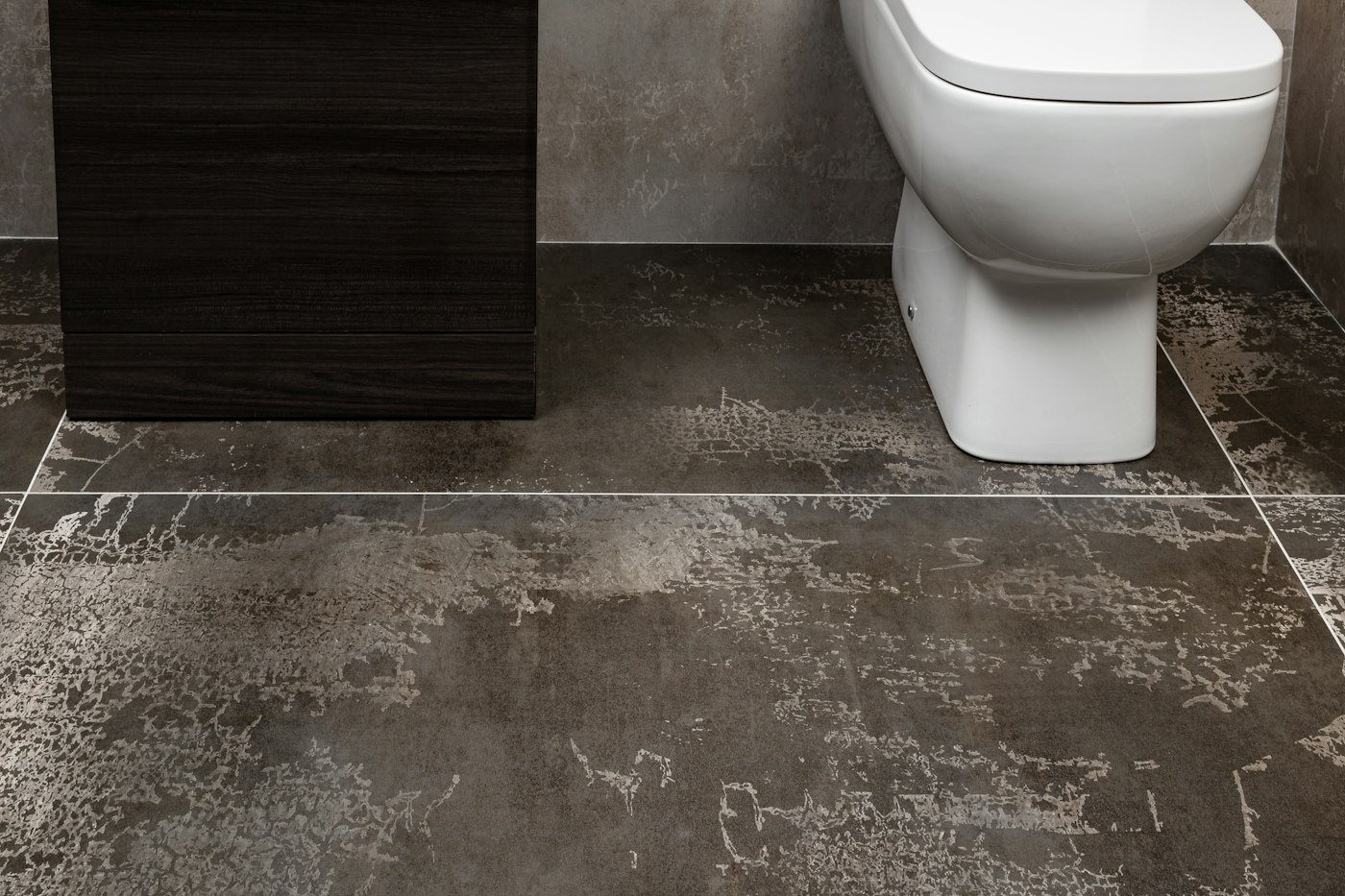
Walk into a tile showroom and the choices seem endless. Narrowing them down for a bathroom becomes easier when you look past color and ask a few practical questions first: Is this tile rated for the floor? Will it be safe when wet? Will it hold up to water? And does its size suit the room? Answer those, and the beautiful options that remain are the ones worth choosing from.
Floor Tile Versus Wall Tile
Not all tile belongs on a floor. Wall tile is often thinner and has a softer glaze that would scratch and wear underfoot. Glazed floor tile carries a wear rating, usually a PEI class, that indicates how much foot traffic it can handle. A bathroom floor does not see the traffic of a front hallway, but it still needs a tile intended for floors. Any floor tile can generally be used on a wall; the reverse is not true. When in doubt, ask or check the manufacturer’s specification sheet.
Slip Resistance in a Wet Room
Bathroom floors get wet, and a polished tile that is fine in a dry hallway can be treacherous beside a tub. Slip resistance is described by a coefficient of friction measurement, and manufacturers indicate whether a tile is suitable for wet areas. Texture helps, and so does size: smaller tiles mean more grout lines, which add grip. This is one reason mosaic tile is so common on shower floors. The slope of a shower floor also depends on small tiles that can follow the pitch toward the drain.
Water Absorption and Where Tile Goes
Porcelain absorbs very little water, which makes it a dependable choice for floors, showers and steam-prone spaces. Standard ceramic is more porous but works well on walls and in many bathrooms when properly installed. Natural stone varies widely; some stones are dense and some are soft or porous, and most need sealing. Glass tile is impervious to water and brings color and light to walls, though it is rarely used on floors because it can be slippery and shows scratches.
- Shower floors: small, textured porcelain, ceramic or stone mosaics.
- Bathroom floors: floor-rated porcelain or ceramic, or sealed stone, with adequate slip resistance.
- Walls: almost anything, including large-format tile and glass.
Size and Scale
Large-format tile, with fewer grout lines, makes a small bathroom feel calmer and is easier to keep clean. It also demands a very flat substrate and skilled installation to avoid lippage, the slight unevenness between tile edges. Smaller tile and mosaics add texture and pattern and forgive minor floor irregularities. Many bathrooms combine both: large tile on the floor and main walls, mosaic on the shower floor or in a niche.
Think about how the tile will be laid out, too. Where will cuts fall? Will a full tile center on the vanity wall? A good installer plans the layout before the first tile goes down so that the slivers end up where they are least noticed.
Bringing It Together
Order samples and set them on the floor and against the walls in your own light. Wet the floor samples and step on them in socks. Look at the color next to your vanity and fixtures. Tile is one of the longest-lasting decisions in a bathroom, so the hour spent testing is well worth it.
A Step-by-Step Way to Choose Your Bathroom Tile
With the technical questions answered, a clear sequence can turn a showroom visit into a confident decision.
- Start with the floor. Because the floor has the most technical requirements, choose it first and let it anchor the rest of the palette.
- Pick the shower floor tile next. It must be slip resistant and small enough to follow the slope, so the options are naturally narrower.
- Select the main wall tile. This is the largest visible surface in many bathrooms and sets much of the mood.
- Add one accent. A niche, a feature wall or a band of mosaic can carry color or pattern without overwhelming the room.
- Choose grout colors. Decide whether you want grout to blend or contrast for each tile.
- Plan trim and transitions. Choose how tile edges will be finished at outside corners, windows and the bathroom doorway.
Layout Planning Tips
The same tile can look polished or awkward depending on how it is laid out. These are details we pay close attention to.
- Center on the focal point. Tile on a vanity wall or behind a tub usually looks best centered on the main fixture or window.
- Avoid thin cuts at doorways, tub edges and the tops of walls where they draw attention.
- Align grout lines between floor and wall tile when the sizes allow, for a tidy, intentional look.
- Consider tile direction. Running rectangular tile lengthwise in a narrow bathroom can make it feel longer.
- Plan the niche and bench into the tile layout so grout lines meet them cleanly.
Common Bathroom Tile Mistakes
- Choosing a polished floor tile without checking its wet slip resistance.
- Using too many tiles. More than three different tiles in a small bathroom can feel busy.
- Ignoring maintenance. Light grout on a floor, textured tile that traps soap scum or unsealed stone can become cleaning chores.
- Overlooking floor flatness before installing large-format tile, which can lead to lippage and cracking.
- Forgetting heated floors. If you want radiant heat, it needs to be planned with the tile and substrate.
Bathroom Tile Questions We Hear
Can I use the same tile on the floor and walls?
Yes, as long as the tile is rated for floors and is slip resistant enough for the room. Using one tile throughout can make a small bathroom feel larger and more seamless.
Is natural stone a good choice for a bathroom?
It can be beautiful and long-lasting, but it requires sealing and gentler cleaning. Some stones are also sensitive to acidic products. Ask about the specific stone’s characteristics before choosing it.
Are large tiles slippery?
Large tiles have fewer grout lines, so the tile surface itself must provide traction. Choose large tiles with a textured or matte finish rated for wet areas if they will be on a bathroom floor.
What grout is best for a bathroom?
Many options work well. Some grouts offer better stain resistance and may not require sealing. Your installer can recommend a grout suited to the tile, joint width and location.