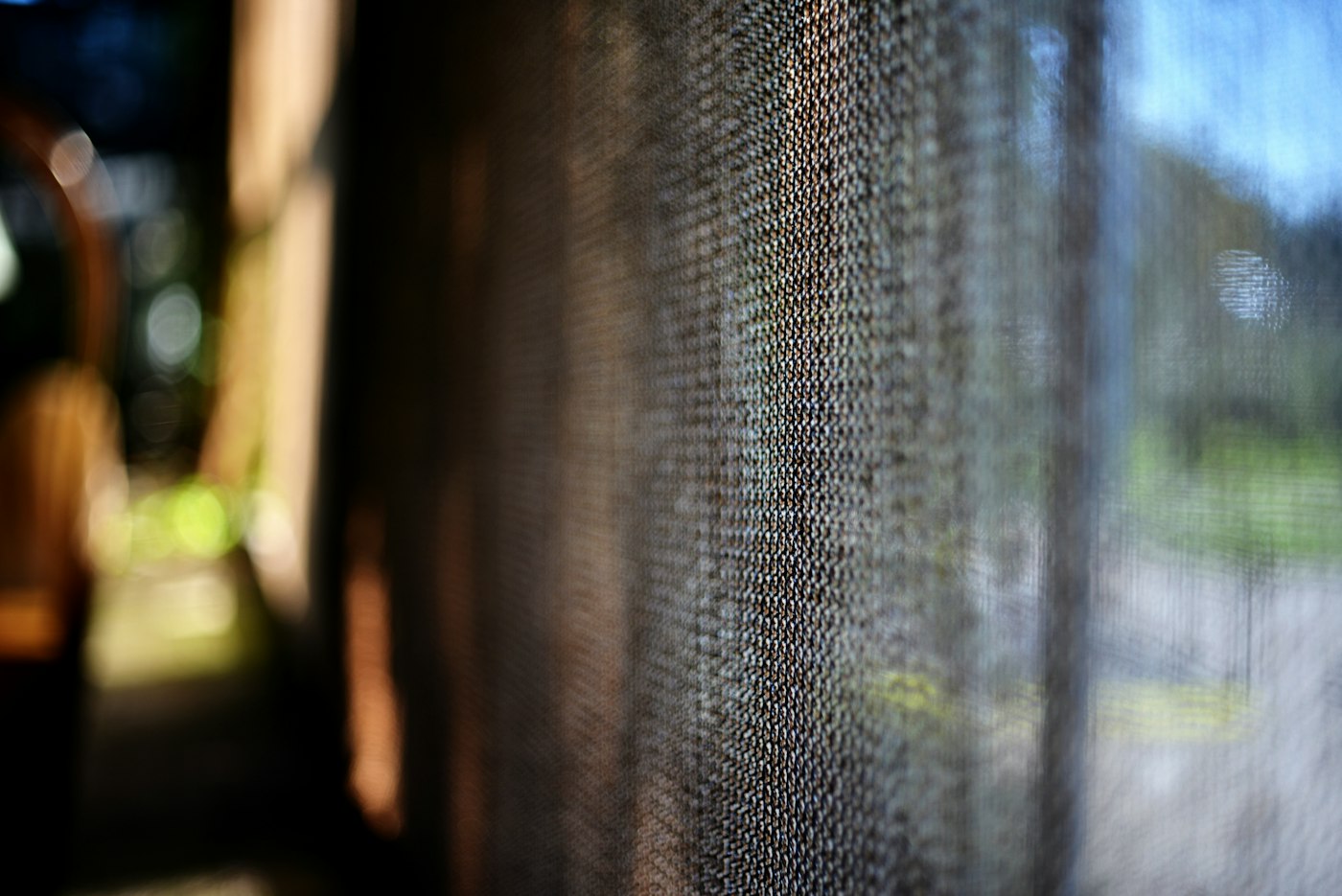
Window screens rarely get much thought until one tears, sags or lets in a cloud of tiny insects on the first warm night. Yet the mesh in a screen affects how much breeze comes through, how clearly you see outside and how well the screen survives curious pets and summer storms. When it is time to replace or rescreen, knowing the options helps you choose the right mesh for each window.
Fiberglass mesh
Fiberglass is the most common screen material. It is flexible, does not dent or crease, does not corrode and is easy to install, which makes it the default for most new windows and rescreening jobs. Charcoal or black fiberglass is popular because it reduces glare and is less visible from inside than lighter gray.
Its weakness is strength. Fiberglass can tear from a pet’s claws or a sharp object, and it can stretch a little over time.
Aluminum and other metals
Aluminum screen is stiffer and more puncture-resistant than fiberglass, and it holds its shape well. It can dent and crease, though, and it may oxidize over time, especially near the coast. Stainless steel, bronze and copper meshes are more durable and corrosion-resistant choices, often used in coastal homes and historic restorations, and they cost more.
Pet-resistant screen
Pet screen is made from heavy vinyl-coated polyester and is far stronger than standard fiberglass. It stands up to dogs pushing with their paws and cats trying to climb, which makes it a smart choice for low windows, porch screens and sliding screen doors. It is thicker and slightly reduces visibility and airflow, so many homeowners use it only where pets actually reach.
Fine mesh, high-visibility mesh and solar screens
Standard insect screen keeps out flies and mosquitoes, but very small biting insects, often called no-see-ums, can slip through. Finer meshes with smaller openings stop them, at the cost of a little airflow and light. They are worth considering near marshes, lakes and the coast.
High-visibility mesh uses thinner strands so the screen nearly disappears, which suits windows with a view. It is more delicate than standard mesh, so it belongs on windows that rarely get bumped.
Solar screens use a dense weave that blocks a good share of the sun’s heat and glare before it reaches the glass. They darken rooms and soften the view, so they are usually reserved for hot, sun-facing windows.
Frames, fit and rescreening
- Check the frame before replacing the mesh. Bent or cracked frames will not hold tension and should be replaced.
- Rescreening means pulling out the old spline, the rubbery cord that locks the mesh into a groove, then rolling new mesh and spline into place with an inexpensive tool.
- Match the spline diameter to the frame and the mesh thickness; heavier pet screen often needs a thinner spline.
- Label screens as you remove them, since windows that look identical often differ slightly in size.
A home does not need one screen type throughout. Pet screen on the slider and the low living room windows, high-visibility mesh facing the lake, fine mesh on the screened porch and standard charcoal fiberglass everywhere else is a perfectly sensible mix. Matching mesh to each window keeps the breeze flowing all summer and the bugs where they belong.
Rescreening a Window, Step by Step
Rescreening is one of the more approachable home repairs, and doing a few frames yourself on a calm afternoon can save waiting for a service call. Here is how the job usually goes.
- Gather supplies. New mesh cut a couple of inches larger than the opening on every side, spline in the right diameter, a spline roller, a utility knife with a fresh blade and a flat work surface such as a table or a sheet of plywood.
- Remove the old spline and mesh. Pry up one end of the spline with a small screwdriver or awl and pull it out of the groove. Lift away the old mesh and clean any debris from the channel.
- Brace the frame. Long, thin frames can bow inward as the mesh is tightened. Clamp or block the middle of each long side so it stays straight.
- Lay the mesh square. Center the new mesh over the frame with the weave running parallel to the edges. Crooked mesh looks wrong from across the room.
- Roll in the first side. Using the convex wheel of the roller, press the mesh into the groove, then follow with the spline using the concave wheel. Work along one side, around a corner and down the next.
- Keep gentle tension. As you work the remaining sides, pull the mesh just snug. Too loose and it sags; too tight and the frame bows or the mesh pulls out.
- Trim the excess. Run the knife along the outside edge of the spline, angled away from the mesh, to cut off the extra material cleanly.
Corners are where beginners struggle most. Press the spline firmly into each corner with a blunt tool rather than cutting it, so the run stays continuous and holds tension evenly.
Mistakes That Shorten a Screen’s Life
- Using the wrong spline size. Spline that is too thin lets mesh pop out; spline that is too thick will not seat and can split the frame channel. Bring a piece of the old spline when buying new.
- Leaving screens on through every season without cleaning. Pollen, salt and grime build up in the mesh, reduce airflow and can speed corrosion on metal screens.
- Pressure-washing screens. High pressure can stretch fiberglass and dent aluminum. A soft brush, mild soap and a gentle rinse with a garden hose do the job.
- Forcing screens in and out. Bent frames and broken tabs usually come from pulling screens out the wrong way. Learn how your window’s screens release before removing them.
- Storing screens flat under heavy items. If you take screens down for winter, store them upright or stacked carefully with nothing heavy on top.
A Room-by-Room Screen Checklist
Walk the house with a notepad and make a decision for each opening. This short list keeps the choices organized.
- Which windows do pets reach, lean on or sit beside?
- Which windows face a view you want to keep as clear as possible?
- Which windows take hard afternoon sun and might benefit from solar screen?
- Where do tiny biting insects get in on summer evenings?
- Which frames are bent, cracked or missing tabs and need replacement rather than new mesh?
- Are any windows missing screens entirely?
Questions Readers Ask
Why do new screens look darker than the old ones?
Charcoal mesh and finer weaves both reduce light slightly compared with older, lighter gray screens. Most people stop noticing within a few days, and charcoal tends to give a clearer view out.
Can I use pet screen in a window frame built for fiberglass?
Usually, yes, but pet screen is thicker, so a thinner spline is often needed. Test a short section of the groove before committing to the whole frame.
Should screens come off in winter?
Removing and storing them can extend their life and let more winter sun through the glass. Many homeowners leave them in place for convenience, which is fine if they are cleaned and checked each spring.
Is it worth hiring someone to rescreen?
For a few standard windows, many homeowners enjoy the job. For large sliders, porch enclosures or specialty metal meshes, a professional often gets better tension and a cleaner result.