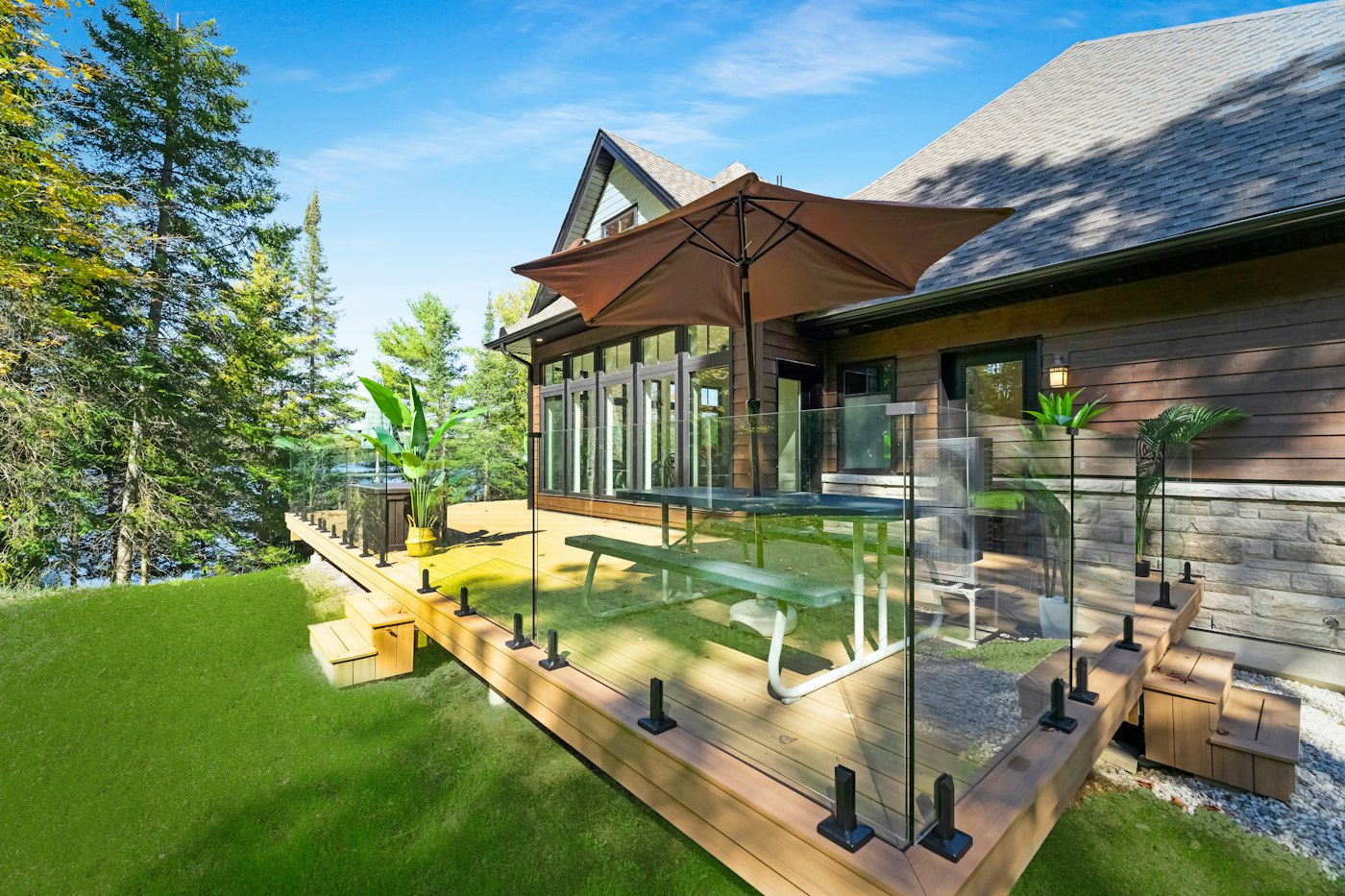
Railings are often the last thing chosen on a deck project and one of the first things people notice. They frame the view from every chair, they define the deck’s style from the yard, and they do serious safety work. Today’s options range from simple painted wood to nearly invisible glass, and each comes with its own mix of looks, maintenance and installation demands.
Wood railings
Wood is the traditional choice, usually pressure-treated pine, cedar or a tropical hardwood. It can be built in almost any pattern, from plain square balusters to custom designs, and it can be painted or stained to match the house. Carpenters work with it easily, and damaged pieces can be replaced one at a time.
The trade-off is upkeep. Railings take a lot of weather, because water sits on top rails and in joints. Plan on periodic cleaning and refinishing, and watch for checking and splitting over time.
Composite and PVC systems
Composite and PVC railings are usually sold as systems, with matching posts, sleeves, rails and balusters designed to pair with composite decking. They do not need painting, they resist rot and insects, and they deliver a clean, uniform look. Many systems slip a sleeve over a structural wood post or attach to a metal post, so the installation details matter. Colors are set by the manufacturer, and lighter shades can show dirt more readily.
Aluminum and steel
Powder-coated aluminum railings are lightweight, do not rust and need little more than an occasional wash. Their slim balusters are less visually heavy than wood, which helps preserve views. They come in standard colors such as black, bronze and white, and suit both traditional and modern homes.
Steel is stronger and can span farther between posts, which makes it popular in contemporary designs with horizontal bars or welded panels. Its coating is its defense, so scratches and chips should be touched up promptly, especially near salt air or pool water.
Cable and glass
Cable railings run stainless steel cables between posts, leaving most of the view open. The cables are pulled very tight, so end and corner posts must be extremely rigid, and the cables need re-tensioning from time to time. Some jurisdictions have rules about horizontal infill that small children could climb, so check with your building department first.
Glass panels go a step further, offering an almost unbroken view and a windbreak on breezy sites. The panels are safety glass held by posts, clamps or a continuous base channel. Glass needs regular cleaning to look its best, shows water spots and is heavier and more involved to install than other options.
Choosing for your deck
- For a classic look and easy repairs, wood still works well if you are willing to maintain it.
- For low maintenance that matches composite decking, consider a composite or PVC system.
- For slim lines and little upkeep, aluminum is hard to beat.
- For the view, look at cable or glass, and plan for stronger posts and more cleaning.
Whatever you choose, the railing must meet local requirements for height, strength and the size of openings, and the posts must be fastened securely to the deck framing. Ask your builder how the posts will be attached, because that hidden connection matters as much as the infill you see. A top rail wide enough to hold a drink and low-voltage lights in the post caps are small upgrades that make summer evenings on the deck more pleasant.
Choosing a Railing Step by Step
With so many options, a step-by-step approach keeps the decision grounded in how your deck is used and what it looks out on.
- Consider the view. If the deck overlooks woods, water or a garden, slimmer balusters, cable or glass keep more of it visible.
- Consider the users. Homes with small children or pets may favor tight balusters or solid panels that are harder to climb or slip through.
- Match the house. Look at the home’s trim, windows and style, and choose a railing that complements them.
- Decide on maintenance. Be honest about how often you want to clean, paint or stain.
- Check the rules. Confirm guard height, opening size and any restrictions on horizontal infill with your building department.
- Plan post attachment. Ask how posts will be connected to the framing and whether blocking or hardware upgrades are needed.
- Choose details. Consider post caps, lighting, drink rails and gate hardware.
Caring for Each Type
- Wood. Clean each spring, check for cracked or loose pieces and refinish when water stops beading on the surface.
- Composite and PVC. Wash with mild soap and water, and check that sleeves and caps remain secure.
- Aluminum. Rinse occasionally and wipe down with a gentle cleaner. Check fasteners.
- Steel. Inspect the coating and touch up chips quickly to prevent rust.
- Cable. Check tension periodically and clean the cables, especially in coastal areas or near pools.
- Glass. Clean with non-abrasive products and inspect clamps and channels for tightness.
Common Mistakes
- Weak post connections. A railing is only as strong as its posts. Posts fastened only with nails or a few screws may not provide adequate strength.
- Too few posts for cable. Cable needs rigid posts close enough together to keep cables tight and safe.
- Ignoring stair rails. Stairs need handrails that are graspable and continuous, not just a matching guard.
- Choosing a style that clashes. A very modern railing on a traditional home, or the reverse, can look out of place.
- Forgetting the view from inside. Railings are seen through windows and doors every day. Look at the design from inside the house.
- Not planning for lighting. Wiring for post-cap or under-rail lights is easiest to install before railings are complete.
- Overlooking gates. If children or pets use the deck, plan a self-closing gate at the stairs from the start.
Questions Homeowners Ask
Can we replace only the railing?
Often, yes, if the deck framing is sound. A new railing can transform the look of an older deck.
Do we need a railing on a low deck?
Requirements depend on the height of the deck surface above the ground and local code. Your building department or contractor can confirm.
Can different railing types be combined?
Yes. Many decks use glass or cable on the view side and balusters elsewhere. We are glad to help you choose a railing that suits your deck and the way you use it.