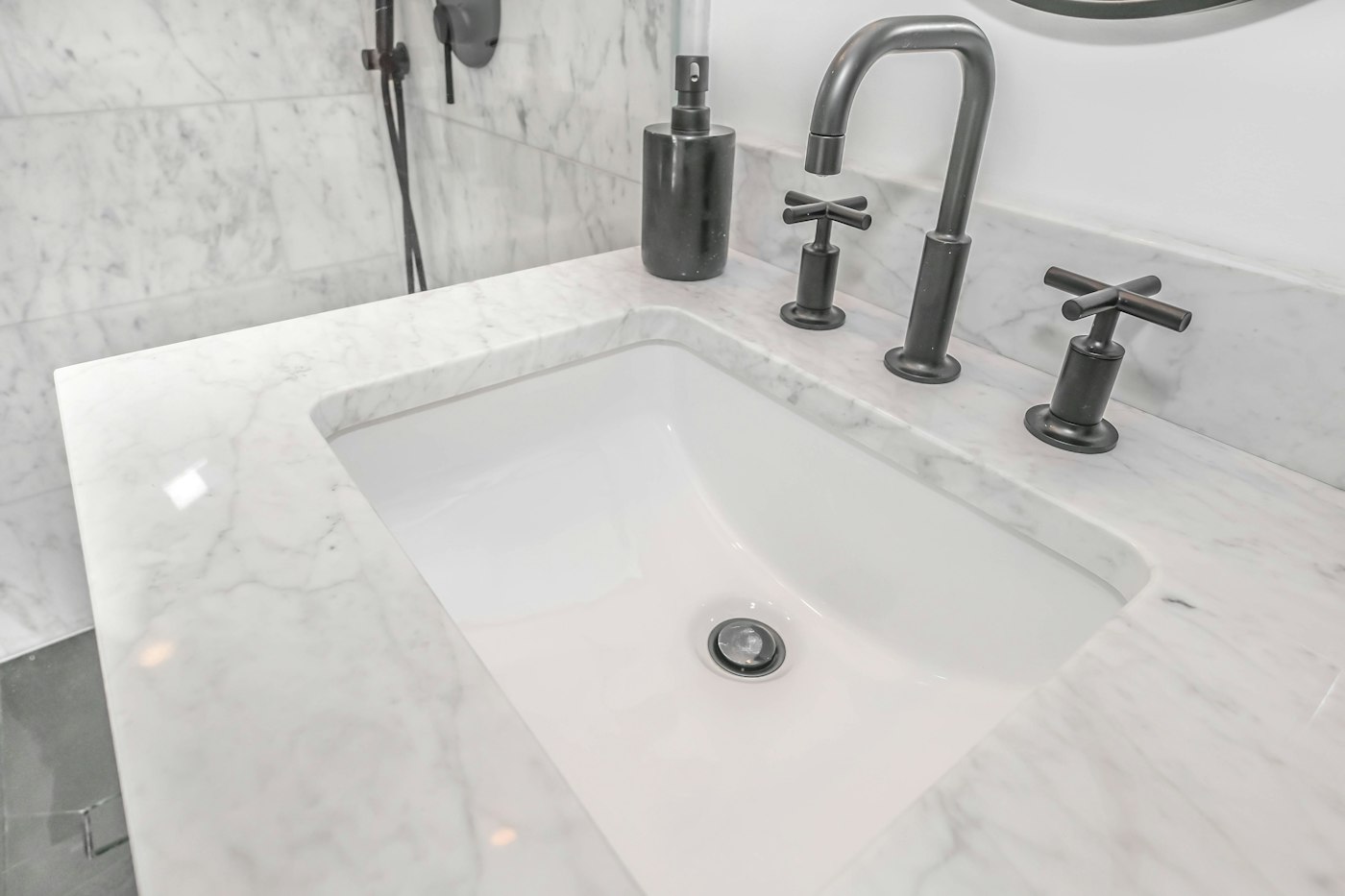
Worn cartridges or washers cause most drips. Replacement parts are inexpensive; the fix takes under an hour. A dripping faucet is one of those problems that’s easy to live with, until you add up the wasted water, the stains in the sink and the sound of that steady drip at night. The good news is that most drips are caused by a small, inexpensive part wearing out, and fixing them is very manageable. This guide explains what causes faucet drips, how to identify your faucet type, the general repair process and when it’s time to call in help.
What a Drip Really Costs
A single drip doesn’t seem like much, but it runs all day and all night. Over weeks and months, a steady drip can waste a surprising amount of water. If the leak is on the hot side, you’re also paying to heat water that goes straight down the drain. Drips also leave mineral deposits and stains on sinks and fixtures, and in some cases a leak at the base of a faucet can let water get into the cabinet below, where it can damage the cabinet floor.
Why Faucets Drip
Worn cartridges or washers cause most drips. Inside every faucet is a mechanism that controls the flow of water. Each time you turn the faucet on and off, its parts rub, compress or slide against each other. Over years, rubber washers harden or wear, seals crack and mineral buildup roughens surfaces, until the faucet can no longer completely stop the water.
Other common causes include:
- Worn O-rings, which often cause leaks around the handle or base rather than from the spout
- Corroded or worn valve seats in compression faucets
- Mineral deposits from hard water
- Loose parts or packing nuts
Identify Your Faucet Type
Knowing what kind of faucet you have tells you which part to replace.
Compression faucets
These usually have separate hot and cold handles that you twist tighter to shut off. They use rubber washers that press against a valve seat. They’re common in older homes, and a worn washer is the classic cause of a drip.
Cartridge faucets
These may have one or two handles. Inside is a cartridge that moves up and down or rotates to control flow. When the cartridge or its seals wear, the faucet drips.
Ball faucets
Common in kitchens, these have a single handle that moves over a rounded cap. They use a ball with springs and seals. Leaks often come from worn seals and springs.
Ceramic disc faucets
These single-lever faucets use two ceramic discs that slide against each other. They’re very durable, but seals can wear and discs can be damaged by debris.
The General Repair Process
The fix takes under an hour for most faucets once you have the right part. Exact steps vary by brand and model, so check the manufacturer’s information if you have it. Here’s the general approach:
- Turn off the water. Close the shutoff valves under the sink. Open the faucet to drain remaining water and confirm the supply is off. If there are no shutoffs under the sink, you’ll need to turn off the main water supply.
- Plug the drain. Put a stopper or a rag in the drain so small parts don’t disappear.
- Remove the handle. Pry off any decorative cap, then remove the screw holding the handle. Some handles use a small set screw that requires a hex key.
- Remove the mechanism. Depending on the faucet type, unscrew the packing nut, pull the retaining clip and remove the cartridge, or remove the cap and ball assembly.
- Take the old part to the store. Bringing the worn washer, cartridge or seal with you, and noting the faucet brand, is the surest way to get an exact match.
- Install the replacement. Clean mineral deposits from the housing, lightly coat O-rings with plumber’s grease if recommended and install the new parts in the same orientation as the old ones.
- Reassemble and test. Put the handle back on, turn the water on slowly and check for drips and leaks.
Take a photo at each stage of disassembly. It’s a simple way to remember how everything goes back together.
Replacement parts are inexpensive
Washers, O-rings, seals and many cartridges are low-cost parts, often far less expensive than a new faucet. Many manufacturers also offer replacement cartridges for their faucets, and some faucets carry warranties that cover parts. It’s worth checking before you buy.
Common Mistakes
- Not shutting off the water first. Always confirm the supply is off before taking anything apart.
- Overtightening. Cranking a compression faucet handle harder to stop a drip just wears the washer faster. During reassembly, overtightening can crack parts.
- Buying the wrong part. Cartridges that look similar often aren’t interchangeable.
- Scratching the finish. Wrap wrench jaws with tape or a cloth to protect chrome and other finishes.
- Ignoring stuck shutoff valves. Older valves can seize or leak when turned. If yours won’t budge, don’t force it.
Repair or Replace the Faucet?
Repair makes sense when the faucet is in good shape and parts are available. Replacing the faucet may be the better choice when:
- The faucet is very old and parts are hard to find
- The body is corroded or cracked
- It leaks from multiple places
- You’ve wanted a different style, a pull-down sprayer or better function anyway
A new faucet can refresh a kitchen or bathroom, and it’s a good time to replace old supply lines and shutoff valves at the same time.
What to Do This Week
- Check every faucet in the house, including tubs, showers and outdoor spigots, for drips.
- Look under sinks for moisture and test that shutoff valves turn.
- Identify your faucet type and brand.
- Replace the worn washer or cartridge, or schedule help.
If you’d rather not take apart a faucet, or your shutoff valves are stuck, we’ll take care of it. AX Home Pro handles repairs, improvements and maintenance for homeowners. Request an estimate to get started.