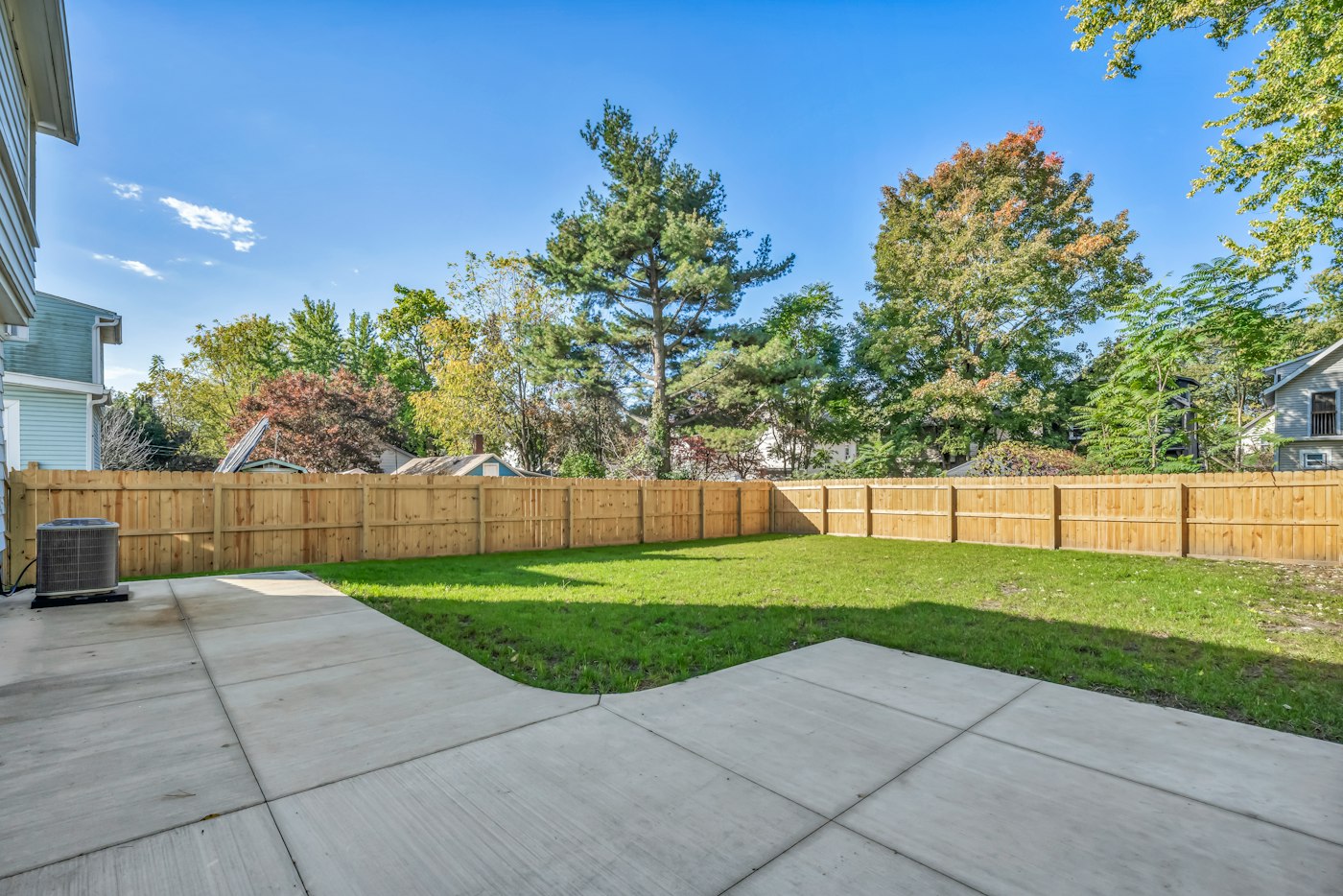
As patios and decks come back into use in April, the view from them matters more, and so does who can see in. A fence or privacy screen does several jobs at once: it marks boundaries, contains children and pets, blocks wind and views, and gives an outdoor room its walls. Choosing one involves material, style and a few conversations that are easier to have before the posts go in.
Wood
Wood fencing is the traditional choice and still the most adaptable. Cedar and redwood resist decay naturally and weather to gray or hold their color with stain; pressure-treated pine is more economical and relies on its treatment for longevity. Styles range from solid board privacy fences and board-on-board designs that hide gaps, to picket, horizontal slat and shadowbox fences that let air and light through. Wood needs periodic staining or sealing, and posts set in concrete with good drainage last longest. Its great advantage is that it can be built to any height, pattern and shape on site.
Vinyl, Composite and Metal
Vinyl fencing never needs painting, resists rot and insects and cleans with a hose. It comes in a range of styles that mimic wood, mostly in white, tan and gray. It can look plastic up close, becomes brittle in extreme cold and is harder to repair than wood if a panel is damaged. Composite fencing, made from wood fiber and plastic like composite decking, offers a more convincing wood look with similar low maintenance, at a higher cost. Both are sold as panel systems, which makes them fast to install on level ground and more challenging on slopes.
Aluminum and steel fences in picket or ornamental styles define a boundary without blocking the view, which suits front yards, pool enclosures and properties with a landscape worth seeing. Aluminum does not rust and needs almost no care; steel is stronger and heavier. Wrought iron is the classic version and requires repainting over time. Chain link is the most economical option for containment and can be softened with vinyl coating, privacy slats or climbing plants.
Privacy Screens and Living Fences
Where a full fence is too much, or not allowed, a screen can do the work in one spot. Freestanding slatted panels, lattice, louvered screens and decorative metal panels block a neighbor’s window or hide the air conditioning units without enclosing the yard. Plantings do the same job more gently: a row of evergreens such as arborvitae, a hedge, tall ornamental grasses or vines on a trellis. Living screens take time to fill in and need water and pruning, but they soften a space in a way no built fence can. Many yards combine a modest fence with planting along it.
Before You Build
- Confirm the property line, ideally with a survey; a fence a foot onto the neighbor’s land is a dispute waiting to happen.
- Check local ordinances for height limits, setbacks, permits and rules about which side faces out; homeowner associations often have their own.
- Talk with the neighbors. Sharing plans, and sometimes costs, avoids friction and may improve the design.
- Call 811 to locate underground utilities before digging post holes.
- Think about gates: their width for mowers and wheelbarrows, their swing and their hardware.
Design Notes
A fence looks best when it relates to the house, echoing its trim color, its level of formality or its materials. Step a fence down a slope in even increments rather than following the grade in a slant. Vary height by zone, taller behind a patio for privacy and lower along the front for openness. Cap posts and top rails to shed water. Finally, consider the view from inside the house as well as from the yard; a fence is part of the picture framed by every back window, and in a well-planned yard it quietly makes the outdoor room feel complete.
Choosing the Right Fence Step by Step
Narrowing down fence options is easier when you start from what the fence must do rather than how it looks in a catalog.
- Define the purpose. Privacy, pet or child containment, pool safety, wind protection, boundary marking or decoration each point toward different heights and styles.
- Walk the line. Note slopes, trees, rocks, drainage paths and existing structures along the route.
- Check the rules. Confirm height limits, setbacks, required permits and any homeowners association guidelines.
- Choose the material. Weigh appearance, maintenance, lifespan and how it handles your yard’s terrain.
- Plan gates. Decide how many you need, where they go and how wide they must be.
- Share the plan. Talk with neighbors before construction, especially along shared lines.
Neighborly Practices That Prevent Problems
- Give advance notice. Let neighbors know when construction will start and how long it might take.
- Discuss the finished side. Many local rules or customs call for the finished side to face outward. Even where it is not required, it is a gracious choice.
- Plan for maintenance access. Setting a fence slightly inside the line can make it easier to maintain your side without stepping onto the neighbor’s yard, though you should confirm how this affects your property rights and local rules.
- Respect drainage. A solid fence can redirect water. Leave a gap at the bottom or plan drainage so runoff does not become a problem for anyone.
- Keep it in good repair. A well-maintained fence protects relationships as well as property.
Common Fence Mistakes
- Posts set too shallow. Shallow posts lean and loosen. Follow local recommendations for depth, especially where the ground freezes.
- Concrete that traps water. Post footings should shed water away from the wood rather than hold it around the base.
- Gates that sag. Wide gates need strong posts, a diagonal brace and heavy-duty hinges.
- Ignoring slopes. Panel systems on uneven ground can leave gaps at the bottom. Plan stepping or racking ahead of time.
- Blocking utilities. Leave access to meters, utility boxes and easements.
- Skipping hardware quality. Cheap hinges, latches and fasteners rust and fail long before good boards do. Galvanized or stainless hardware is worth the small difference.
Questions Homeowners Ask
Can we combine a fence and plantings?
Yes. A lower fence with shrubs or vines along it provides privacy while feeling softer than a tall solid wall.
How do we keep a wood fence looking good?
Clean it, keep plants and soil from piling against the boards, and stain or seal it on a regular schedule.
Should a privacy screen be attached to the deck?
It can be, but the attachment must be designed for wind loads. We are glad to help you choose the fence or screen that fits your yard and your neighborhood.