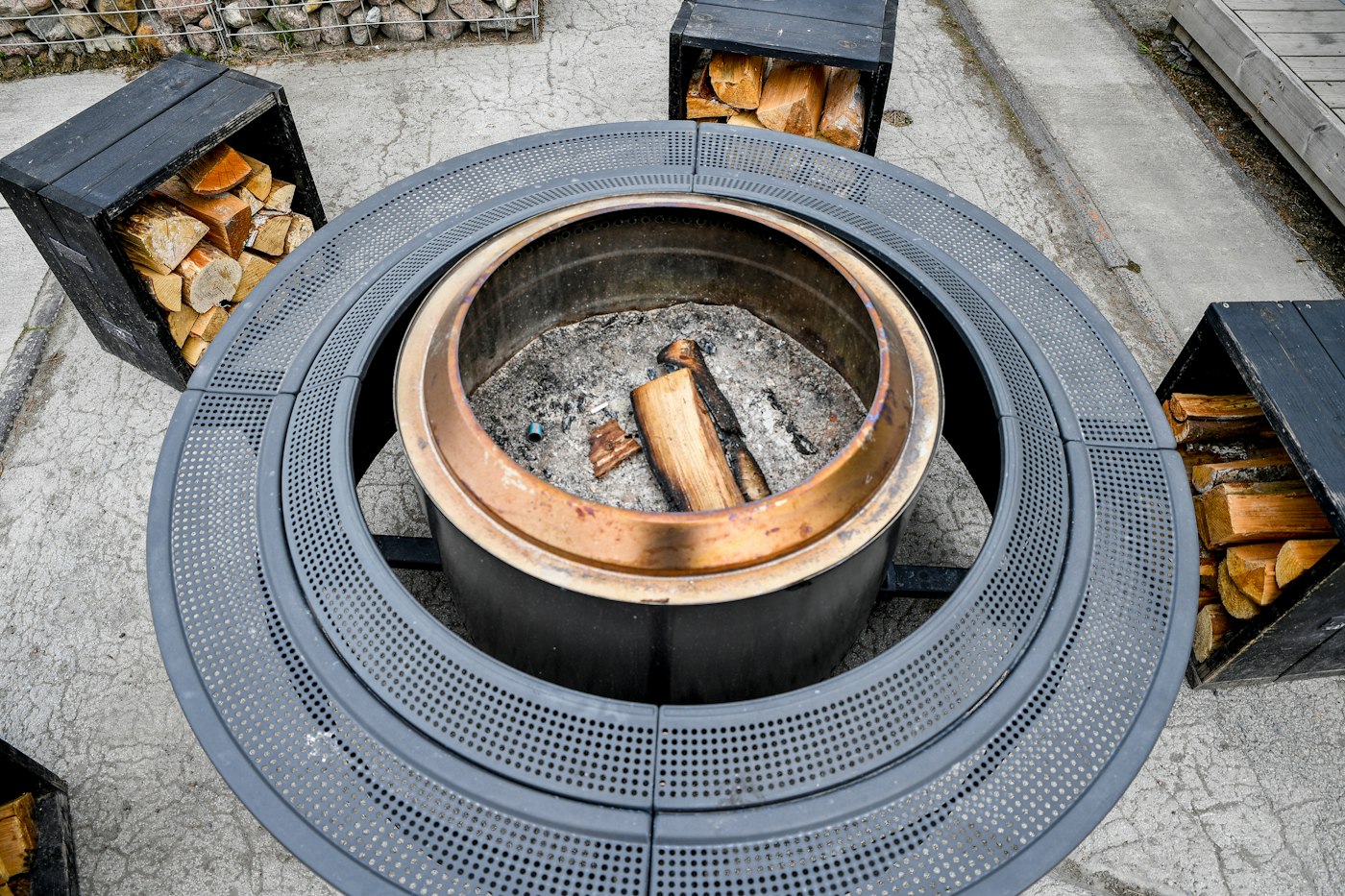
Nothing gathers people outdoors like a fire. On a cool April evening, a fire pit turns a patio from a place you pass through into a place you stay. Options run from a portable steel bowl to a built-in stone fireplace with a chimney, and the choices about fuel and placement shape both the experience and the safety of the feature.
Wood-Burning Fires
A wood fire offers everything people love about fire: the crackle, the smell, the ritual of building and tending it, and real heat. Wood-burning fire pits can be portable bowls, built-in rings of stone or block with a metal insert, or chimney-style fireplaces that draw smoke up and away. The trade-offs are smoke, which shifts with the wind and can send guests rotating around the circle; sparks, which require a screen and a non-combustible zone; ash to clean out; and a supply of dry, seasoned wood. Many towns restrict open burning or require certain distances from structures, and some prohibit wood fires on certain days, so check local rules and your fire department’s guidance before building.
Gas Fires
Gas fire pits burn natural gas from a buried line or propane from a tank hidden in the base. They light with a switch or a match, produce no smoke or sparks, go out instantly and leave nothing to clean. The flames dance over lava rock, fire glass or ceramic logs. The heat is gentler than a roaring wood fire and the experience is tidier, which suits dining areas and patios close to the house. Natural gas requires a line run by a licensed professional; propane means swapping tanks. Burners should be rated for outdoor use and installed with proper ventilation in the base so gas cannot accumulate.
Where to Put It
- Keep a safe distance from the house, fences, sheds and anything overhead, including tree branches and pergola rafters; local codes often specify minimums.
- Set the fire on a non-combustible surface such as pavers, concrete or gravel, not directly on a wood or composite deck without a protective base designed for it.
- Consider the prevailing wind so smoke drifts away from seating and windows.
- Leave enough space around the fire for chairs to be pulled back and for people to walk behind them.
- Keep the fire away from the main traffic path to the yard.
Built-In Fireplaces
An outdoor fireplace is a more significant structure, with a firebox, a chimney and often a hearth, and it becomes the focal point of an outdoor room. It directs heat forward and smoke upward, which makes it more comfortable than an open pit on breezy nights, and it provides a backdrop for seating, a mantel for lanterns and sometimes storage for wood. It can be masonry built on site or a prefabricated unit finished in stone or stucco. Fireplaces need a proper foundation, clearances and often a permit, and their scale should match the patio so they do not overwhelm it.
Comfort and Design
Seating is what makes a fire feature work. Built-in benches of stone or block, a curved low wall, or a circle of comfortable chairs all serve, and a slightly sunken or enclosed seating area holds warmth and feels intimate. A fire table, where the burner sits in the center of a dining-height or coffee-height surface, combines a fire with a place to rest a drink. Lighting around the area should be low, so the fire remains the brightest point. Keep a hose, a bucket of sand or an extinguisher within reach of any wood fire, and never leave one burning unattended.
A fire feature is one of the most used additions to an outdoor space, especially in spring and fall when the air is cool. Placing it well and choosing the fuel that fits how you entertain makes it a safe, welcome part of the yard for years.
Choosing the Right Fire Feature for Your Yard
Before deciding on wood or gas, pit or fireplace, it helps to answer a few honest questions about how the feature will be used.
- How often will you light it? If the answer is most evenings in spring and fall, the convenience of gas may matter more than the romance of wood.
- Who gathers around it? A family roasting marshmallows wants a low, open pit with room for sticks. A group of adults having dinner may prefer a fire table at dining height.
- How windy is the spot? Breezy, open yards favor a fireplace with a chimney or a gas feature with a wind guard.
- How close are neighbors? Smoke can drift into nearby windows. In tight lots, gas is usually the more considerate choice.
- Do you want heat or atmosphere? Wood fires and fireplaces give more warmth; gas features are often more about glow and gathering.
Building It to Last
Whether it is a simple ring or a full fireplace, a built-in fire feature needs the same kind of care in construction that a patio does.
- A solid base. Masonry is heavy. A fire pit or fireplace needs a compacted base or footing so it does not settle and crack.
- Fire-rated materials. Ordinary landscape block and some stones can crack or spall when exposed to direct flame. Inner liners of steel or firebrick protect the structure.
- Drainage. Rainwater collecting in a fire pit can damage the liner and freeze in winter. Build in a way for water to escape.
- Ventilation for gas. Gas features need vents in the enclosure so leaked gas cannot build up.
- Access for service. Valves, igniters and burners should be reachable without dismantling the feature.
Safe Habits Around the Fire
- Burn only dry, seasoned firewood; never use gasoline or other accelerants to start a fire.
- Keep a spark screen handy for wood fires, and keep the area around the pit clear of leaves and debris.
- Supervise children and pets closely, and set clear rules about how close they may come.
- Douse wood fires completely and stir the ashes before leaving, and dispose of cooled ashes in a metal container.
- Turn off gas at the valve when the feature is not in use, and follow the manufacturer’s maintenance guidance.
- Check for burn bans and local alerts during dry or windy weather.
Questions Homeowners Ask
Can a fire pit go on a deck?
Some gas fire tables are designed for decks when placed on a protective base and kept at proper clearances. Wood-burning pits are generally a poor fit for wood or composite decks. Always follow the manufacturer’s instructions and local rules.
Can we convert a wood pit to gas later?
Often, yes, with a burner kit sized for the pit. It is far easier if a gas line or conduit was run to the location during original construction.
What size should the seating area be?
Plan enough room for chairs to sit comfortably back from the heat and for people to walk behind them. We can help you lay out the space so the fire feels inviting without feeling crowded.