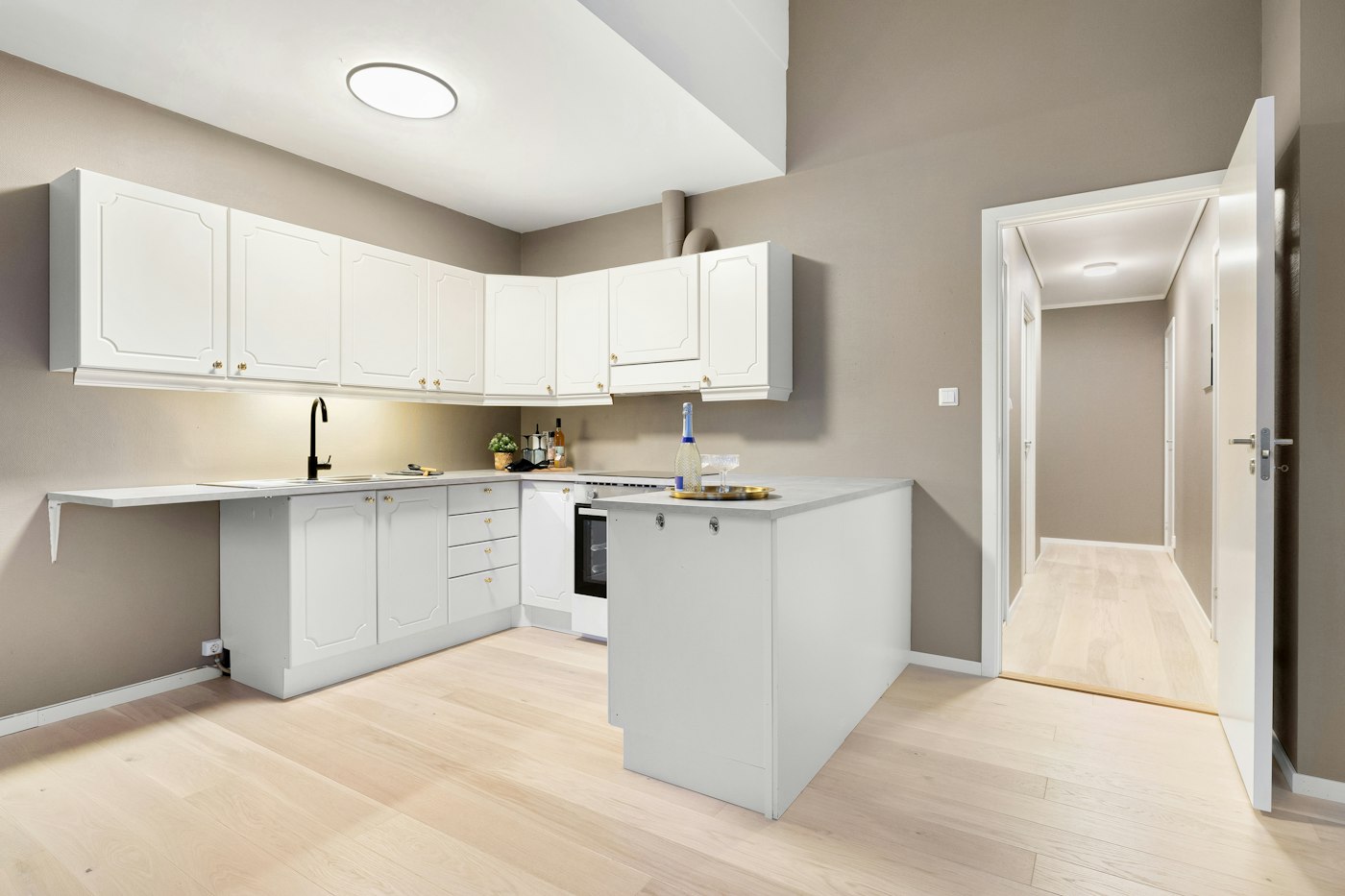
When shopping for cabinets, most people focus on door style and color. Behind those doors, though, is a structural choice that affects how your cabinets look, how much they hold and how easy they are to use: framed or frameless construction.
What Framed Cabinets Are
Framed cabinets have a face frame, a rectangle of solid wood strips attached to the front edge of the cabinet box. The doors attach to this frame. Face-frame construction has a long tradition in American cabinetry and gives cabinets a sturdy, classic appearance. The frame adds rigidity to the box and provides a solid surface for mounting hinges.
Because the frame creates a lip around each opening, the usable opening is slightly smaller than the box itself. Drawers and pull-outs must fit within that opening, which can reduce interior width a bit.
What Frameless Cabinets Are
Frameless cabinets, sometimes called full-access or European-style cabinets, skip the face frame. The doors attach directly to the sides of the box, typically with concealed hinges. Without a frame in the way, you get full access to the interior and slightly more usable storage space, which can be especially noticeable in drawers. Frameless cabinets are often associated with clean, contemporary design, but they can be built in many styles.
Door Overlay Styles
Construction type works hand in hand with how doors sit on the cabinet, known as overlay.
- Traditional overlay: Doors cover part of the face frame, leaving some frame visible around each door. A classic look found in many homes.
- Full overlay: Doors cover almost all of the box or frame, creating a more continuous surface. Available in framed and frameless versions.
- Inset: Doors sit inside the face frame, flush with its front. This is a traditional, furniture-like look that requires precise construction and careful adjustment.
Pros and Considerations
Framed cabinets offer a timeless look and work well with inset doors. They can be a little more forgiving in older homes where walls are not perfectly straight, since the frame can be scribed to fit. Frameless cabinets maximize storage and access and suit sleek, modern kitchens, though they depend on accurate installation to keep door gaps even.
Neither style is inherently better. Quality depends far more on materials, joinery, hardware and installation than on whether a face frame is present. Look at box material, drawer construction and hinge and drawer slide quality as you compare options.
Questions to Ask
- What is the cabinet box made of, and how are the joints assembled?
- Are drawers built with sturdy joinery and full-extension slides?
- Are soft-close hinges and slides included?
- How will fillers and end panels be handled to give a finished look?
Cabinets are one of the largest parts of any kitchen remodel, and they will be used every day. If you would like help comparing cabinet options for your project, reach out through our contact page.
How to Inspect Cabinet Quality in a Showroom
Whether you lean toward framed or frameless, a hands-on look at sample cabinets tells you more than a brochure. Here is what to check, step by step.
- Open a drawer all the way. Look at how the drawer box is joined at the corners. Dovetail or other interlocking joints and solid drawer bottoms tend to hold up well. Pull the drawer out fully and see whether it stays level and smooth.
- Push down on an open drawer. A sturdy slide should feel solid under light pressure, without sagging or wobbling.
- Close a door and drawer gently. Soft-close hardware should catch and settle without slamming.
- Look at the box material and thickness. Check the sides, back and bottom of the cabinet box. Ask what the box is made of and whether the back is a full panel.
- Check the finish. Look along edges and inside corners. Paint or stain should be smooth and consistent, without drips or thin spots. Ask how the finish is applied and cured.
- Look inside. Interior finishes, shelf thickness and shelf supports matter, since you will see and use them every day.
- Ask about adjustment. Hinges and drawer fronts should be adjustable so gaps can be fine-tuned after installation and over time.
How Construction Affects Everyday Storage
Drawer stacks
In framed cabinets, the frame between drawers means each drawer box is a little shorter and narrower than the cabinet. In frameless cabinets, drawers can use nearly the full interior. If you are planning a kitchen built around deep drawers for pots and dishes, that difference adds up.
Pull-outs and accessories
Trash pull-outs, spice racks and roll-out shelves are available for both types, but sizes vary. Ask to see accessories in the specific cabinet line so you know they fit the openings.
Corners and fillers
Both styles use filler strips to fill small gaps at walls and appliances. Frameless cabinets often need fillers placed carefully so doors and drawers clear handles on adjacent cabinets. A good layout plans these from the start.
Repairs over time
With either construction, doors can usually be adjusted or replaced individually. Keeping the manufacturer and model information with your home records makes future repairs and additions easier.
Cabinet Decisions That Often Get Missed
- Finished end panels. Exposed sides of cabinets, especially on islands and at the end of runs, need finished panels that match the doors.
- Toe kick style. A recessed toe kick is standard, but some furniture-style designs use feet or a decorative base.
- Crown and light rail molding. These trims affect how upper cabinets meet the ceiling and how under-cabinet lights are hidden.
- Interior lighting and outlets. Plan any lights inside cabinets or outlets in appliance garages before the cabinets are ordered.
- Hardware placement. Decide where knobs and pulls will go and whether drawers get one or two pulls, especially on wide drawers.
Common Questions About Cabinet Construction
Can I mix framed and frameless in one kitchen? It is possible, but most kitchens use one construction type for consistency in door gaps, hardware and appearance.
Are inset cabinets harder to live with? Inset doors look beautiful but need precise fit. Seasonal humidity changes can affect gaps on wood doors, so occasional adjustment may be needed.
Do frameless cabinets need special installation? They rely on level, plumb installation to keep the narrow gaps between doors consistent, so experienced installation is especially important.
How long should good cabinets last? Well-built boxes with quality hinges and slides can serve for many years. Hardware is the part most likely to need adjustment or replacement, which is one more reason to choose it carefully.