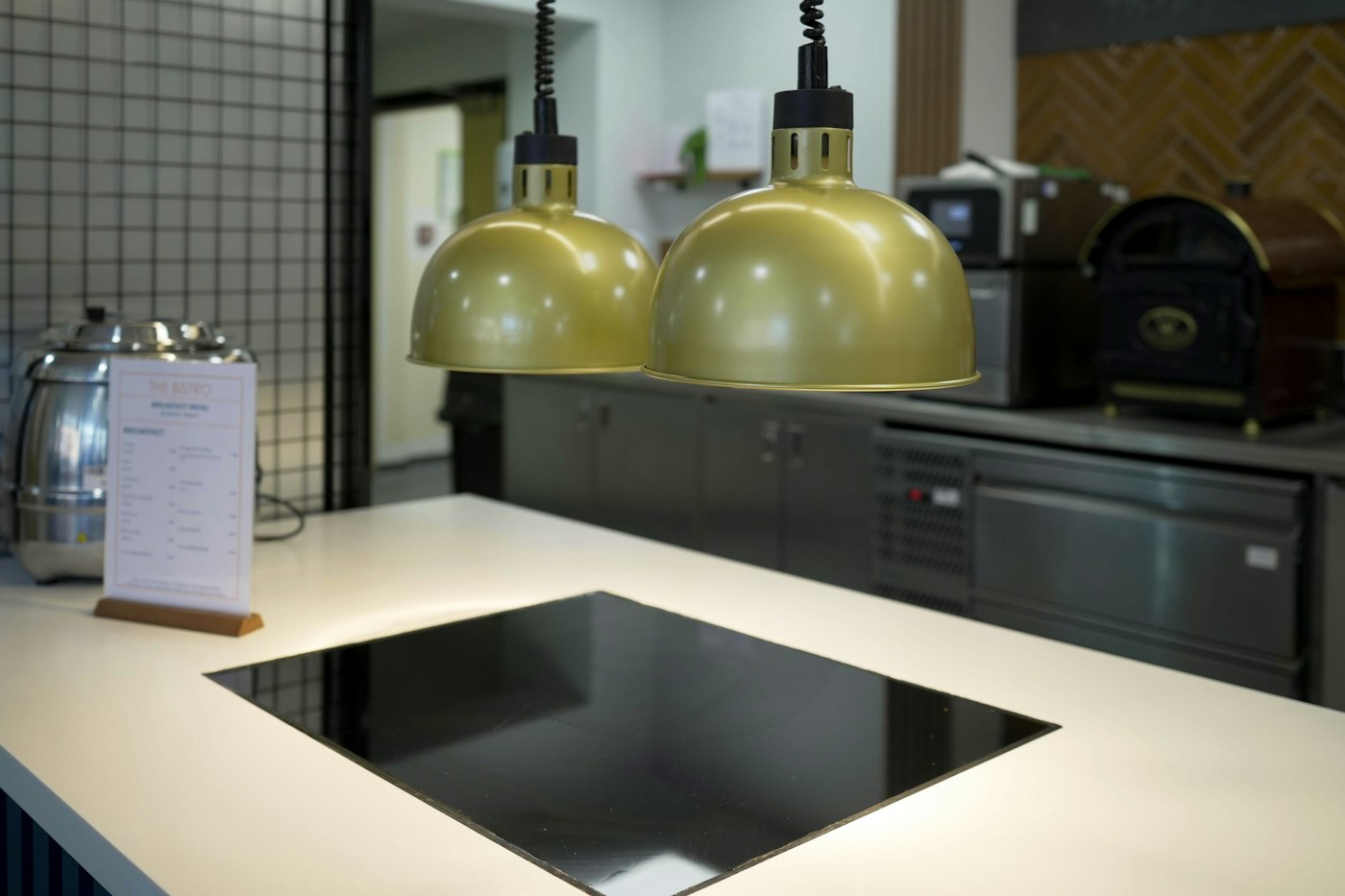
Choosing a cooktop is not only an appliance decision. It determines what kind of power line runs to the kitchen, how much ventilation the room needs, how the counters around it are protected and even which pots stay in the drawer. Settling the question early in a kitchen remodel saves changes later. Here is how the three main types compare and what each means for the plan.
Gas
Gas cooktops heat with an open flame under the pan. Cooks like the instant visual feedback, the quick response when the knob turns and the ability to use any cookware, including round-bottomed woks on a suitable grate. Gas requires a gas line, which may already exist or may need to be run by a licensed professional, and the flame produces combustion byproducts and more heat into the room, so a range hood that vents outdoors is especially important. Grates and burner caps take more cleaning than a flat surface. Professional-style gas ranges with high-output burners need correspondingly stronger ventilation, and in some cases make-up air provisions, which your contractor should address.
Radiant Electric
Electric smooth-top cooktops heat elements under a glass-ceramic surface, which glows red and transfers heat to the pan. They are simple, widely available and easy to wipe clean. They respond more slowly than gas or induction, hold heat after they are turned off, and work best with flat-bottomed pans that sit fully on the surface. They run on a dedicated electrical circuit. Coil-element electric cooktops are the older and most economical version. Electric cooktops add less heat and no combustion products to the kitchen, though ventilation for cooking fumes is still needed.
Induction
Induction cooktops use a magnetic field to heat the pan directly, while the glass surface itself stays relatively cool. They heat faster than gas, respond instantly, hold very precise low temperatures and are the easiest of all to clean because spills do not burn onto the surface. They put less heat into the room and no combustion products. The requirements are a dedicated electrical circuit, often a higher-capacity one than an existing electric range uses, and cookware with a magnetic base; cast iron and most stainless steel work, while aluminum, copper and glass do not unless they have a bonded magnetic layer. A refrigerator magnet that sticks to the bottom of a pan is the standard test. Induction also makes a faint hum with some pans, which most people stop noticing.
What Each Means for the Remodel
- Power: gas needs a gas line and a standard outlet for ignition; electric and induction need a dedicated circuit sized for the unit, which may require electrical panel work.
- Ventilation: all three need a hood that vents outdoors; gas benefits the most, and hood capacity should match the cooktop.
- Counters: a cooktop set into a countertop needs the cutout templated to the specific model.
- Format: a freestanding or slide-in range combines cooktop and oven; a separate cooktop with a wall oven elsewhere frees the design.
- Dual-fuel ranges pair a gas top with an electric oven for those who want both.
Making the Choice
Many showrooms have live cooktops to try, and that experience is worth more than any specification. Cooks devoted to gas tend to stay with it. Those switching to induction often find the speed and cleanup hard to give up. Whatever you choose, decide before the cabinets are ordered and the electrician and plumber are scheduled, because the cooktop sets requirements that ripple through the whole plan.
Questions to Answer Before You Choose
The right cooktop depends as much on your kitchen and household as on how each type performs. These questions help narrow the choice.
- What is already there? If the kitchen has a gas line, keeping gas may be simplest. If it has an existing electric range circuit, an electrician can tell you whether it is adequate for a new electric or induction unit.
- How does your electrical panel look? Older panels may not have space or capacity for a new high-demand circuit. That answer can shape the budget.
- What cookware do you own? If you love your aluminum or copper pans, induction will mean replacing or adapting some of them.
- Who cooks, and how? Frequent stir-frying and charring peppers suit gas. Precise simmering and fast boiling suit induction. Everyday family cooking works on any type.
- Are there young children in the house? The cooler surface of induction and the automatic pan detection on many models appeal to some families.
- How much do you care about cleanup? Smooth glass tops are much easier to wipe than gas grates.
Planning the Cooking Zone Around the Cooktop
Whatever type you choose, the area around it needs thought. Leave counter space on both sides for landing hot pans and resting utensils. Keep the cooktop away from windows where curtains or drafts could cause problems, and away from corners where pot handles can catch. Plan an outlet nearby for small appliances, a drawer or rail for spoons and spatulas, and a place for oils and spices that is close but not directly above the heat. A pot filler over a large range is a convenience some cooks love, and it needs to be planned with the plumbing.
Ventilation That Actually Works
- Size the hood to the cooktop. A hood at least as wide as the cooking surface captures more smoke and steam; a slightly wider hood helps even more.
- Mind the mounting height. Follow the manufacturer’s recommended height range. Too high and it misses fumes; too low and it gets in the cook’s way.
- Vent outdoors. A short, direct duct run with few bends works best.
- Consider make-up air. Powerful hoods can pull air from the house faster than it can be replaced, especially in tight homes. Your contractor can check whether local code requires make-up air.
- Use it. Turn the hood on before cooking starts and leave it running for a few minutes after.
Questions Homeowners Ask
Can we switch from gas to induction?
Yes. The gas line is capped by a licensed professional, and an electrician runs a new circuit sized for the induction unit. It is easiest to do during a remodel when walls and cabinets are open.
Do induction cooktops work during a power outage?
No. Electric and induction cooktops need power. Some gas cooktops can be lit with a match during an outage, but check the manufacturer’s guidance.
Is one type better for resale?
Preferences vary by buyer and area. Choose the cooktop that suits how you cook, and we will help you plan the kitchen around it so it works well for years.