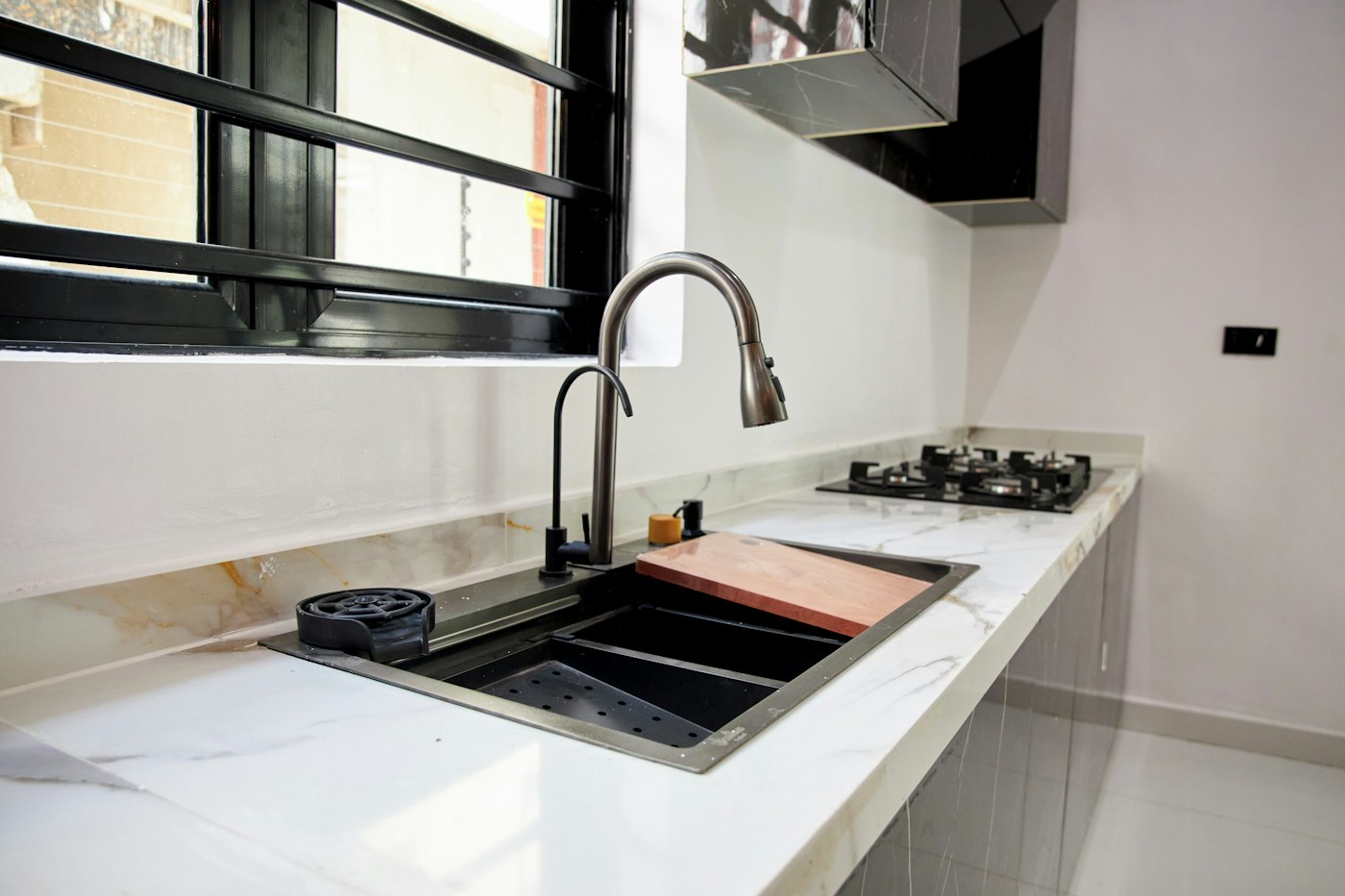
Of all the fixtures in a kitchen, the sink probably gets the most use. Rinsing produce, filling pots, washing dishes and cleaning up after meals all happen there. Choosing the right sink means thinking about material, how it mounts to the countertop and how many bowls you need.
Common Sink Materials
- Stainless steel: A long-time favorite for its durability, heat resistance and neutral look. Thicker steel (indicated by a lower gauge number) generally feels sturdier and quieter. Sound-dampening pads and coatings help reduce noise. Stainless can show scratches and water spots, though brushed finishes hide them better.
- Fireclay: Clay glazed and fired at high temperatures, often used for farmhouse-style sinks. Fireclay has a smooth, glossy surface and a classic look. It can chip if hit hard by heavy cookware.
- Enameled cast iron: Very heavy and durable, with a glossy enamel finish. It needs solid support from the cabinet and countertop.
- Composite and granite composite: Made from crushed stone and resin. These sinks come in many colors and often resist scratches and stains well.
- Solid surface and quartz: Can sometimes be integrated with a countertop of similar material for a seamless look.
Mounting Styles
How a sink attaches to the counter affects both looks and cleaning. A drop-in or top-mount sink sits on top of the counter with a visible rim. It is simple to install and works with nearly any countertop material, though the rim can catch crumbs. An undermount sink attaches beneath the countertop, allowing you to wipe crumbs straight into the bowl. Undermount sinks typically require solid countertops like stone or quartz. A farmhouse or apron-front sink has an exposed front panel that extends past the cabinets, which usually requires a cabinet designed for it.
Bowl Configurations
Single-bowl sinks offer a large open basin that fits big pots and baking sheets. Double-bowl sinks let you separate tasks, such as soaking dishes on one side and rinsing on the other. Some double sinks have one large bowl and one smaller bowl, which many cooks find practical. Workstation sinks include ledges that hold cutting boards, colanders and drying racks, turning the sink into a prep station.
Details That Matter
- Depth: Deeper bowls hide dishes and reduce splashing, but very deep sinks can be hard on your back.
- Drain location: A rear-set drain can free up space under the sink and keep the drain clear of stacked dishes.
- Corner radius: Tight corners look crisp; rounded corners are easier to clean.
- Faucet holes: Plan for the faucet, soap dispenser, sprayer or filtered water tap you want.
Choosing With Confidence
The best sink is the one that matches how you cook and clean. Bring a large pot or baking sheet to the showroom to check fit. If you are choosing a sink as part of a kitchen remodel, reach out through our contact page.
How to Choose Your Sink, Step by Step
With so many options, it helps to work through the decision in a logical order. Each choice narrows the next.
- Start with how you cook and clean. Do you hand-wash large pots and roasting pans, or does nearly everything go into the dishwasher? Do you prep a lot of produce? Your habits point toward a single bowl, double bowl or workstation design.
- Confirm your countertop. The countertop material determines which mounting styles are possible. Stone and quartz work well with undermount sinks, while laminate typically uses drop-in models.
- Check the cabinet size. Sinks are sized to fit specific sink base cabinets. Apron-front and large workstation sinks may need a particular width or a cabinet designed to support them.
- Pick the material. Weigh durability, noise, care and appearance against your daily routine.
- Coordinate the faucet. Choose the faucet at the same time so its height, reach and spout fit the bowl. A tall spout over a shallow sink can splash, and a short reach may not cover the whole bowl.
- Think about the disposer and accessories. If you plan a garbage disposer, check that the sink drain is compatible. Decide on bottom grids, strainers and soap dispensers now.
Matching Sinks to Real Kitchens
For a household that cooks every night
A large single bowl or a workstation sink with a cutting board ledge keeps prep and cleanup in one spot. A sturdy stainless or composite material handles heavy pans well.
For a busy family kitchen
A low-divide double sink lets one side hold dirty dishes while the other stays free for rinsing, and the lower divider still allows larger items to fit across both bowls.
For a farmhouse or traditional design
A fireclay or cast iron apron-front sink becomes a focal point. Plan the cabinet for support, and use a bottom grid to protect the surface from heavy cookware.
For a compact kitchen
A single bowl with a rear-offset drain maximizes usable space below and inside the sink. Accessories that sit over the bowl, like a roll-up drying rack, add counter space.
Sink Mistakes We See
- Choosing a bowl too small for your pans. Always test with your largest pot or sheet pan.
- Ignoring the depth’s effect on comfort. Leaning into a very deep sink every day can be tiring, especially for shorter household members.
- Forgetting under-sink storage. Disposers, water filters and plumbing take up space. A rear drain and careful planning keep room for cleaning supplies.
- Picking the faucet last. A mismatch in faucet holes or spout reach is a common late-stage problem.
- Skipping the bottom grid on delicate materials. A grid protects fireclay, cast iron and stainless finishes from scratches and chips.
Quick Answers About Kitchen Sinks
Is a second prep sink worth it? In larger kitchens with more than one cook, a small prep sink on an island can keep work flowing. In smaller kitchens, the space is often better used as counter.
How do I keep stainless looking good? Rinse and dry after use, clean in the direction of the grain with a mild cleaner, and avoid leaving steel wool or cast iron pans sitting wet in the bowl.
Can a farmhouse sink go in an existing kitchen? It usually requires changing the sink base cabinet and the countertop cutout, so it is best done during a broader update.
Do composite sinks stain? Many resist staining well, but care instructions vary by brand. Following the manufacturer’s guidance keeps the color even.