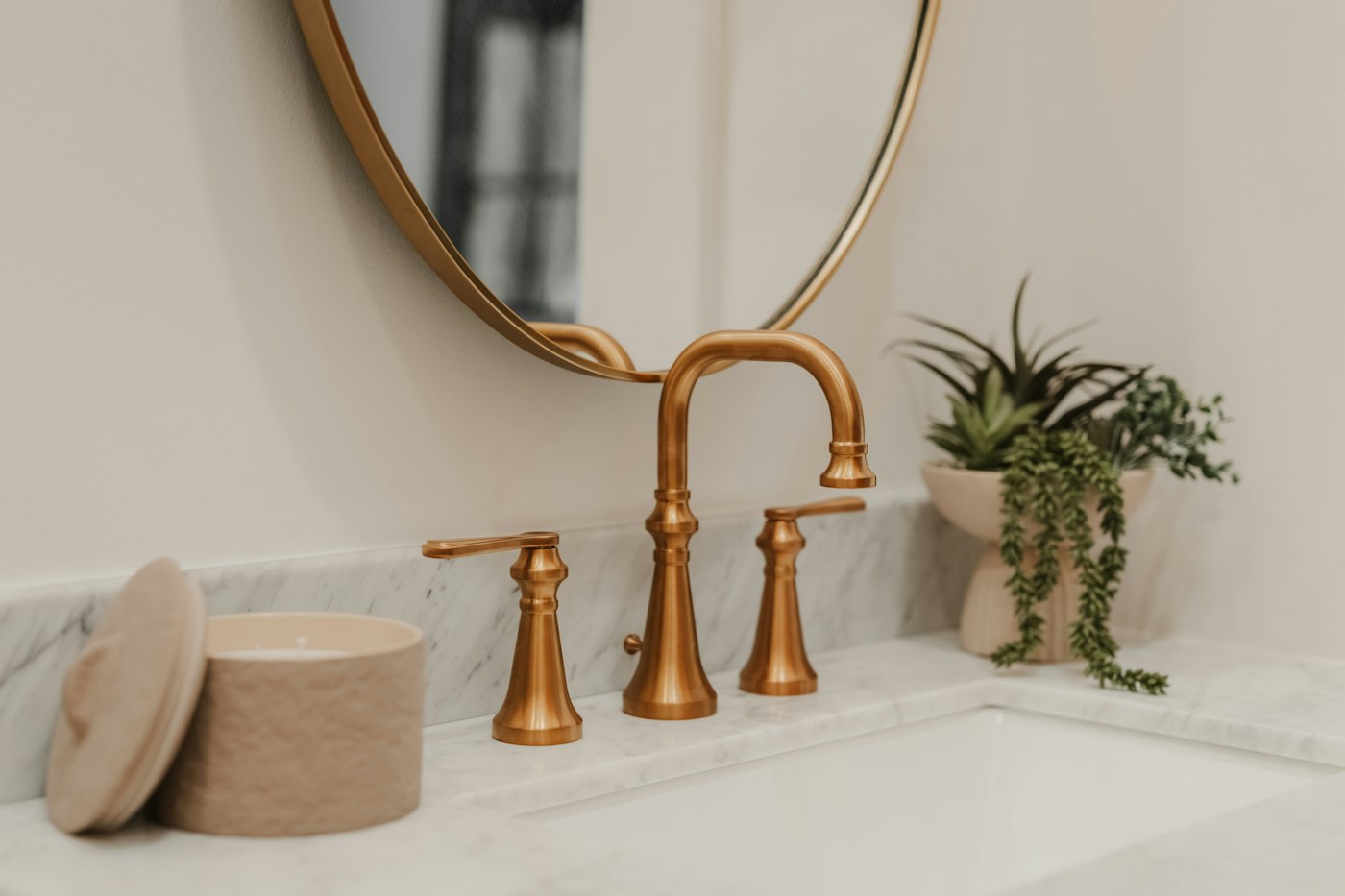
There was a time when every metal finish in a room was expected to match exactly. Faucets, cabinet hardware, light fixtures and towel bars all shared the same finish. Today, many designers mix metals intentionally to create rooms that feel collected and layered rather than uniform. Done thoughtfully, mixing metals adds depth and personality. Done without a plan, it can look accidental.
Choose a Dominant Finish
Start by picking one main finish that will appear most often in the room. In a kitchen, this might be the faucet and cabinet hardware. In a bathroom, it might be the plumbing fixtures. This dominant finish creates a foundation that ties the room together. Then choose one, or at most two, accent finishes to use more sparingly.
Group Finishes by Function
One of the simplest ways to mix metals successfully is to keep finishes consistent within each category of item.
- Plumbing fixtures: Faucets, showerheads, tub fillers and shower valves typically match.
- Cabinet hardware: Pulls and knobs within the same set of cabinets usually match.
- Lighting: Pendants, sconces and chandeliers can introduce an accent finish.
- Accessories: Towel bars, robe hooks and mirror frames can follow either the plumbing or the lighting.
For example, a kitchen might feature a polished nickel faucet, brushed brass cabinet hardware and brass pendant lights. Each category is consistent, but the room combines two finishes in a deliberate way.
Balance Warm and Cool Tones
Metal finishes fall broadly into warm tones, such as brass, gold, copper and bronze, and cool tones, such as chrome, nickel and stainless steel. Matte black acts as a neutral that pairs with almost anything. Combining one warm and one cool finish often creates pleasing contrast. Pairing two very similar but not identical finishes, such as two slightly different golds, can look like a mismatch rather than a choice.
Repeat Each Finish at Least Twice
An accent finish that appears only once can look like an outlier. Repeating it at least twice in the room, such as on pendant lights and a mirror frame, makes it read as intentional. Distributing finishes across the room, rather than concentrating them in one corner, also helps create balance.
Remember that stainless steel appliances and sinks are metals too. In many kitchens they act as a background finish, so pairing them with warm hardware or lighting can add contrast. If your appliances are panel-ready or a color other than stainless, you may have more freedom with hardware and fixtures.
Test Before You Commit
Finishes can look different from photos in person, and the same finish can vary slightly between manufacturers. Gather samples of hardware, a fixture finish chip and a lighting sample, and look at them together with your cabinet, countertop and tile samples in your home’s lighting. If you are selecting finishes for a remodel, reach out through our contact page.
A Step-by-Step Way to Build Your Metal Palette
When homeowners feel stuck on finishes, it is usually because they are trying to choose everything at once. Breaking the decision into a sequence makes it far more manageable.
- Start with what is fixed. List the metal elements you are keeping or have already chosen, such as appliances, a sink, a range hood or existing door hardware. These are your starting point.
- Look at the undertones of your other materials. Countertops, tile, cabinet colors and wood tones lean warm or cool. Warm metals often sit comfortably against creamy whites, warm woods and earthy stone, while cool metals can feel crisp against gray, blue or bright white.
- Choose the dominant finish for the items you touch and see most, then pick an accent that contrasts in tone rather than one that almost matches.
- Assign each category. Write a simple list: plumbing in one finish, hardware in another, lighting in the accent, accessories following one of the two.
- Check sight lines. Stand where you enter the room and where you spend the most time. Make sure each finish appears in more than one place within view.
- Confirm availability. Before finalizing, make sure your chosen finishes are offered in every item you need, from shower trim to toilet levers to cabinet latches.
Sample Combinations to Spark Ideas
These are not rules, just pairings that tend to work well and illustrate the principles above.
- Polished chrome and matte black: Crisp and graphic, suited to modern bathrooms and kitchens with bright white or high-contrast tile.
- Brushed nickel and soft brass: A gentle pairing that feels calm and timeless, especially with painted cabinets and warm stone.
- Stainless steel and unlacquered brass: A classic kitchen combination where the brass will develop a patina over time, adding character.
- Oil-rubbed bronze and brushed nickel: A warmer, traditional mix that suits wood cabinetry and natural textures.
- Matte black and warm gold: A bold look that works well when one finish is used for hardware and the other for lighting and mirror frames.
Finish Durability and Care
How a finish looks on day one is only part of the decision. How it ages and how it is cleaned matter just as much in a busy kitchen or family bath.
Living Finishes
Unlacquered brass, copper and some bronze finishes are designed to change over time, darkening and developing a patina where they are handled. Some homeowners love this; others prefer a consistent look. Decide which camp you are in before choosing.
Polished Versus Brushed
Polished finishes reflect light beautifully but show fingerprints and water spots more readily. Brushed and satin finishes tend to hide everyday marks, which can be helpful at a busy kitchen sink.
Cleaning
Most metal finishes do best with mild soap, water and a soft cloth. Abrasive pads and harsh cleaners can scratch or strip protective coatings, so follow each manufacturer’s care guidance.
Mixing Metals: Questions We Hear Often
Can I mix more than two finishes?
It is possible, but each additional finish makes the room harder to hold together. If you use three, let one dominate, use the second as a clear accent and keep the third minimal, perhaps limited to a single category such as lighting.
Do appliances have to match my hardware?
No. Stainless appliances usually read as a neutral background, so warm hardware can actually help them blend into a warmer room.
Should door hardware throughout the house match the kitchen?
Many homes use one finish for door hardware throughout for continuity, then allow kitchens and bathrooms their own palette. Where rooms flow openly into each other, it is worth checking how the finishes look together.
Your Finish Planning Checklist
- Existing or fixed metals identified
- Undertones of cabinets, counters and tile considered
- One dominant finish and no more than one or two accents
- Each category assigned a single finish
- Every finish repeated in at least two places
- Samples reviewed together in your own lighting