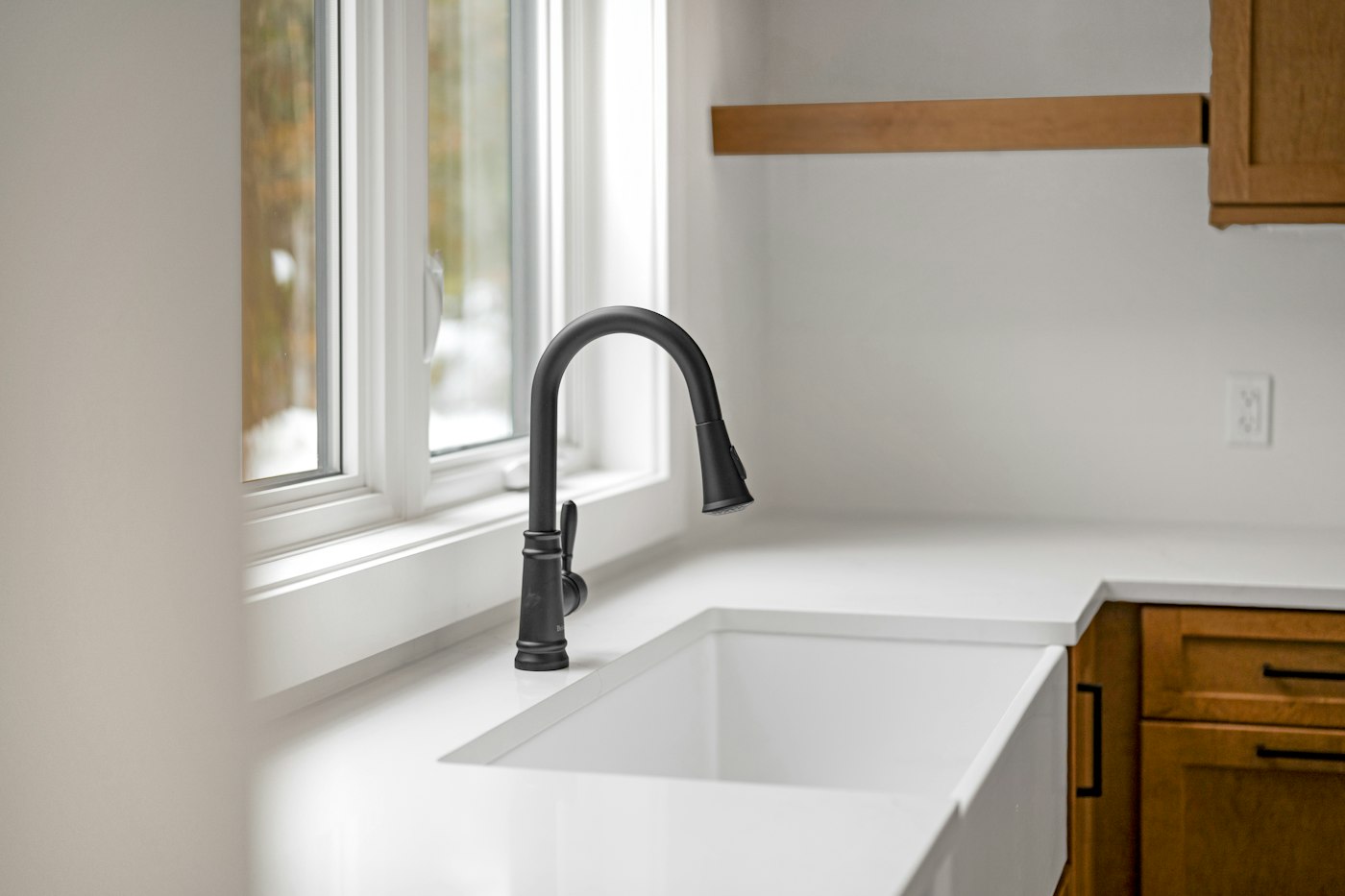
The kitchen faucet may be the most-used fixture in your home. It fills pots, rinses dishes, washes hands and runs dozens of times a day. When it drips, wobbles, sprays unevenly or just looks worn, it drags down the whole sink area. Replacing it is one of the quickest kitchen updates there is. New faucets install in about an hour and refresh the sink area, often making the kitchen feel newer than you would expect from such a small change.
Signs It Is Time for a New Faucet
- Drips that keep coming back after cartridge or washer repairs
- Leaks at the base of the faucet or under the sink
- A loose handle or spout that wobbles
- Low or uneven water flow that cleaning the aerator does not fix
- A sprayer that leaks, sticks or will not retract
- Corroded, pitted or worn finish
- A style that no longer fits your kitchen
- You want features your current faucet does not have
Not every drip calls for replacement. Worn cartridges or washers are often inexpensive to replace. But if the faucet is old, has several problems at once or simply does not suit how you use your kitchen, a new one makes sense.
Choosing the Right Faucet
Count the holes
Look under the sink and count the mounting holes in the sink or countertop. Faucets come in one-hole, two-hole, three-hole and four-hole configurations. A single-hole faucet can often be installed on a three-hole sink using a deck plate, also called an escutcheon, to cover the extra holes. Extra holes can also be used for a soap dispenser, side sprayer or water filter faucet.
Pick a style
- Pull-down faucets have a sprayer head that pulls down into the sink. Great for deep sinks and filling pots.
- Pull-out faucets have a shorter spout with a sprayer that pulls toward you. Useful where cabinets above the sink limit height.
- Single-handle faucets are easy to operate with one hand.
- Two-handle faucets offer a traditional look and fine control of hot and cold.
- Touch or touchless faucets turn on with a tap or a wave, handy when hands are messy.
- Bridge and gooseneck styles make a design statement and offer clearance for large pots.
Consider size and clearance
Check the height of the faucet against any cabinets or windows above the sink. Make sure the spout reaches the center of the sink basin and that the handle can swing fully without hitting the backsplash or a windowsill.
Finish
Stainless, chrome, matte black, brushed nickel and brass-tone finishes are all popular. Consider how each one handles water spots and fingerprints, and how it pairs with your cabinet hardware and appliances.
How a Faucet Replacement Goes
For a straightforward swap, a new faucet can typically be installed in about an hour. Here is the general process.
- Clear the cabinet. Empty the space under the sink and put down a towel. Have a bucket and flashlight ready.
- Shut off the water. Close the hot and cold supply valves under the sink. Open the faucet to relieve pressure and confirm the water is off.
- Disconnect the supply lines. Use a wrench to loosen the connections at the shutoff valves. Expect a little water.
- Remove the old faucet. Loosen the mounting nuts under the sink. A basin wrench helps in tight spaces. Lift the old faucet out and clean the sink surface.
- Install the new faucet. Set it in place with the included gasket or deck plate, then tighten the mounting hardware from below, keeping the faucet aligned.
- Connect the sprayer hose and attach any weight, following the manufacturer’s directions for pull-down models.
- Connect the supply lines. Many faucets come with attached lines. If not, use new braided supply lines. Hand-tighten, then snug with a wrench without overtightening.
- Flush and test. Remove the aerator, turn the water on slowly and run it to flush debris. Reinstall the aerator and check every connection for leaks.
When It Takes Longer
An hour is typical for a simple replacement, but some situations add time:
- Corroded or stuck mounting nuts on an old faucet
- Old shutoff valves that will not close fully or start leaking. This is a good time to replace them.
- Changing the hole configuration, such as adding a hole to a countertop
- Tight access from a garbage disposal, water filter or deep sink
- Water damage discovered in the cabinet base
- Adding features, such as touch controls that need power or a filtered water faucet
Complete the Sink Area Refresh
A new faucet is the centerpiece, but a few companion updates can complete the look:
- A matching soap dispenser in an extra sink hole
- A new sink strainer and drain basket
- Fresh caulk where the sink meets the countertop
- New supply lines and shutoff valves
- Organizing the under-sink cabinet with a mat and pull-out storage
Common Mistakes
- Buying a faucet that does not match the number of sink holes
- Forgetting to check height and clearance under cabinets or windows
- Reusing old, worn supply lines
- Overtightening plastic connections and cracking them
- Skipping the flush, which can clog the new aerator with debris
- Not checking for slow leaks under the sink a day later
What to Do This Week
- Count the holes in your sink and measure clearance above it.
- Check that your shutoff valves turn and close fully.
- Decide what style and features fit how you use your kitchen.
- Choose a finish that works with your hardware and appliances.
- Plan your installation, or have it done for you.
New faucets install in about an hour and refresh the sink area. AX Home Pro handles repairs, improvements and maintenance for homeowners. Request an estimate to get started.