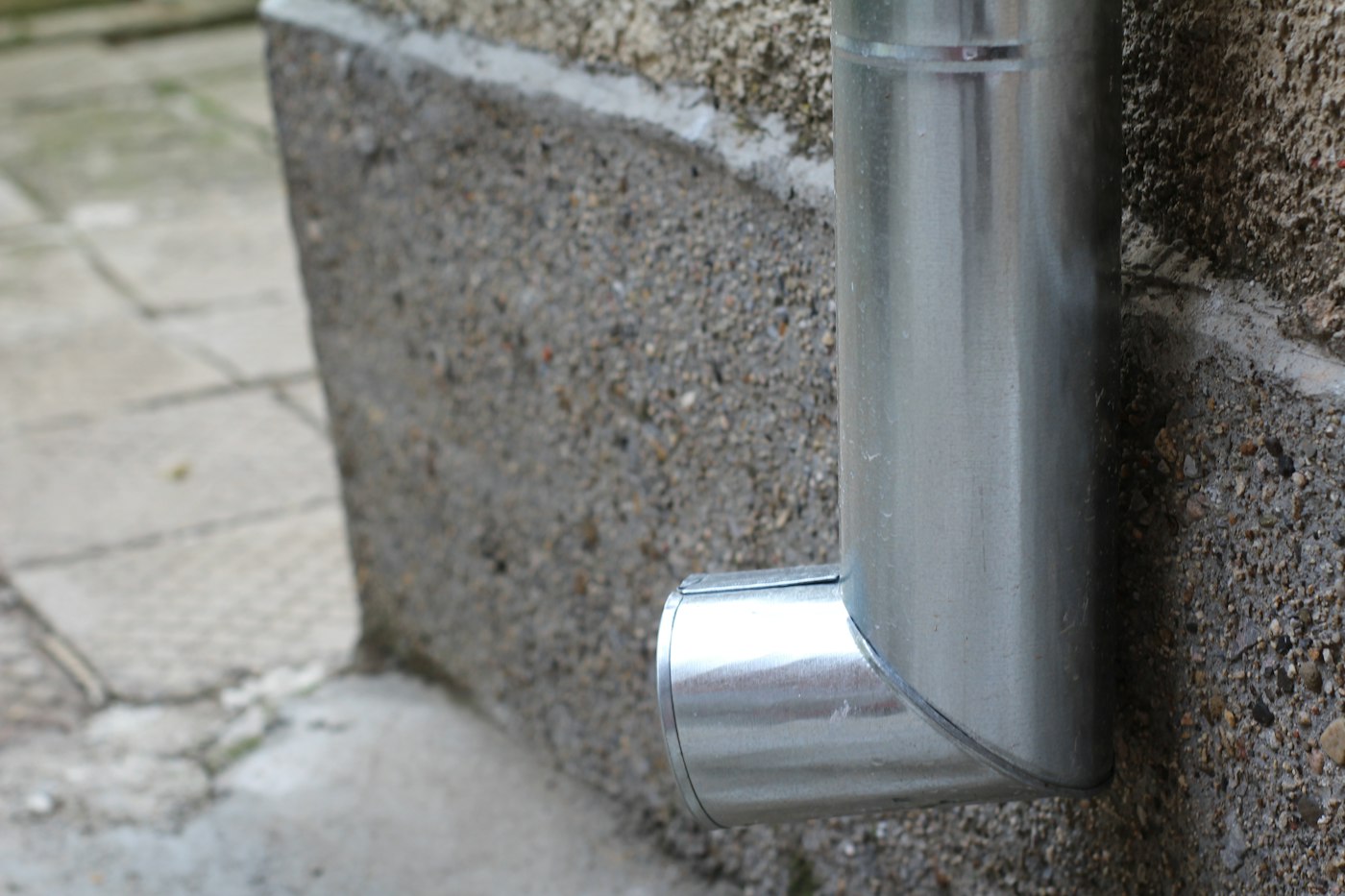
Your gutters and downspouts are a complete system, and the system only works if both ends do their jobs. At the top, leaves and debris need to stay out so water can flow. At the bottom, the water needs to go somewhere other than the base of your house. Leaf guards help with the first part. Downspout extensions handle the second, and here the rule is simple: extensions should carry water at least four feet from the house.
Why Water at the Foundation Is a Problem
A single roof can shed a large volume of water in an ordinary rainstorm, and nearly all of it is funneled through a few downspouts. If those downspouts empty right next to the foundation, the soil there becomes saturated. That can lead to:
- Basement leaks and damp crawlspaces
- Hydrostatic pressure against foundation walls
- Soil erosion and settling along the foundation
- Cracked walkways, patios and driveways near the house
- Mold and musty odors in lower levels
- Washed-out mulch and damaged plantings
- Ice patches on walkways in freezing weather
Moving that water away from the house is one of the simplest, most effective things you can do to protect your foundation.
Downspout Extensions: Getting Water Away
Extensions carry water from the bottom of the downspout to a spot where it can soak in or drain away safely. The goal is to discharge at least four feet from the house, onto ground that slopes away from the foundation.
Types of extensions
- Rigid extensions. Straight sections of downspout material that attach with an elbow. Durable and inexpensive.
- Flexible extensions. Corrugated tubes that bend around obstacles and stretch to length.
- Hinged or flip-up extensions. Swing up out of the way for mowing, then lower back down.
- Roll-out sleeves. Lightweight tubes that unroll when water flows and recoil when it stops.
- Splash blocks. Concrete or plastic pads that spread out the water. Helpful, but often too short on their own.
- Underground drain lines. Buried pipe that carries water to a pop-up emitter or drainage area farther from the house. Clean and out of sight, but needs proper slope and periodic checks.
Placement tips
- Make sure the ground at the discharge point slopes away from the house.
- Do not discharge toward a neighbor’s property, a walkway or your driveway where it can freeze.
- Secure extensions so they do not get knocked loose by kids, pets or yard equipment.
- Check after every major storm that each extension is still in place.
Leaf Guards: Keeping Gutters Flowing
Leaf guards, also called gutter guards, cover the top of the gutter to keep out leaves and larger debris while letting water through. They can reduce how often gutters need cleaning, which is especially helpful for homes surrounded by trees or with gutters that are hard to reach.
Common styles
- Screens. Simple mesh panels that block leaves. Affordable but can let smaller debris through.
- Micro-mesh. Very fine mesh that blocks even small debris like pine needles and seed pods.
- Reverse-curve or surface-tension guards. Solid covers that let water follow a curved edge into the gutter while debris slides off.
- Foam or brush inserts. Fill the gutter channel to keep debris out. Easy to install but can collect debris themselves.
What leaf guards will not do
No leaf guard makes gutters maintenance free. Debris can collect on top, fine material can still get through, and very heavy rain may overshoot some designs. Plan to inspect and clean them periodically. Leaf guards also do not fix sagging gutters or poor slope, so those issues should be addressed first.
Are leaf guards right for your home?
Leaf guards tend to be most worthwhile when:
- Large trees overhang the roof and gutters fill quickly every fall
- Pine needles, seed pods or blossoms clog gutters through much of the year
- The house is two or more stories and gutter cleaning means long ladder work
- Gutters overflow during moderate rain even shortly after being cleaned
If your home has few trees nearby and the gutters stay fairly clean with regular maintenance, guards may not be necessary. In that case, two good cleanings a year and solid downspout extensions are usually enough. Either way, match the guard style to the debris you actually get. Fine needles call for fine mesh; big broad leaves can be handled by simpler designs.
Check the Whole System
Fall is a good time to evaluate your gutters from top to bottom:
- Gutters. Clean and check that they slope toward downspouts with no standing water.
- Hangers. Make sure gutters are firmly attached and not pulling away from the fascia.
- Seams and corners. Look for drips and seal leaking joints.
- Downspouts. Flush each one and confirm water flows freely and the straps are secure.
- Extensions. Confirm every downspout discharges at least four feet from the house.
- Grading. Check that soil near the foundation slopes away from the house.
Common Mistakes
- Leaving a downspout with no extension, emptying right at the foundation
- Using a short splash block that sends water only a foot or two away
- Pointing extensions toward a low spot that drains back toward the house
- Installing leaf guards on gutters that already sag or leak
- Assuming leaf guards mean never checking the gutters again
- Forgetting to reattach extensions after mowing or landscaping
What to Do This Week
- Walk around the house during or after a rain and watch where downspout water goes.
- Measure each extension. Lengthen any that discharge less than four feet from the house.
- Secure loose extensions and replace damaged ones.
- Clean gutters and consider whether leaf guards would help your home.
- Note any grading problems that send water back toward the foundation.
AX Home Pro handles repairs, improvements and maintenance for homeowners. Request an estimate to get started.