
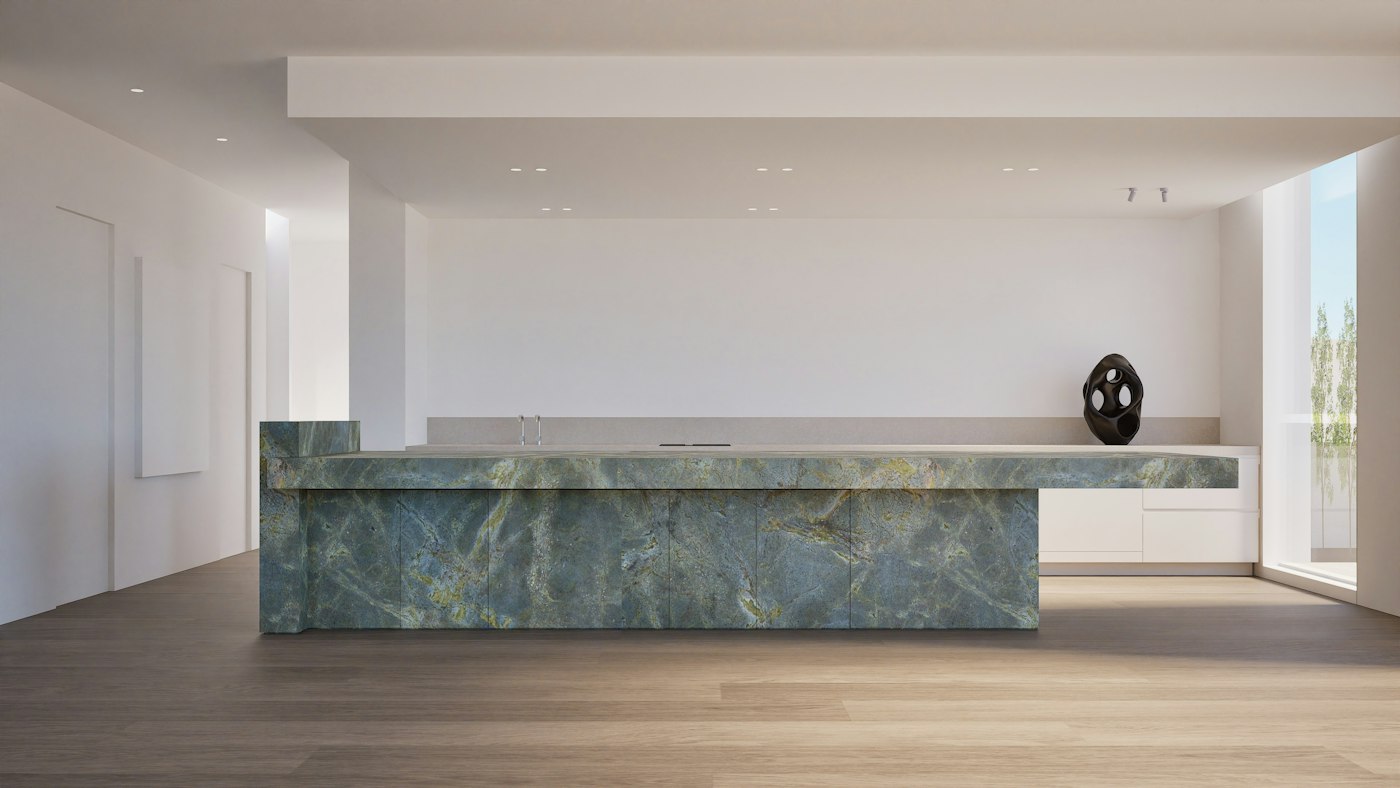
Granite gets most of the attention in conversations about stone countertops, but it is far from the only natural stone that works in a kitchen or bath. Marble, quartzite, soapstone and slate each have a distinct look and, more importantly, a distinct personality in daily use. Some resist scratches and etching; others develop a patina that their owners grow to love. Summer, with its lemonade, sliced tomatoes and evening glasses of wine, is a fair test of how a stone handles everyday acids, so it helps to know which is which.
Marble
Marble is a metamorphic rock formed from limestone, prized for its soft, luminous veining and its long history in kitchens and baths. It is relatively soft and composed largely of calcite, which reacts with acids. Lemon juice, wine, tomato sauce and some cleaners can etch the surface, leaving dull marks even when the stone is sealed, because sealers help resist stains but do not prevent etching. Honed finishes make etching less noticeable than polished ones. Many people choose marble knowing it will show wear and value its lived-in character. Others prefer it in baths or baking areas, where acids are less frequent.
Quartzite
Quartzite is a natural metamorphic rock formed from sandstone, and it should not be confused with quartz, the engineered surface made from crushed quartz and resin. True quartzite is generally very hard and resistant to etching, and some varieties resemble marble, which appeals to those who want the look with more durability. The challenge is naming: stones are sometimes sold as quartzite when they are actually softer materials, such as marble or dolomite. Ask the supplier about the specific stone, and test a sample with a drop of lemon juice and a scratch test before committing.
Soapstone
Soapstone is a soft, dense stone rich in talc, with a smooth, slightly silky feel. It is typically gray to charcoal, often with green tones and pale veining, and it darkens with oil or with use. Soapstone is nonporous, is not etched by acids and tolerates heat well, which is why it has long been used for laboratory counters, sinks and wood stoves. Its softness means it scratches and dents more easily than granite, but scratches can often be sanded out or blended with mineral oil. Many owners embrace the gradual patina.
Slate
Slate is a fine-grained metamorphic stone that splits into layers, familiar from roofing and old schoolroom chalkboards. Countertop slate is dense, comes in dark gray, black, green and purple tones and has a matte, soft-touch surface. It resists stains and heat well, but edges and corners can chip, and some types can flake along their layers. Rounded or eased edges help.
Choosing Among Them
- View full slabs in person, since natural stone varies from slab to slab.
- Ask about porosity and sealing needs for the specific stone.
- Test samples with the foods and cleaners you use most.
- Decide honestly whether patina is a feature or a frustration for you.
Natural stone rewards the homeowner who chooses it with clear eyes. Matched to the right kitchen, each of these materials can serve beautifully for decades. If you would like help weighing stone options for a remodel, reach out through our contact page.
How to Test a Stone Sample at Home
Showroom descriptions can only tell you so much. A simple set of tests on a sample of the actual stone, ideally one from the slab you are considering, shows how it will behave in your kitchen. Ask the supplier if they are comfortable with you testing a sample, since some tests leave marks.
- The etch test. Place a few drops of lemon juice or vinegar on the surface and leave it for several minutes. Wipe it off and look at the spot at an angle under good light. A dull or rough patch means the stone etches.
- The stain test. Put small amounts of oil, red wine and coffee on the sample and leave them for an hour or so. Wipe them away and see whether any color or darkening remains.
- The scratch test. Try to scratch an inconspicuous area with the tip of a knife or a steel nail. Stone that is genuinely hard will resist; softer stone will show a line.
- The water test. Place a few drops of water on the surface and time how long it takes to darken the stone. Faster absorption suggests a more porous stone that may need sealing more often.
- The touch test. Run your hands over honed and polished finishes. How the stone feels every day matters, too.
Living With Each Stone
Daily care
- Use a pH-neutral cleaner made for stone, or mild dish soap and water. Avoid vinegar, citrus-based and abrasive cleaners on marble and other calcium-based stones.
- Wipe spills promptly, especially acidic foods and drinks on marble.
- Use cutting boards. Even hard stones dull knives, and softer ones scratch.
- Use trivets for hot pans on stones and finishes the fabricator advises caution with, and avoid placing heat near seams.
Periodic care
- Check whether sealing is due by watching how quickly water darkens the surface. Follow the fabricator’s recommendation for the sealer and frequency.
- For soapstone, apply mineral oil if you prefer an even, darker color, or leave it to darken naturally with use.
- Light scratches in soapstone can often be sanded out with fine sandpaper. Ask your fabricator for guidance first.
- Etching on marble can sometimes be reduced by a stone restoration professional, who can hone or polish the surface.
Questions We Hear
Which stone is best for a busy family kitchen?
True quartzite is often the most forgiving of the four for everyday use, and soapstone is a good choice for those who welcome patina. Marble suits homeowners who accept that it will show wear.
Can I use different stones in the same kitchen?
Yes. A common approach is a durable stone on the main perimeter counters and a more delicate favorite, such as marble, on an island or baking station.
Does natural stone need special support?
Cabinets must be level and sturdy, and overhangs may need brackets or supports depending on the stone and thickness. The fabricator will specify what is required.
How do seams look in natural stone?
Seams are often visible to some degree, especially with strong veining. Ask the fabricator where seams will fall and how the veining will be matched.


