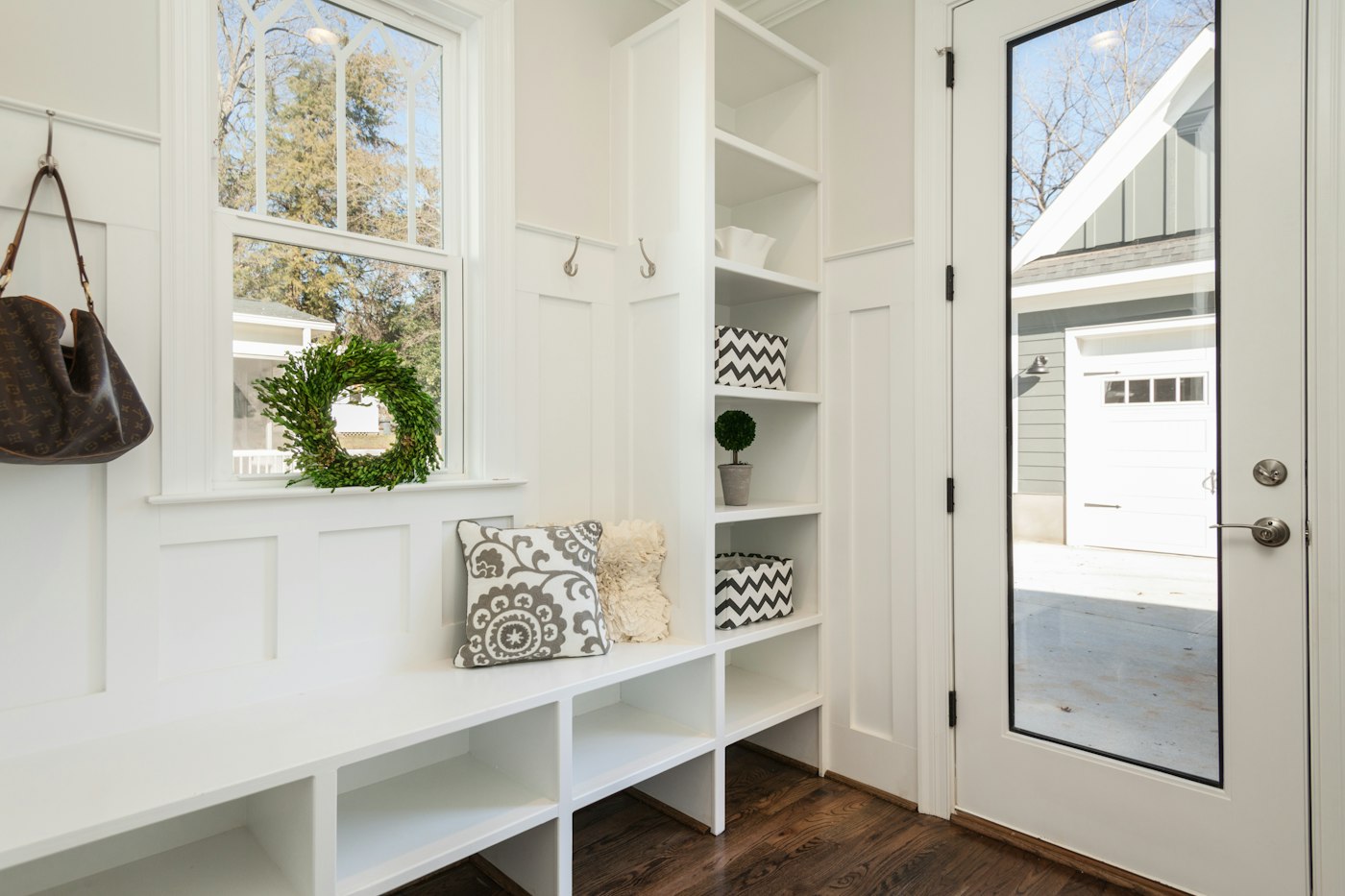
In the middle of winter, the entry to a home takes a beating. Snowy boots, wet coats, backpacks, gloves, leashes and grocery bags all arrive at once, and if there is no plan for them, they pile up. A mudroom, or even a well-designed entry area, gives everything a place to land and keeps the rest of the house cleaner.
Start With How You Come and Go
Think about which door your household actually uses most. In many homes, it is a side or garage door rather than the front door. That is where storage will do the most good. Watch what happens at that door over a week. Note what gets dropped, what gets lost and where people get stuck putting on shoes.
Storage That Works
The most effective mudrooms give each person a dedicated zone. Common elements include:
- Hooks at different heights, including low hooks children can reach
- A bench for sitting while taking off boots, with storage underneath
- Cubbies or lockers with open or closed fronts for each family member
- Upper shelves or cabinets for seasonal items like hats and gloves
- A boot tray or open shelf where wet footwear can drain
Open storage is fast and easy to use. Closed cabinets look tidier. Many mudrooms combine both, with open hooks and benches below and cabinet doors above.
Choose Durable, Easy-Clean Surfaces
A mudroom floor needs to handle water, salt, grit and heavy traffic. Porcelain tile, slate, luxury vinyl and sealed concrete are popular choices. A textured or matte finish can help reduce slipping when floors are wet. Darker or patterned floors hide dirt better. On walls, washable paint, beadboard or wainscoting can stand up to scuffs from bags and boots. Some mudrooms also include a floor drain or a small utility sink, which requires plumbing planning.
Small Entries Can Work Too
Not every home has room for a dedicated mudroom. A section of hallway, a coat closet or even a single wall near the door can be outfitted with hooks, a narrow bench and a shoe rack. Converting a coat closet into an open nook with built-in hooks and cubbies is a common and effective change. A slim wall-mounted cabinet can hold keys, mail and dog leashes.
Thoughtful Extras
- A charging station for phones and devices
- A small family calendar or message board
- Good lighting so you can find what you need on dark mornings
- Ventilation or a spot near a heat source to help wet gear dry
- A place for pet supplies, such as food, towels and leashes
A mudroom is one of those projects that pays off every single day, especially in winter. If you are thinking about adding or improving an entry area as part of a remodel, reach out through our contact page.
Planning Your Mudroom, Step by Step
A good mudroom feels effortless to use, but it takes thoughtful planning to get there. Here is a practical way to work through the design.
- Count the users. List every person who uses the entry, plus pets. Each should have a defined zone.
- List what each person brings in. School bags, work bags, sports gear, coats, boots, helmets, umbrellas and leashes all need a home.
- Measure the space. Note wall lengths, door swings, windows, outlets, heating vents and any pathways that must stay clear.
- Choose the main storage type. Decide between open hooks and cubbies, closed lockers, or a combination.
- Plan the drop zone. A small counter or shelf near the door gives keys, mail and packages a landing spot instead of the kitchen table.
- Plan for wet gear. Decide where wet boots, coats and towels will dry, and how water will be kept off finished floors.
- Add lighting and power. Plan ceiling lights, task lighting and outlets for a charging station with a licensed electrician.
Smart Details for Cold, Wet Months
- Boot trays with a raised grid let melting snow drain away from soles so boots dry faster.
- Vented locker doors help damp coats and gear dry instead of trapping moisture.
- A durable mat at the door catches grit and salt before it is tracked inside. Choose one that can be shaken out and washed.
- A sturdy bench at a comfortable height makes putting on and taking off boots easier for everyone.
- Glove and hat bins labeled for each person keep small items from vanishing.
- A small towel hook for wiping a dog’s paws keeps the rest of the house cleaner.
Mudroom Mistakes to Avoid
Cubbies that are too small
Winter coats and backpacks are bulky. Measure your largest items and make sure each cubby or locker can hold them comfortably.
No room to sit
Without a bench, people balance on one foot or sit on the stairs. Even a narrow bench makes a big difference.
Choosing delicate finishes
Light carpet, flat paint and soft woods take a beating in an entry. Choose surfaces that can be wiped down and that hide everyday wear.
Forgetting the door swing
Benches and lockers placed too close to the door can block it or create pinch points. Map the door swing before finalizing the layout.
Planning only for winter
Adjustable shelves and hooks let the same mudroom handle beach bags, sports equipment or garden gear in warmer months.
Mudroom Questions We Hear
Can a mudroom go in the garage? In some homes, part of the garage near the house entry can hold a mudroom-style setup. Building a finished room there may involve code requirements, so ask before planning major changes.
Do I need a floor drain? Not usually, but a drain or utility sink can be helpful for pet washing or very muddy gear. Both require plumbing planning.
What is the best flooring for salt? Dense, sealed surfaces such as porcelain tile tend to resist salt and moisture well, especially with grout that is sealed or stain resistant.
Is a combined laundry and mudroom a good idea? For many households, yes. Dirty clothes and wet gear go straight to the washer, and the utility sink can serve both purposes.
Keeping it working once it is built
Even the best mudroom needs a little upkeep. Empty cubbies and bins at the change of each season, wash the mats, and give each family member a quick reminder of where things go. Wipe down benches and floors regularly during the wettest months so salt and grit do not build up. A few minutes of attention every week keeps the space doing its job for years.