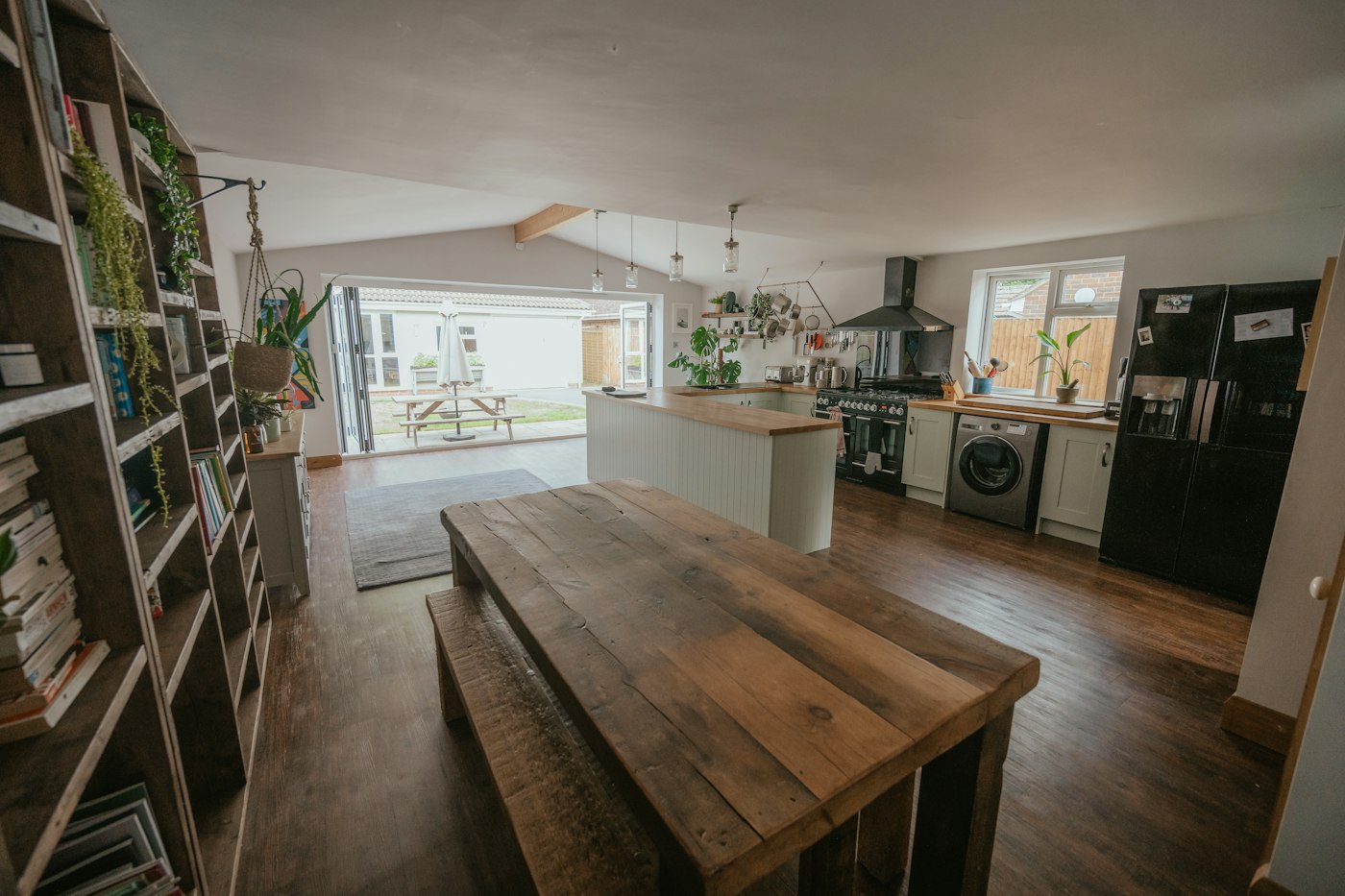
Few kitchen debates run hotter than open shelving versus upper cabinets. Photographs favor the shelves: a few stacked bowls, a plant, a row of glasses catching the light. Daily life often favors the cabinets. The honest answer is that each works well for certain households and certain walls, and the best kitchens frequently use both.
What Open Shelving Does Well
Open shelves make a kitchen feel larger and lighter because they do not form a solid block at eye level. They are convenient for the things used daily, since there is no door to open. They display beautiful objects, bring warmth through wood and give a small kitchen a sense of air. They also cost less than cabinets of the same width and are easy to install on a single wall, which makes them a popular choice for a refresh rather than a full remodel.
What They Ask of You
Shelves hide nothing. Mismatched mugs, a half-used bag of rice and the blender base all sit in plain view. Dust and cooking grease settle on whatever is not used often, so items near the range need regular washing. Shelves also hold less than cabinets, since the space above each row and behind the front edge goes unused, and deep shelves become hard to reach and look cluttered. Households that are tidy by nature, own a limited and attractive set of dishes, and cook without much spatter tend to be happy. Households with many small appliances, children’s cups and bulk pantry goods often regret an all-shelf kitchen.
The Case for Upper Cabinets
Upper cabinets are the storage workhorses of a kitchen. They keep contents clean and out of sight, hold more per linear foot and can be fitted with lift-up doors, glass fronts or interior lighting. They reach to the ceiling when designed to, capturing space that shelves rarely use well. Their drawback is visual weight. A wall of upper cabinets can close in a small kitchen, especially in dark finishes, and they block light from any window they flank.
Blending the Two
- Flank a window or range hood with a short run of shelves and keep cabinets elsewhere.
- Use shelves on an island end or a short wall where a cabinet would look boxy.
- Choose glass-front or lighter-colored upper cabinets to reduce visual weight.
- Put shelving in the pantry or on a coffee station, where display and quick access matter most.
Practical Details
Shelves need solid support. Thick wood or steel shelves on sturdy brackets anchored into studs will carry a stack of plates; thin shelves on decorative brackets will sag. Shelf depth should match what will sit on them, usually enough for a dinner plate and not much more. Keep the lowest shelf high enough to clear a countertop appliance. If you choose cabinets, consider how they meet the ceiling, since a gap above them collects dust while a run to the ceiling with crown or a filler panel looks finished.
The choice is personal and the answer can change as a family changes. A kitchen designed with both options in mind, such as cabinets on the main storage wall and a few well-built shelves where the eye lands, usually ages best.
Deciding Wall by Wall
Rather than choosing one approach for the entire kitchen, we often suggest evaluating each wall on its own. A few questions help.
- What will live here? Everyday dishes and glasses suit open shelves near the sink and dishwasher. Bulk goods, food storage containers and rarely used items are better behind doors.
- How close is it to the range? Shelves within reach of cooking grease and steam require more frequent cleaning.
- What is the view? Walls visible from the living or dining area are natural places for display shelves or glass-front cabinets.
- Is there a window? Shelves flanking a window let more light into the room than solid cabinets would.
- How much storage does the kitchen need? If lower cabinets and a pantry already hold most items, open shelving becomes more practical.
Styling Open Shelves So They Work
Shelves look best and stay most useful when they hold a curated selection rather than everything that will fit.
- Group like items. Stacks of plates, rows of glasses and sets of bowls read as orderly.
- Use a limited color palette. Dishes in one or two colors look calmer than a mix of patterns.
- Leave breathing room. Empty space on a shelf keeps it from looking crowded.
- Mix in a few decorative pieces, such as a cutting board, a plant or a favorite pitcher.
- Keep everyday items accessible on lower shelves and less-used items higher up.
Common Mistakes With Shelving and Cabinets
- Removing all upper cabinets without replacing the storage, leaving the kitchen short on space.
- Installing shelves without proper support, which can lead to sagging or pulling away from the wall.
- Placing shelves too deep, encouraging clutter in the back and making items hard to reach.
- Forgetting the backsplash. Open shelves expose more wall, so plan whether tile or paint will cover the area behind them.
- Ignoring lighting. Shelves can cast shadows on the counter just as cabinets do, so under-shelf lighting may still be needed.
Shelving and Cabinet Questions We Hear
Are open shelves harder to keep clean?
They can be, because items are exposed to dust and grease. Shelves that hold everyday items tend to stay cleaner because their contents are used and washed regularly.
Can I convert existing upper cabinets to open shelves?
Sometimes cabinet doors can be removed and interiors finished to create an open look. Building dedicated shelves usually gives a cleaner result and more flexibility.
Do glass-front cabinets offer the best of both?
Glass-front cabinets display items while protecting them from dust. They still require tidy contents, but they offer more protection than open shelves.
What materials work best for shelves?
Solid wood, wood-wrapped steel and stone are popular. The right choice depends on the weight being carried, the style of the kitchen and how the shelf will be supported.
A Quick Decision Checklist
- Storage needs measured against available cabinet space
- Shelf locations away from heavy cooking spatter where possible
- Supports and brackets planned into the wall structure
- Shelf depth matched to dishes and items
- Lighting and backsplash coordinated with shelves or cabinets
- A realistic look at how tidy your household will keep shelves day to day