An outdoor room is only as good as the weather until it has a way to adjust the temperature. On a still July evening, a ceiling fan turns a stuffy porch into a breezy one. On a cool April night, a heater keeps the party outside past sunset. In a dry climate, a misting system cuts the heat of the afternoon. These systems are modest in scale compared to building the porch itself, but they decide how many days a year the space actually gets used.
Outdoor Ceiling Fans
A ceiling fan is the most effective comfort upgrade for a covered porch or pergola with a solid roof. Moving air feels several degrees cooler on the skin and discourages mosquitoes, which are weak fliers. Outdoor fans carry one of two ratings: damp-rated fans suit covered areas where they will not be hit by rain, and wet-rated fans can take direct rain and even salt air. Choose by the size of the area, with larger blades or multiple fans for bigger spaces, and mount the fan high enough for safe clearance above heads. A reversible motor, a remote and an integrated light are useful features. Fans with blades made of composite or ABS resist warping better than wood.
Patio Heaters
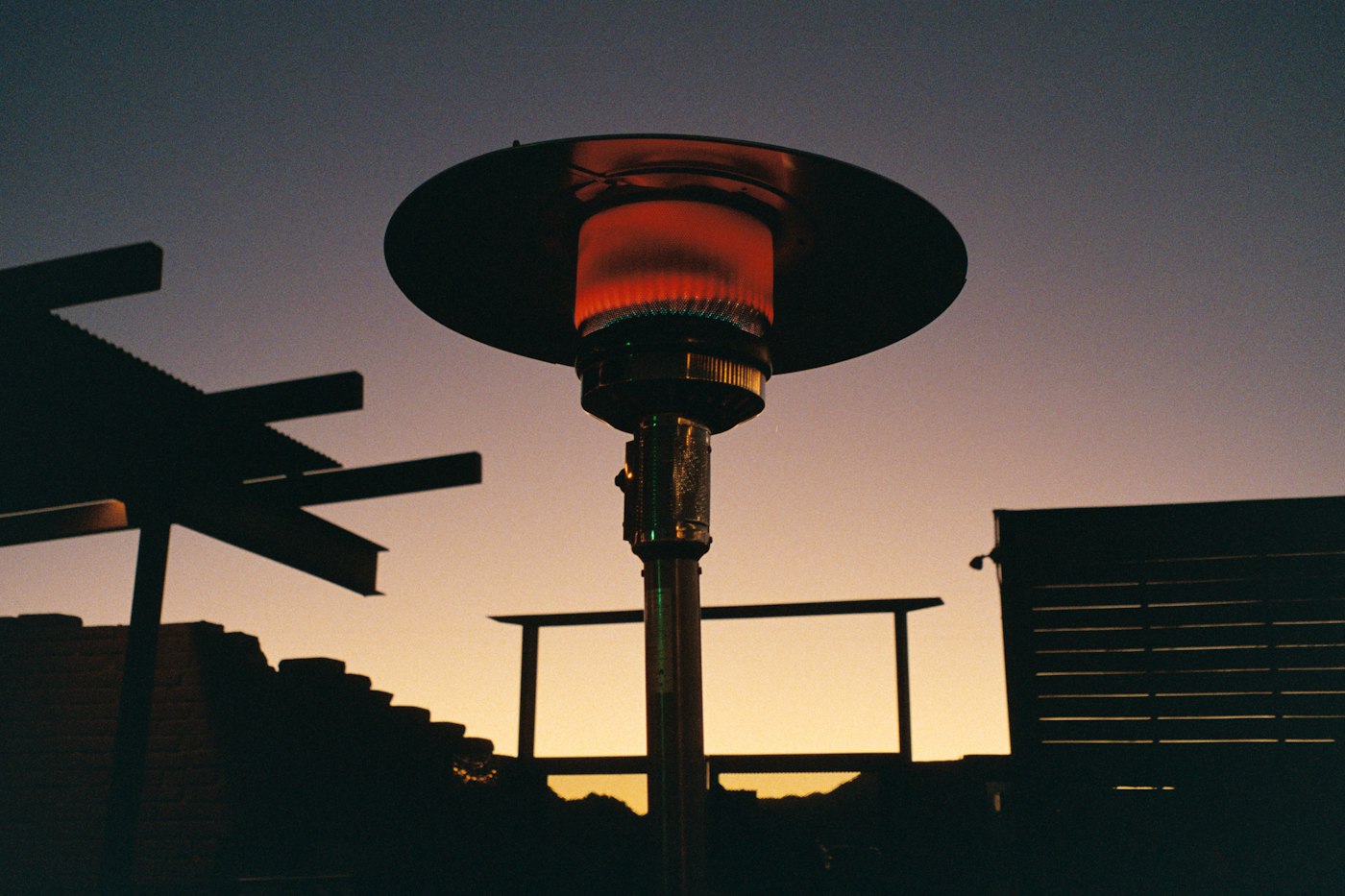
Outdoor heaters come in three main forms. Electric infrared heaters mount to a wall, ceiling or pergola beam and warm people and objects directly with radiant heat, with no flame or fumes; hardwired units need an electrician, and plug-in versions suit smaller spaces. Natural gas heaters, mounted overhead or built as freestanding units connected to a gas line, provide strong heat without tank changes and need a gas fitter to install. Propane heaters, the familiar freestanding mushroom-top style and newer pyramid designs, go anywhere and need only a tank. Every heater has clearance requirements from combustibles and from people, specified by the manufacturer, and gas heaters need open-air ventilation, so they are not for enclosed porches. Heaters work best when the space is sheltered from wind and when they are placed to warm seating areas rather than the open air.
Misting Systems
Misters spray a very fine fog that evaporates and cools the surrounding air. They are most effective in dry climates, where evaporation is rapid; in humid regions they can leave surfaces damp without much cooling. Low-pressure systems run on household water pressure and are inexpensive, producing a coarser mist. High-pressure systems use a pump to create a fog so fine it evaporates before landing. Nozzles mount along the edge of a pergola, awning or umbrella. Water quality matters, since minerals clog nozzles, and a filter helps. Misters should be drained for winter in cold climates.
Combining and Controlling
- A fan and a heater can share a pergola; keep the fan off when the heater is on so warm air is not pushed away.
- Put fans, heaters and lighting on separate switches or a weatherproof remote.
- Timers prevent heaters from running all night.
- Outdoor curtains or a windbreak make any heating or cooling far more effective.
Planning Ahead
Wiring for fans and heaters, and gas lines for heaters or a future fire feature, are easiest to run while a porch or pergola is being built, so decide on them during design. Make sure the structure can carry the weight and vibration of a fan and that the mounting box is rated for fans. Electrical work outdoors requires weatherproof, ground-fault-protected circuits installed by an electrician, and gas work belongs to a licensed professional. With those systems in place, a porch becomes a room with a thermostat of sorts, and the season that used to run from June to September stretches from April into November.
Choosing Comfort Systems Step by Step
Fans, heaters and misters each solve a different problem. Working through a few questions in order helps decide which ones your outdoor space actually needs.
- Note when you use the space. Think about which months and times of day you most want to be outside, and when the space is uncomfortable now.
- Identify the problem. Still, heavy air calls for a fan. Chilly evenings call for a heater. Dry, intense afternoon heat may suit a mister.
- Look at the structure. A solid roof can carry a fan and overhead heater. A slatted pergola may need wet-rated equipment or freestanding units.
- Measure the space. Note the size of the seating and dining areas so fans and heaters can be sized and placed to cover them.
- Check the utilities. Determine where power and gas can come from, and whether new circuits or lines are needed.
- Plan the controls. Decide whether you want wall switches, remotes, timers or a combination.
Placement Tips That Make a Difference
- Center fans over seating. A fan over the middle of a dining table or conversation area does far more good than one centered on the roof.
- Use more than one fan in long spaces. Two medium fans often cover a long porch better than one large one.
- Aim heaters at people. Radiant heat warms what it reaches. Position heaters to cover seating rather than walkways or open lawn.
- Respect clearances. Follow the manufacturer’s required distances from ceilings, walls, furniture and heads.
- Keep misters away from electronics and fabrics. A fine mist can still dampen cushions, speakers and wood surfaces over time.
- Think about wind. Breezes carry heat away quickly. Shelter heated areas with walls, screens or plantings when possible.
Common Mistakes
- Using indoor fans outdoors. Indoor fans are not built for moisture and can fail or become hazardous.
- Installing gas heaters in enclosed spaces. Gas heaters need open-air ventilation.
- Running misters in humid weather. In muggy conditions, misters can leave furniture and floors damp without much cooling effect.
- Skipping maintenance. Fans need occasional cleaning and tightening, heaters need inspection and misters need nozzle cleaning and winter draining.
- Forgetting noise. Some heaters and pumps hum or click. Listen to models before buying if quiet evenings matter to you.
Questions Homeowners Ask
Can a fan and lights share a circuit?
Often, yes, but separate switches give more control. An electrician can confirm that the circuit can handle all the loads planned for it.
Are infrared heaters safe around children?
Mounted high and installed with proper clearances, they keep hot elements out of reach. Always follow the manufacturer’s safety guidance.
Can we add these to an existing porch?
Usually. Running new wiring or gas lines may require opening ceilings or adding conduit. We are glad to help you plan what will make your outdoor space comfortable more months of the year.