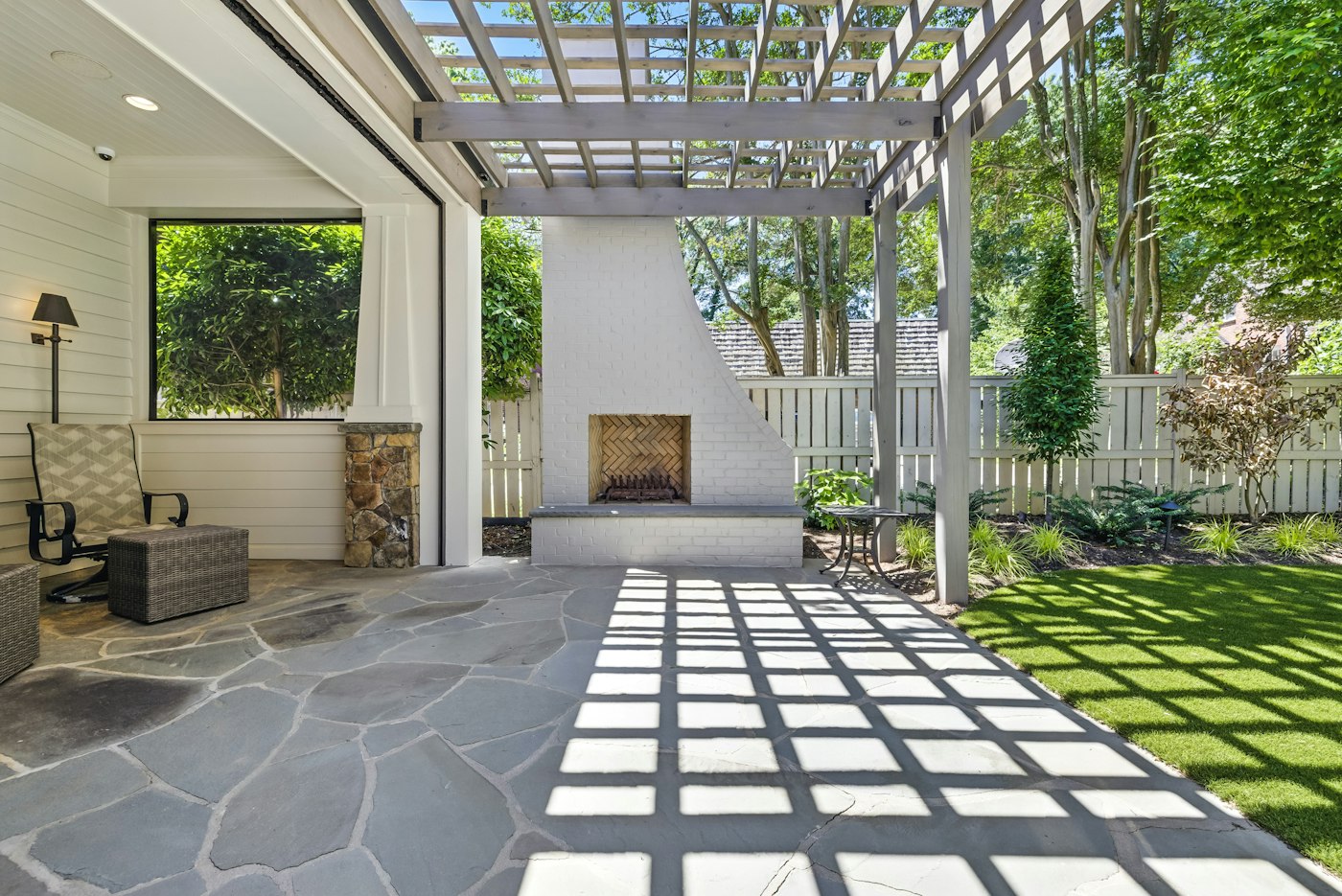
The first warm afternoons of spring reveal the problem with many patios: there is nowhere to escape the sun. Shade is what makes an outdoor space usable at noon and comfortable at four, and there are more ways to create it than ever. Each option trades off coverage, permanence, cost of installation and appearance a little differently.
Pergolas
A pergola is an open framework of posts and overhead beams, usually with rafters or slats spaced to cast partial, dappled shade. It defines a space the way a ceiling does without closing it in, and it is a strong architectural element that can tie a patio to the house. Wood pergolas, in cedar or treated lumber, have a warm, traditional look and need periodic finishing; aluminum, fiberglass and vinyl versions need little upkeep. A pergola’s shade changes with the sun’s angle, which means it offers the least coverage at midday unless the slats are oriented and spaced with that in mind.
Pergolas are often the starting point for more shade. A fabric canopy stretched across the top, retractable panels that slide along the rafters, or climbing plants such as wisteria or grapes can fill in the overhead. Louvered pergolas, with slats that rotate to open or close and sometimes motorized, give control over sun and light rain at a higher cost.
Retractable Awnings
A retractable awning mounts to the house and extends over the patio with a crank or a motor, then rolls back against the wall when not needed. It provides solid shade right where it is wanted, protects the interior from afternoon heat and glare, and disappears in wind or winter. Awnings are sized by width and projection, and the fabric comes in many colors and patterns. They need a solid mounting surface and should be retracted in strong wind and heavy rain; many motorized models include wind sensors. Fixed awnings over doors and windows are a smaller, permanent cousin.
Shade Sails
Shade sails are tensioned fabric panels, often triangular or rectangular, stretched between posts, trees or the house. They have a light, contemporary look, cast generous shade and can be arranged in overlapping layers for coverage and visual interest. The fabric is typically a knitted, breathable material that blocks much of the sun while letting heat escape. Sails require very strong anchor points, since tensioned fabric puts real load on them, and they are usually taken down for winter in snowy climates. Their angled installation also sheds rain if the fabric is waterproof.
Umbrellas and Other Movable Shade
A large cantilevered umbrella can shade a dining table or a seating group and swings to follow the sun. It is the most flexible option and the simplest to install, though it needs a heavy base or an in-ground mount and should be closed in wind. Freestanding gazebos and pop-up canopies cover more but are less sturdy. Trees remain the oldest and most beautiful shade, planted now for the benefit of future summers.
Choosing the Right Approach
- Need shade at a specific time of day? Watch the sun’s path for a week before deciding.
- Want architecture and a sense of enclosure? A pergola.
- Want shade on demand that disappears in winter? A retractable awning.
- Want modern lines and broad coverage on a budget? Shade sails.
- Want to try before committing? A good umbrella.
Permanent structures such as pergolas may require a permit and must respect property setbacks, so check with your local building department. Whatever you choose, test its shade with a chair underneath at the hour you most want to be outside. That is the only measurement that matters.
Reading Your Patio Before You Choose
The right shade for your patio depends less on what looks good in a catalog and more on how sun, wind and the house itself interact with the space.
- Sun direction. A west-facing patio needs shade low on the horizon in late afternoon, which overhead slats alone rarely provide. A side screen, a drop shade or a tree may do more than a roof.
- Wind exposure. Open, breezy yards are hard on awnings, umbrellas and sails. If the patio catches strong gusts, sturdier structures or easy-to-retract options make more sense.
- Mounting surfaces. Awnings and sails need structural anchor points. Vinyl siding over sheathing is not the same as a solid rim joist or masonry wall, so the attachment point must be confirmed.
- Drainage. Solid covers and waterproof sails collect and shed water. Plan where that runoff will land so it does not pool against the foundation or on a walkway.
- Height. Overhead shade that is too low feels oppressive; too high and the shade lands somewhere other than your table. Most people find a comfortable clearance and then adjust the size of the cover to suit.
Combining Shade Types
Many of the most comfortable patios use more than one approach. A few combinations work especially well:
- A pergola over the seating area with a retractable fabric canopy for midday, plus an umbrella for the dining table at the edge.
- A retractable awning off the house paired with a shade sail farther out over the lawn or play area.
- A pergola with climbing vines on one side and outdoor curtains on the sunny side for late-day glare.
- A newly planted shade tree with a temporary sail for the years it takes the tree to fill in.
Mistakes That Undermine Patio Shade
- Undersized footings. Pergola posts and sail posts carry wind loads, not just weight. Shallow or undersized footings let them lean over time.
- Leaving fabric out in storms. Awnings and sails are built to shade, not to ride out severe weather. Retract or remove them when strong wind or heavy rain is forecast.
- Ignoring lighting and fans. If you plan to add a fan, lights or a heater under a pergola later, run conduit while the structure is going up.
- Choosing color on looks alone. Dark fabrics shade more deeply but can hold heat; light fabrics feel airy but let more light through. Look at samples in your own sun.
- Forgetting maintenance. Wood needs refinishing, fabric needs cleaning and hardware needs occasional tightening. Pick the option whose upkeep fits your habits.
Questions Homeowners Ask
Can a pergola attach to the house?
Yes, many do, but the connection has to be designed properly, with flashing to keep water out of the wall. A freestanding pergola avoids that connection entirely.
How long does shade fabric last?
It depends on the material, sun exposure and care. Cleaning fabric gently, storing it dry in the off-season and retracting it in bad weather all extend its life.
Will shade make the patio stay damp?
Solid covers can slow drying after rain. Breathable fabrics and slatted pergolas allow air movement, which helps surfaces dry and discourages mildew. We are happy to help you weigh these options for your patio.